
 pays (is liable)
 does not pay (is exempt)
 keeps it
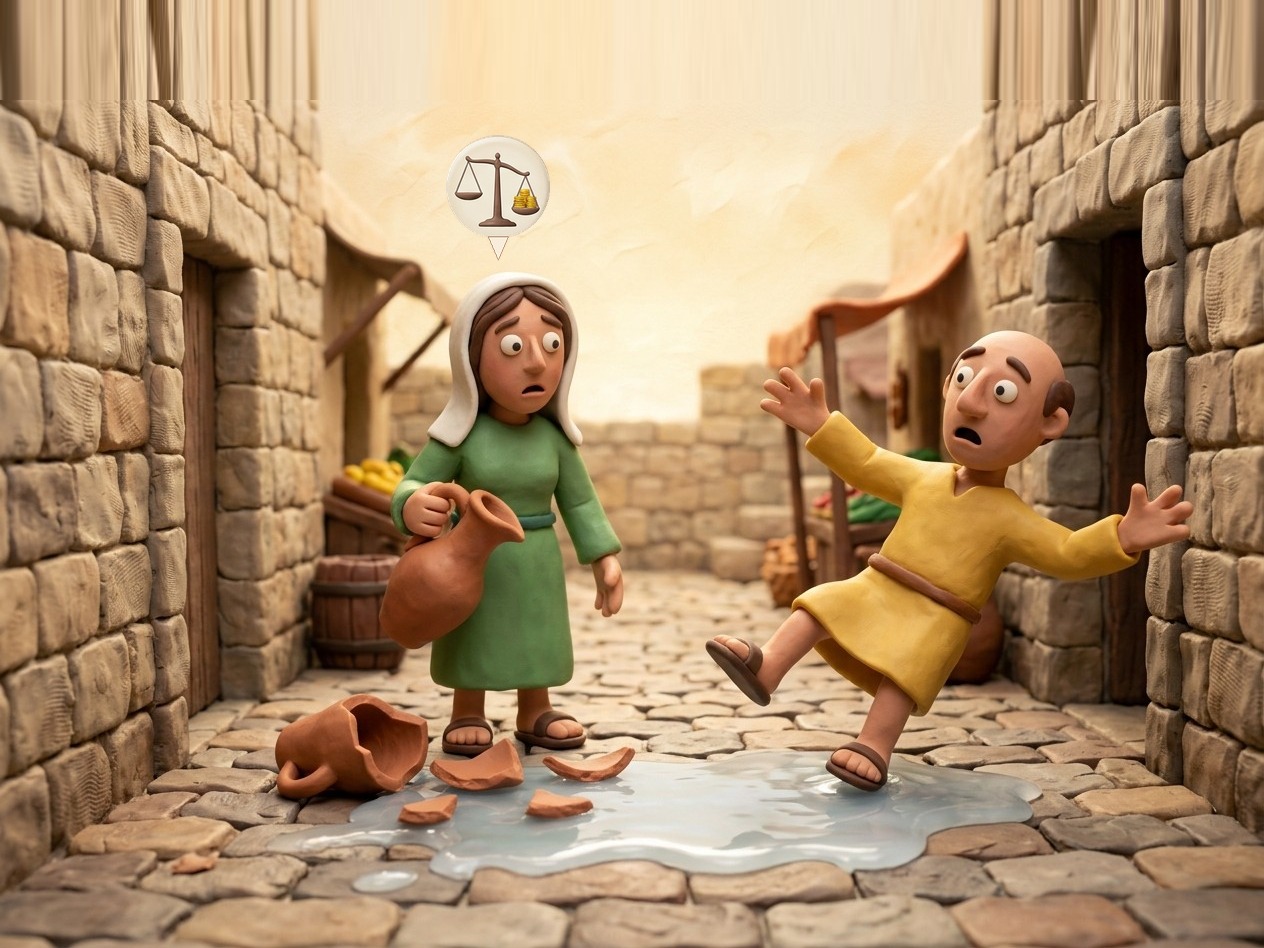
Mishnah 1: A jug in the public domain
Someone who breaks an object left in the public domain is exempt, but if he is hurt, the owner pays. The owner of a jug that breaks there pays for what it causes.
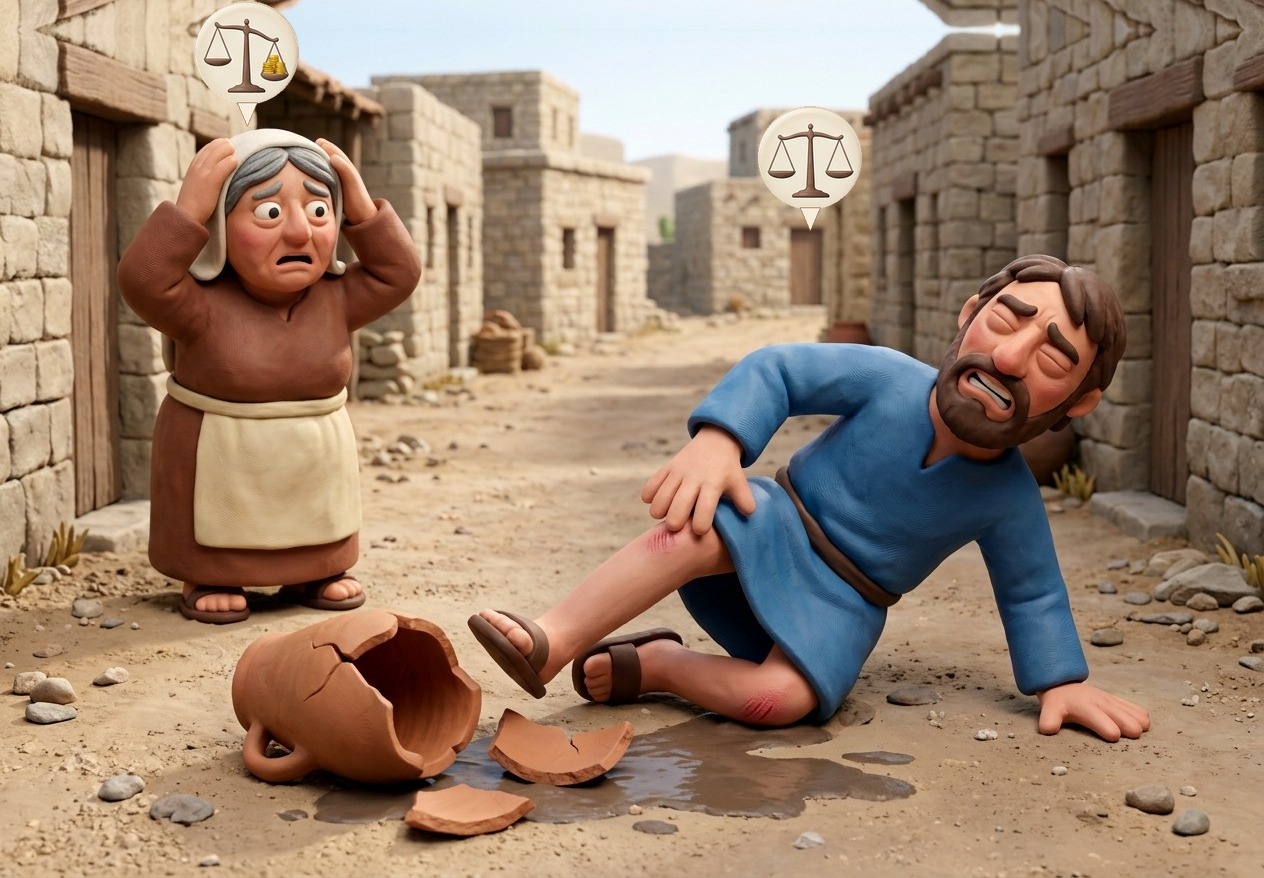
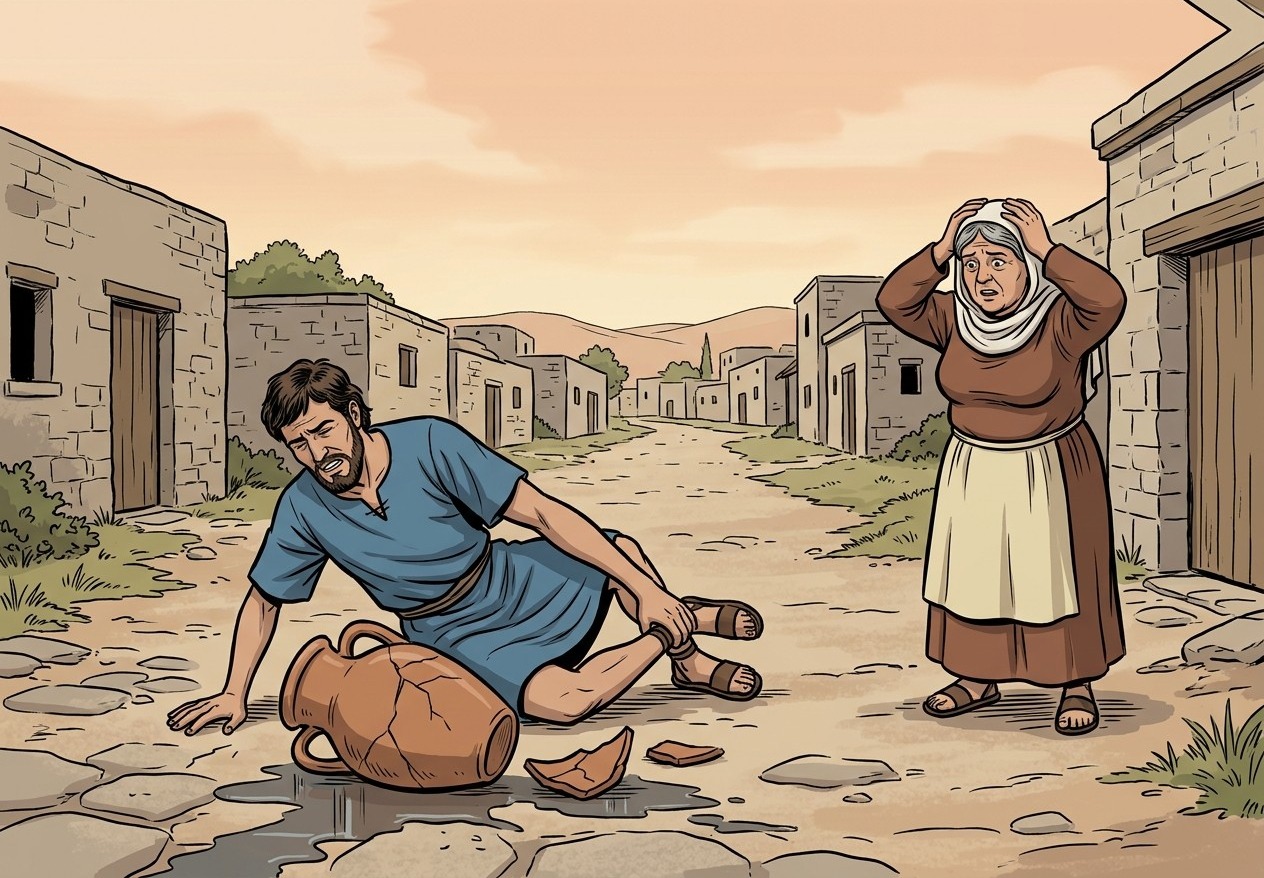
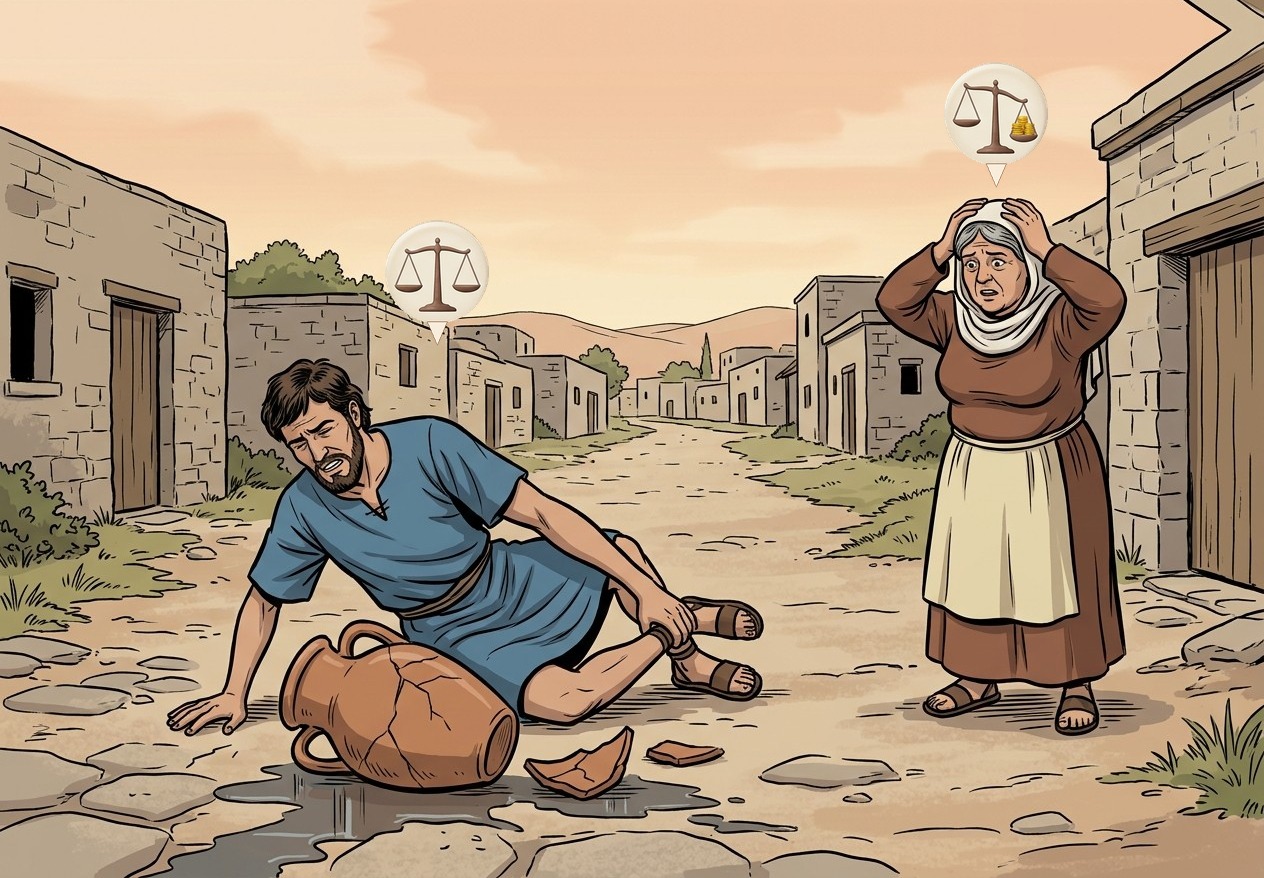
A jug left in the public domain
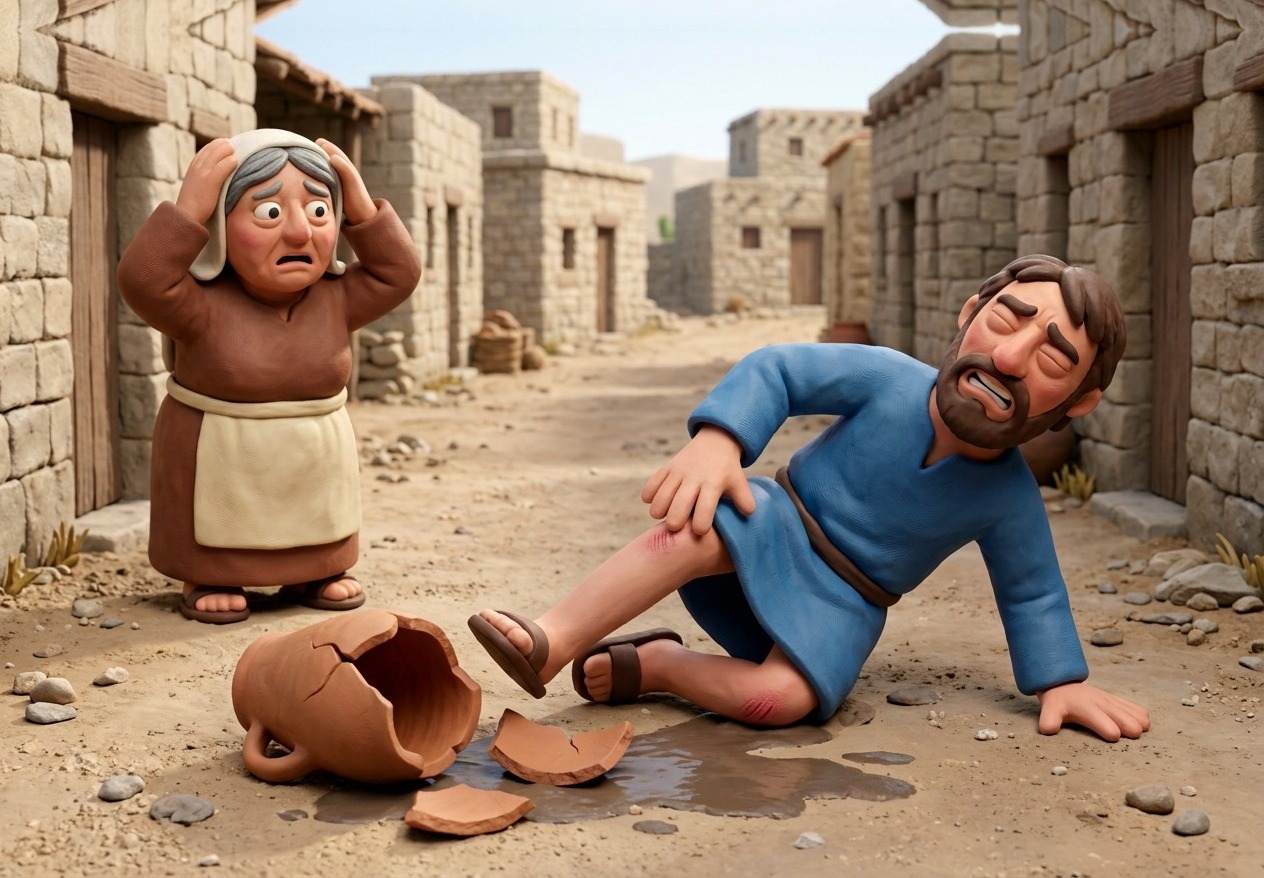
- A man left a jug in the public domain and another came and stumbled over it and broke it: he is exempt.
- If he was injured by it, the owner of the jug is liable for his injury.
- The one who stumbled is exempt because people walking are busy with their thoughts and do not look at the ground; it was for the owner of the jug to guard that no one trips on it.
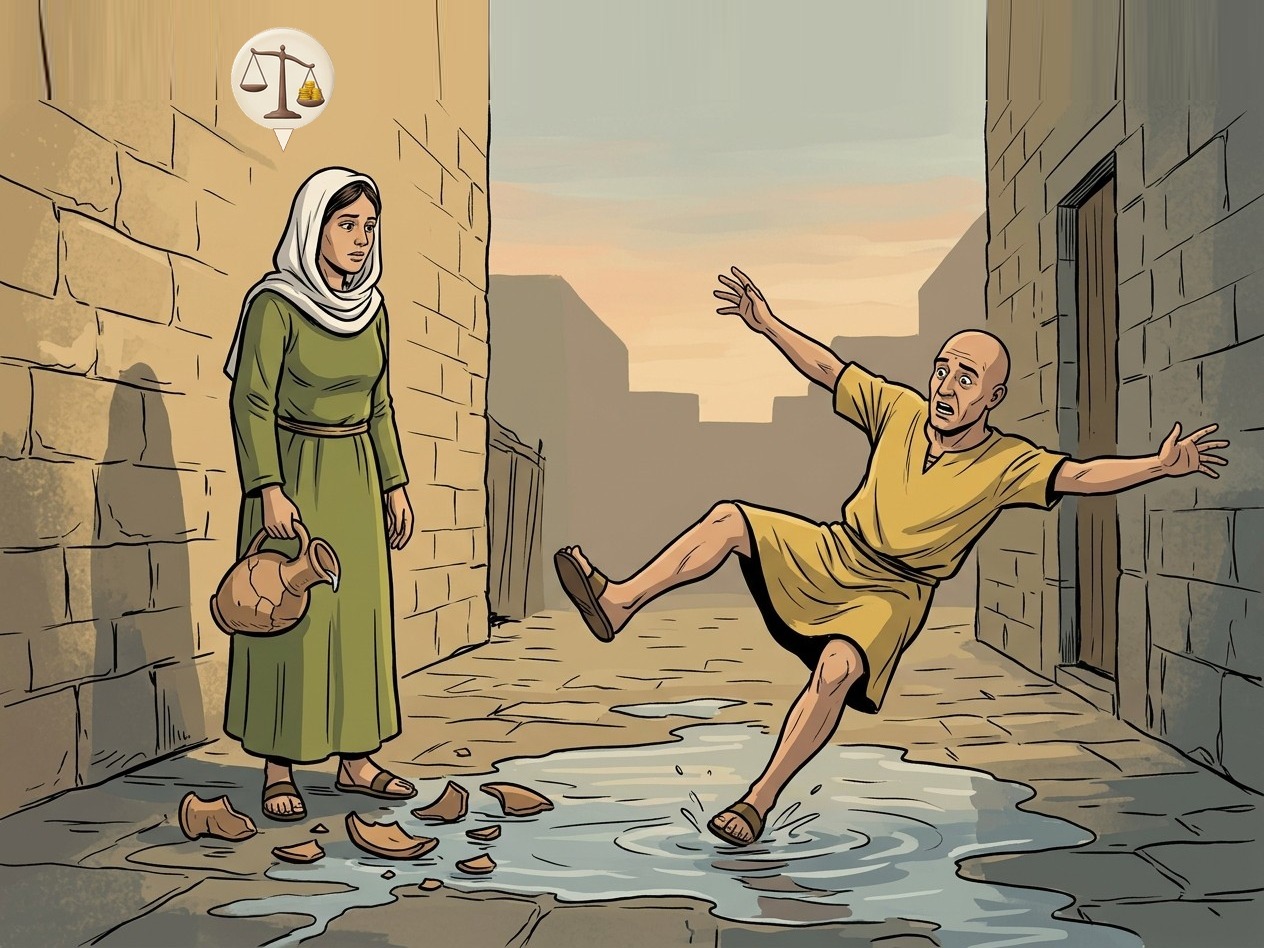
A jug that breaks in the public domain
- If a man's jug broke in the public domain, and another slipped on the water or was hurt by the potsherds, he is liable.
- Rabbi Judah: if he broke it with intention he is liable; if without intention he is not.
Kehati's notes
- The Gemara reads Rabbi Judah's "with intention" as meaning that he intended to acquire the broken pieces and the water. If he did not, it was an accident and he is exempt.
- Even if he gave up ownership of the jug, he is still liable for the injury, as with a pit. If a person fell into a pit and died the owner pays no ransom, but for an injury he pays.
המניח את הכד ברשות הרבים ובא אחר ונתקל בה ושברה פטור. ואם הוזק בה. בעל החבית חייב בנזקו.
נשברה כדו ברשות הרבים והוחלק אחד במים או שלקה בחרסיה חייב.
רבי יהודה אומר במתכוין חייב. באינו מתכוין פטור:
One who places a jug in the public domain, and another comes and stumbles on it and breaks it, is exempt. And if he incurred damage by it, the owner of the barrel is liable for his damage.
If one's jug broke in the public domain and another slipped in the water or was injured by its shards, he is liable.
Rabbi Yehuda says: If he acted with intent, he is liable; if without intent, he is exempt.
 does not pay
 pays12
 does not paypays12
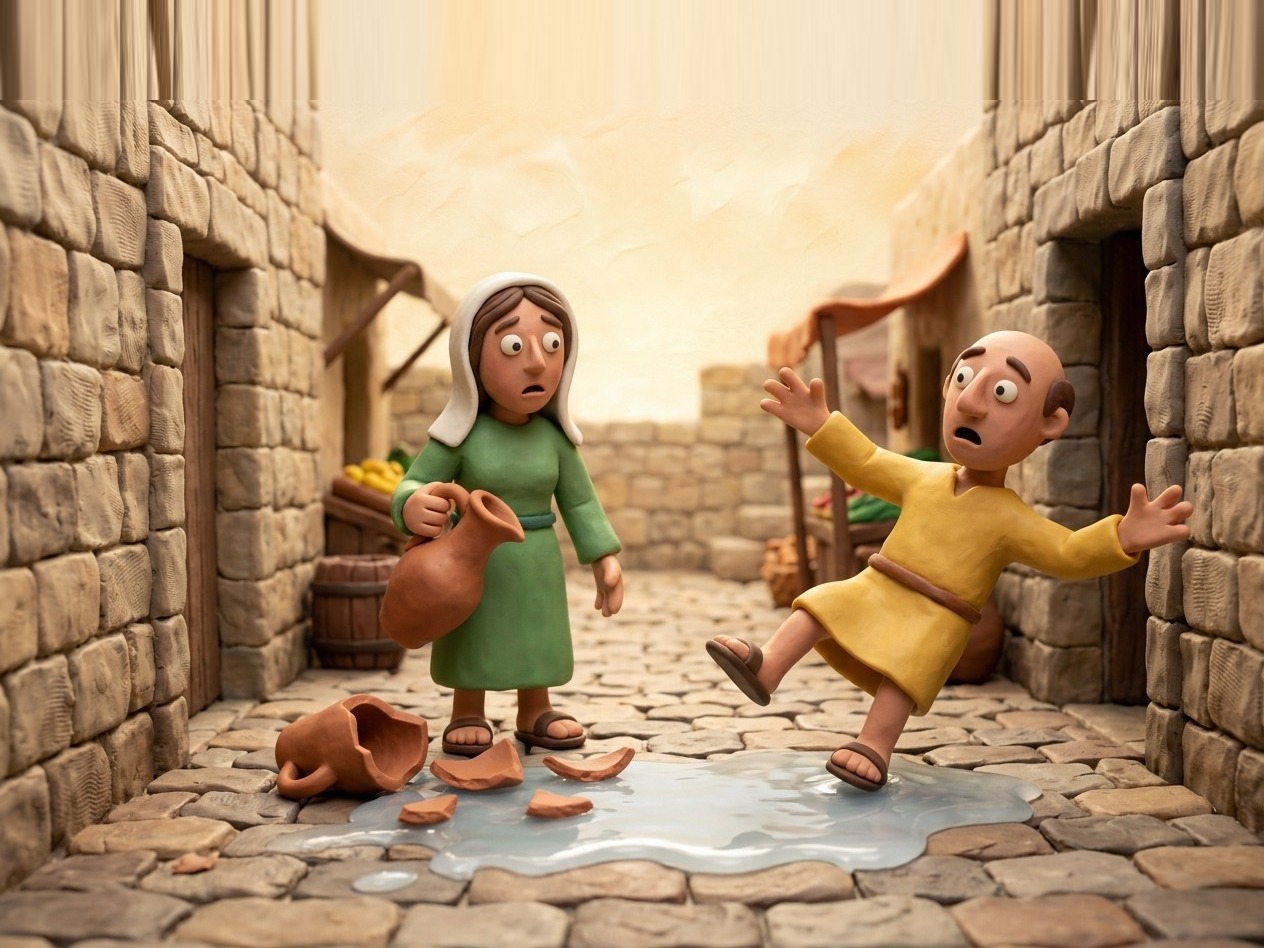 pays?
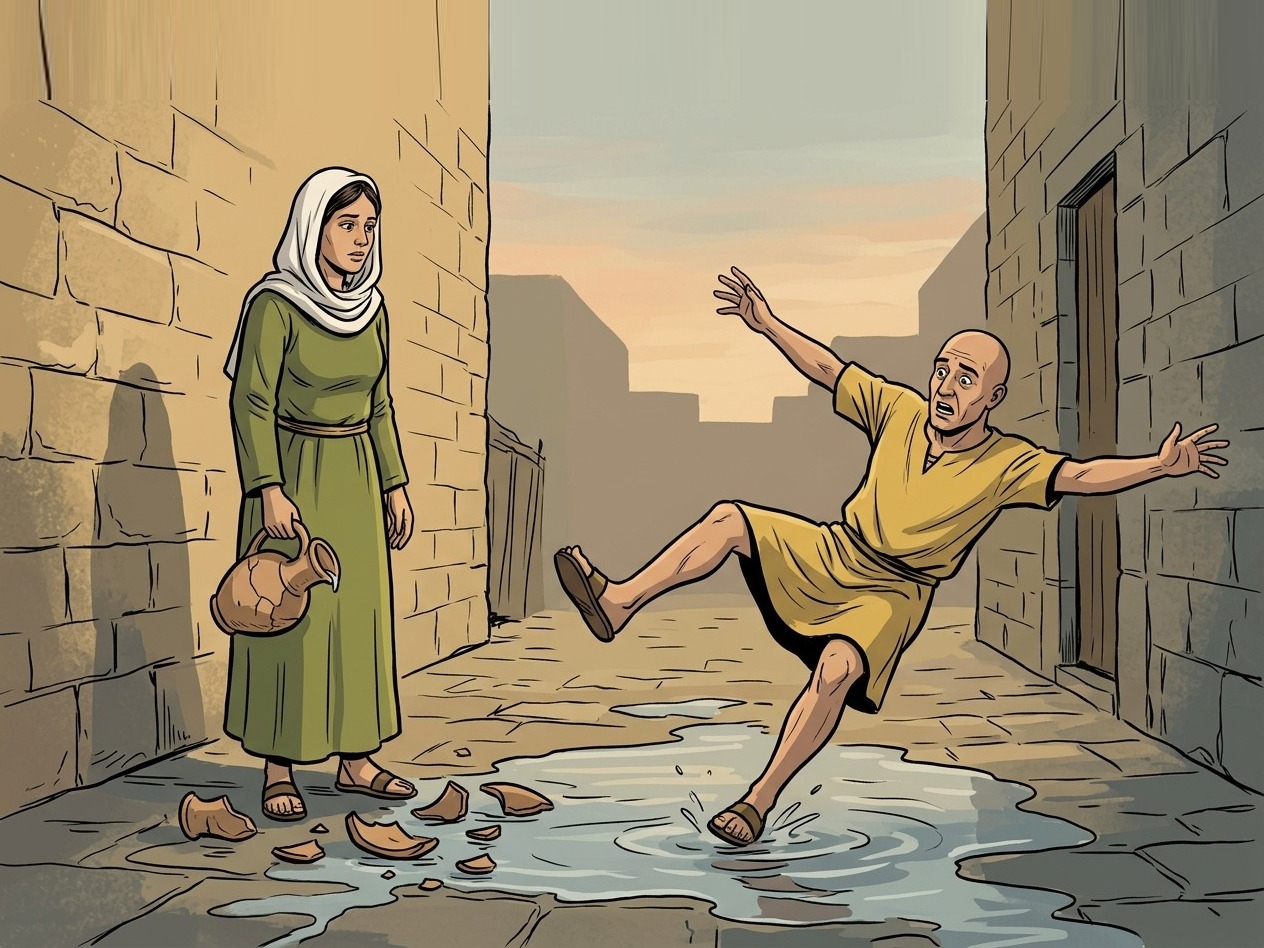 pays?
Mishnah 2: Water, thorns and glass
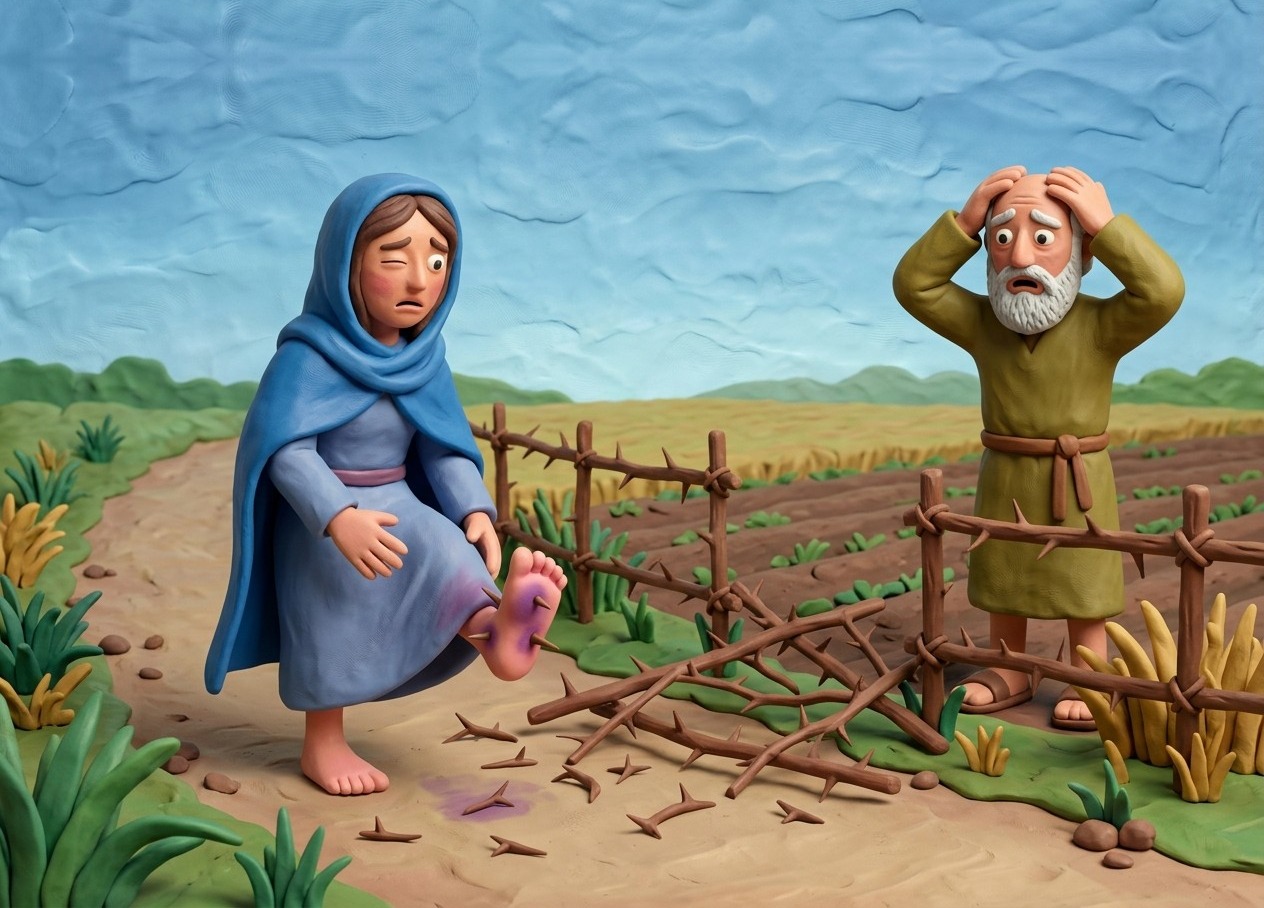
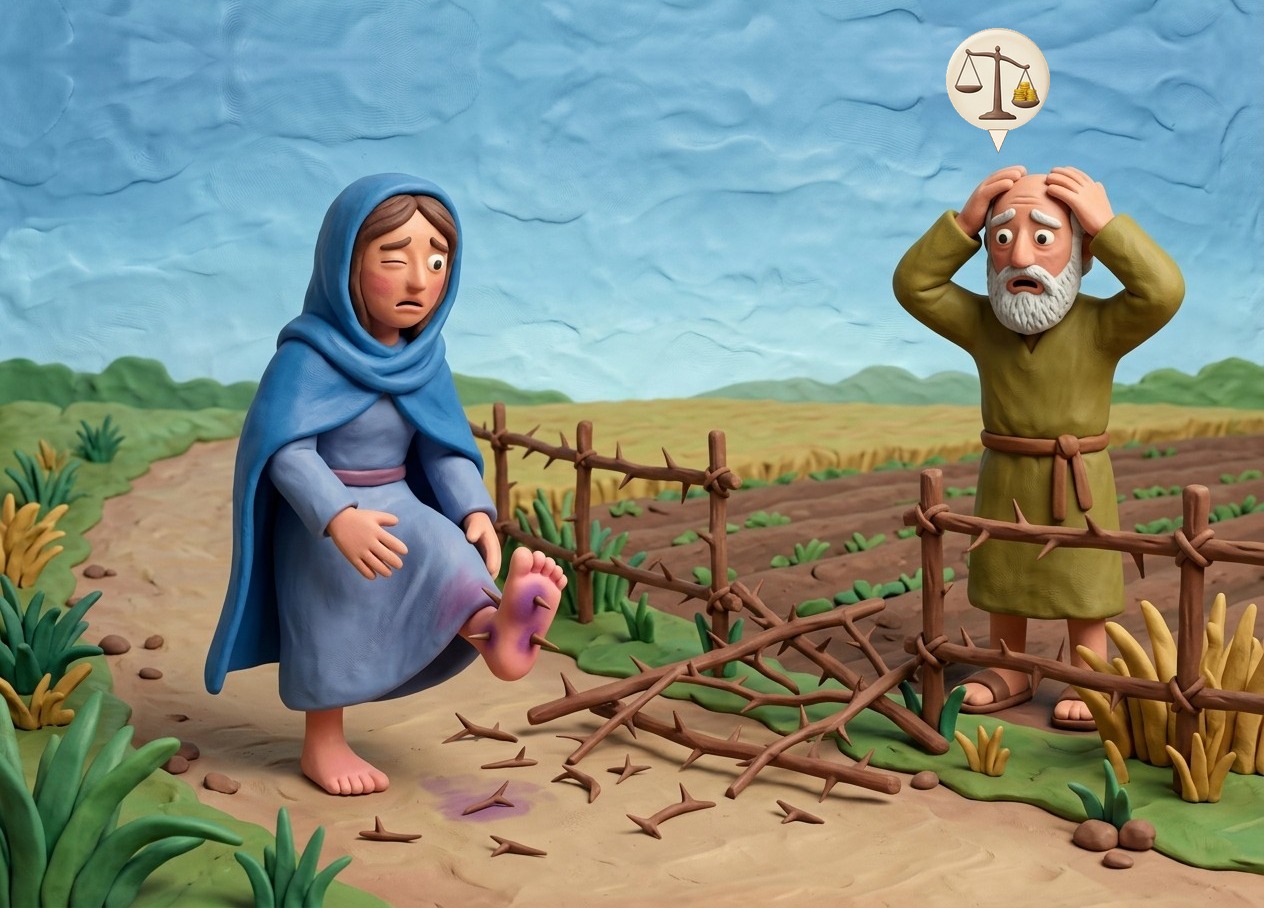
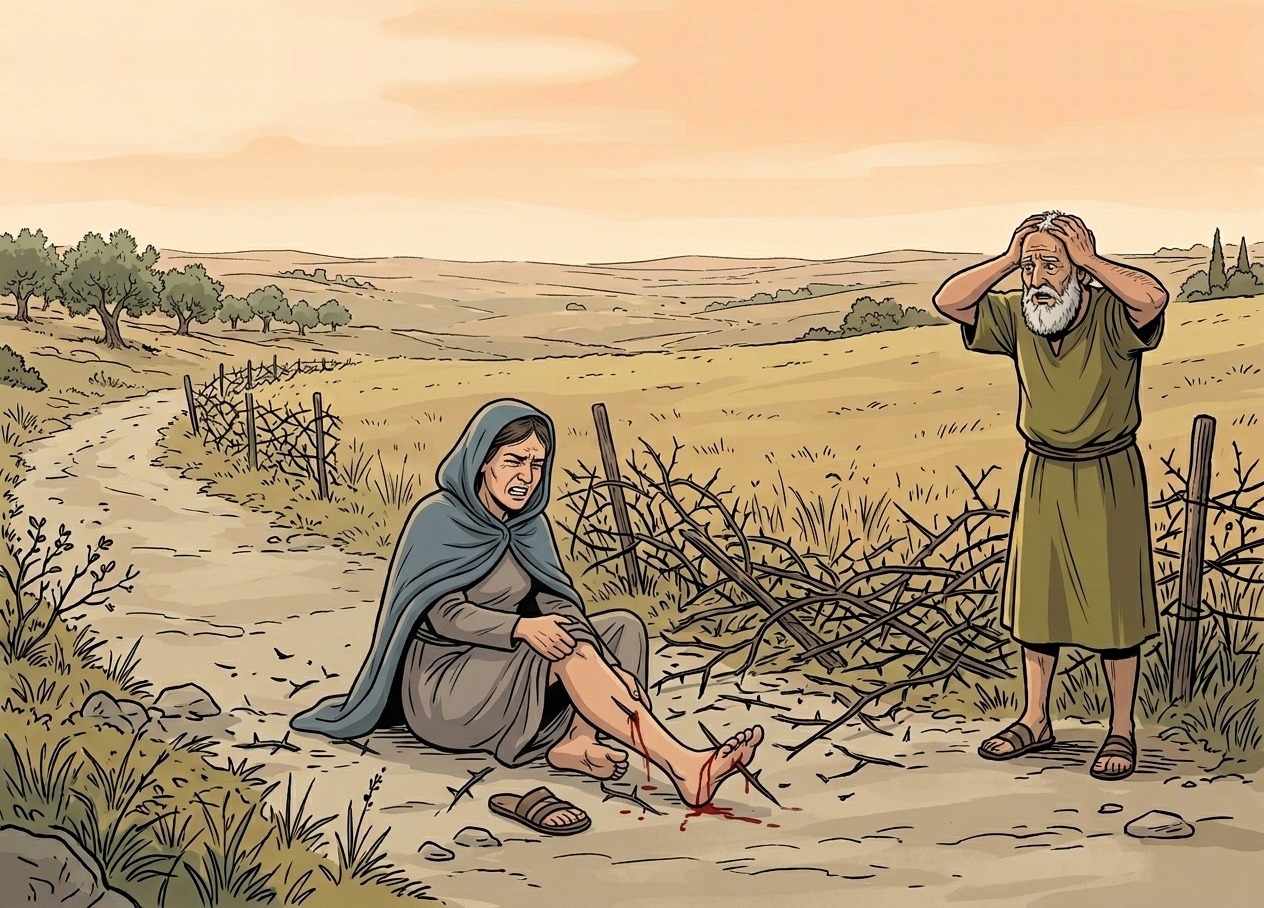
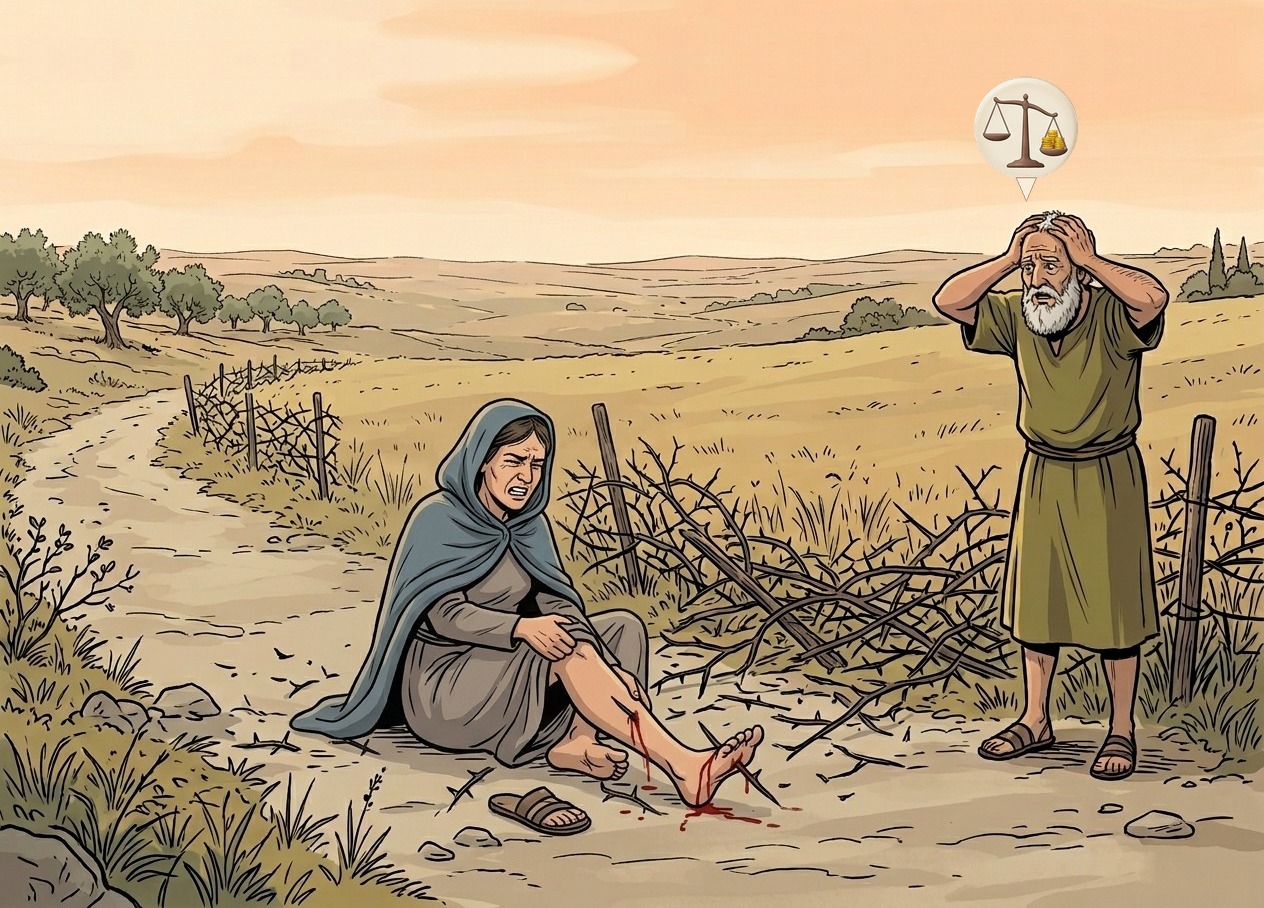
Someone who pours water into the public domain, hides thorns or glass there, or lets a thorn fence fall into it, pays for the injury.
What he is liable for
- If a man poured out water in the public domain and another was injured, he is liable for his injury.
- If he hid thorns or glass, or made his fence of thorns, or his fence fell into the public domain and others were injured, he is obligated for their injury.
Why
- These cases are treated like a pit: he left a hazard (water, thorns, glass, a fallen fence) in the public domain, and it injured someone.
Kehati's notes
- Even in the rainy season, when pouring water into the public domain is allowed, he is liable for an injury it causes.
- If he built his thorn fence inside his own property and someone was hurt by brushing against it, he is exempt, since people do not normally rub against walls.
השופך מים ברשות הרבים והוזק בהן אחר חייב בנזקו. המצניע את הקוץ ואת הזכוכית. והגודר את גדרו בקוצים. וגדר שנפל לרשות הרבים. והוזקו בהן אחרים חייב בנזקן:
One who pours water in the public domain, and another incurred damage due to it, is liable for his damage. One who conceals a thorn or glass, or one who puts up a fence of thorns, or a fence that fell into the public domain, and others incurred damage due to them, he is liable for their damage.
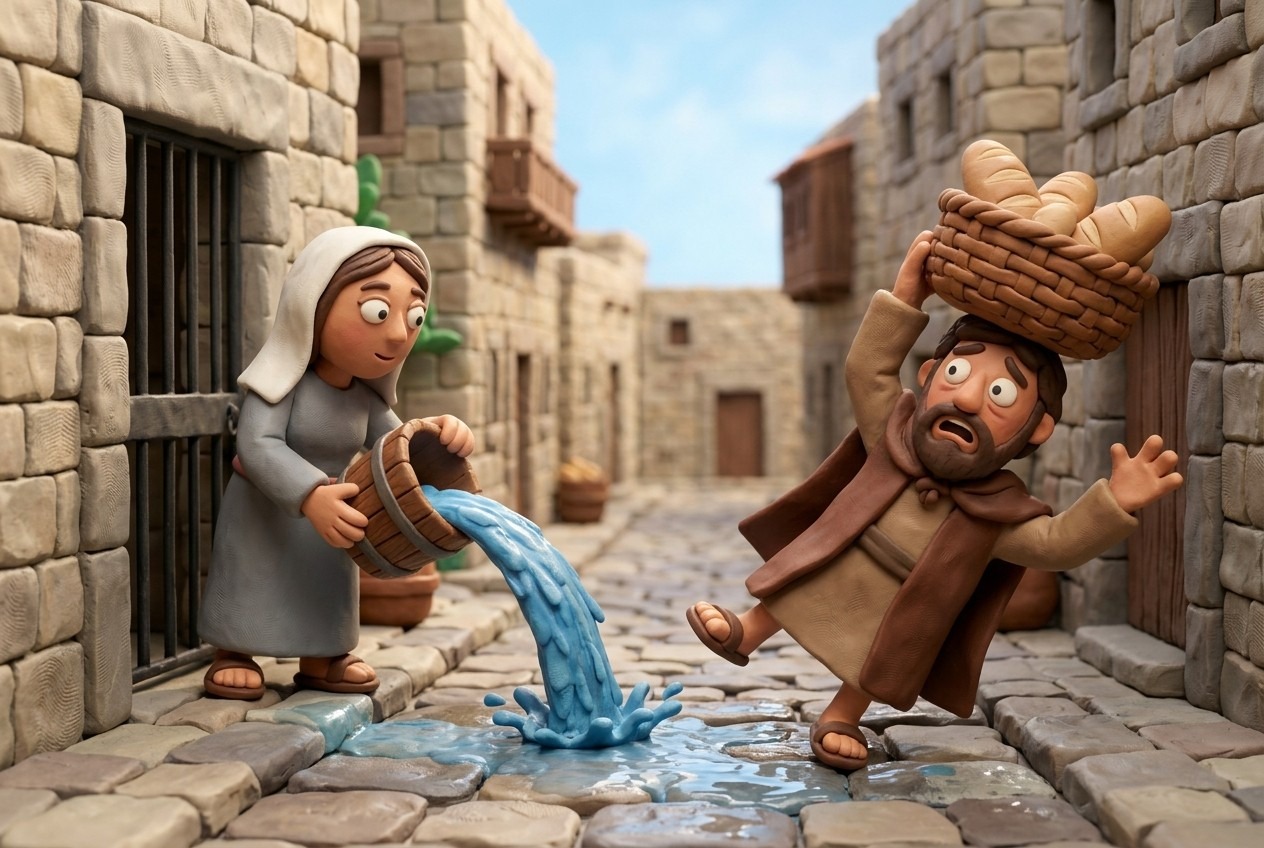 pays?
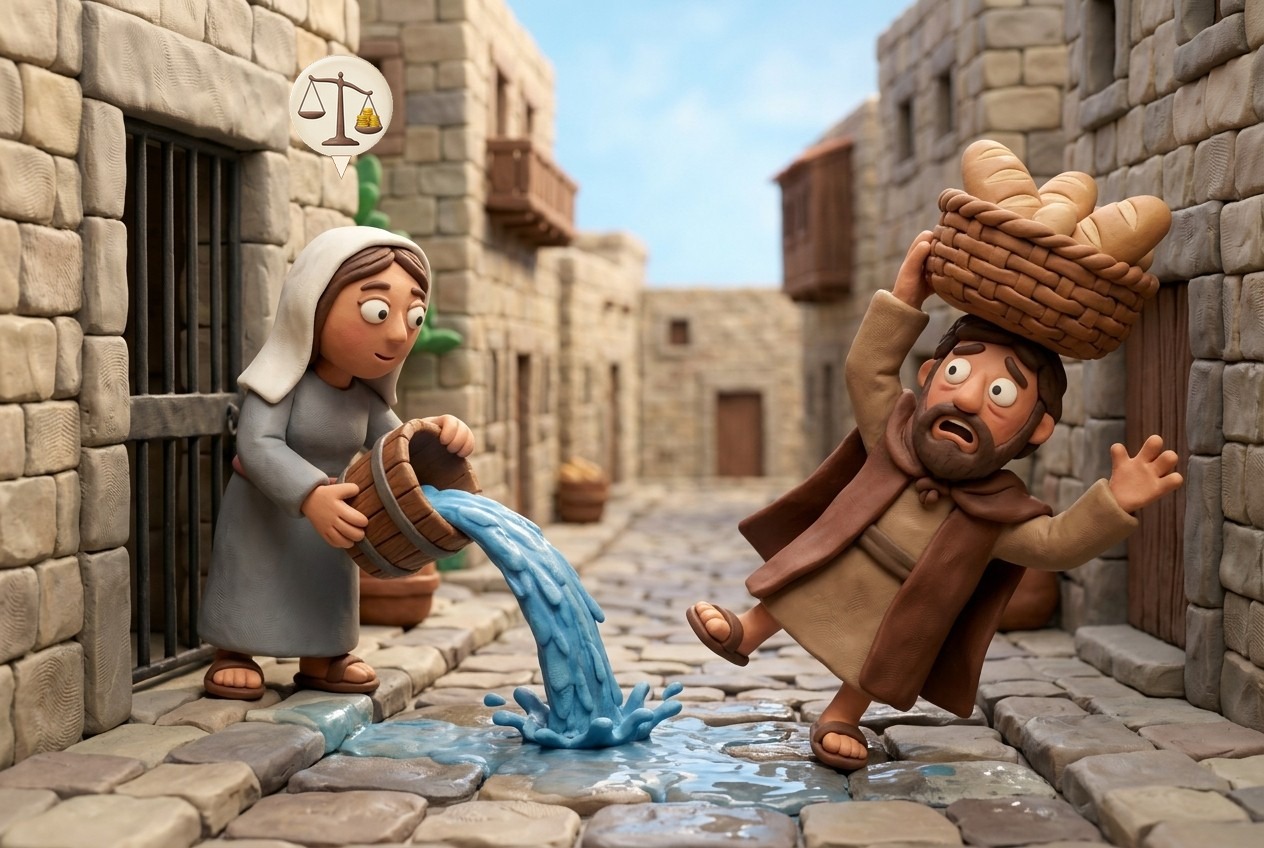
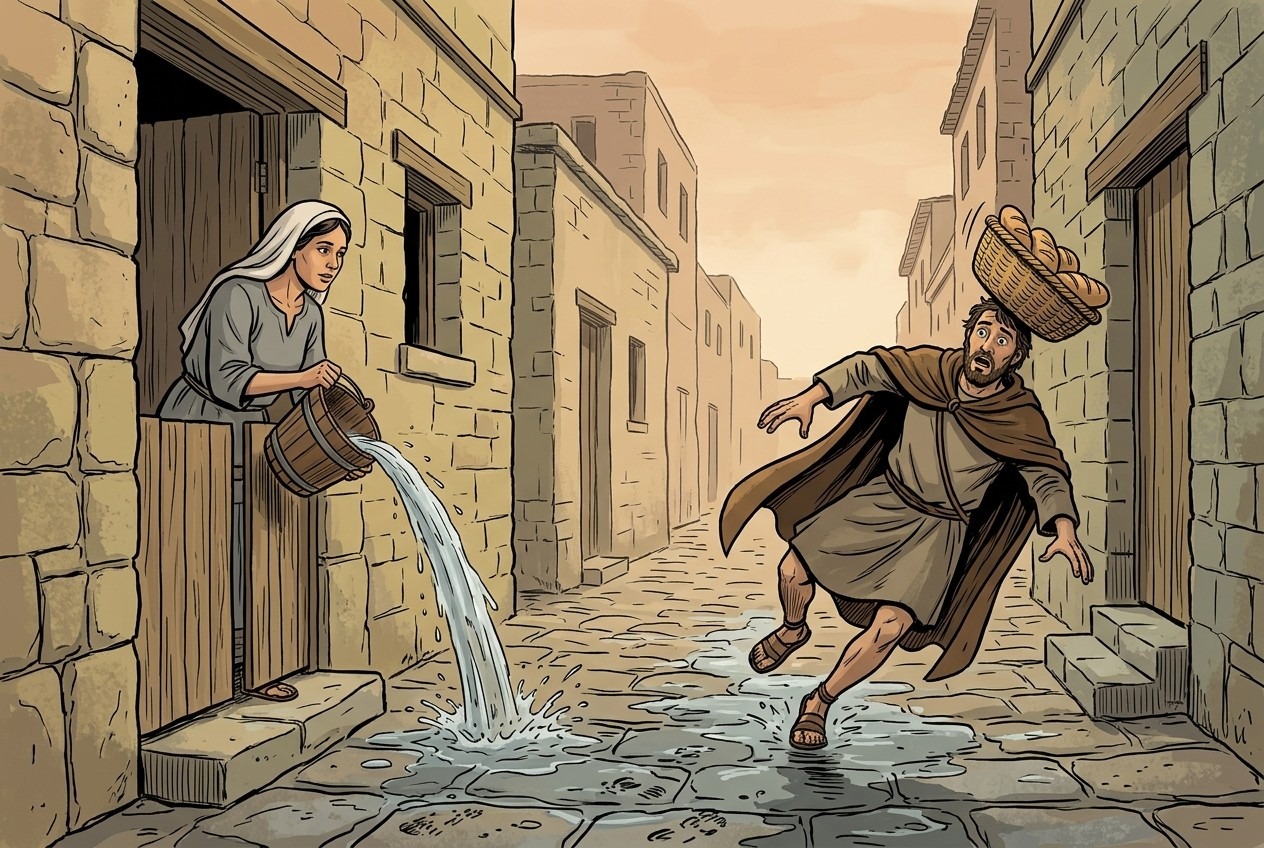 pays?
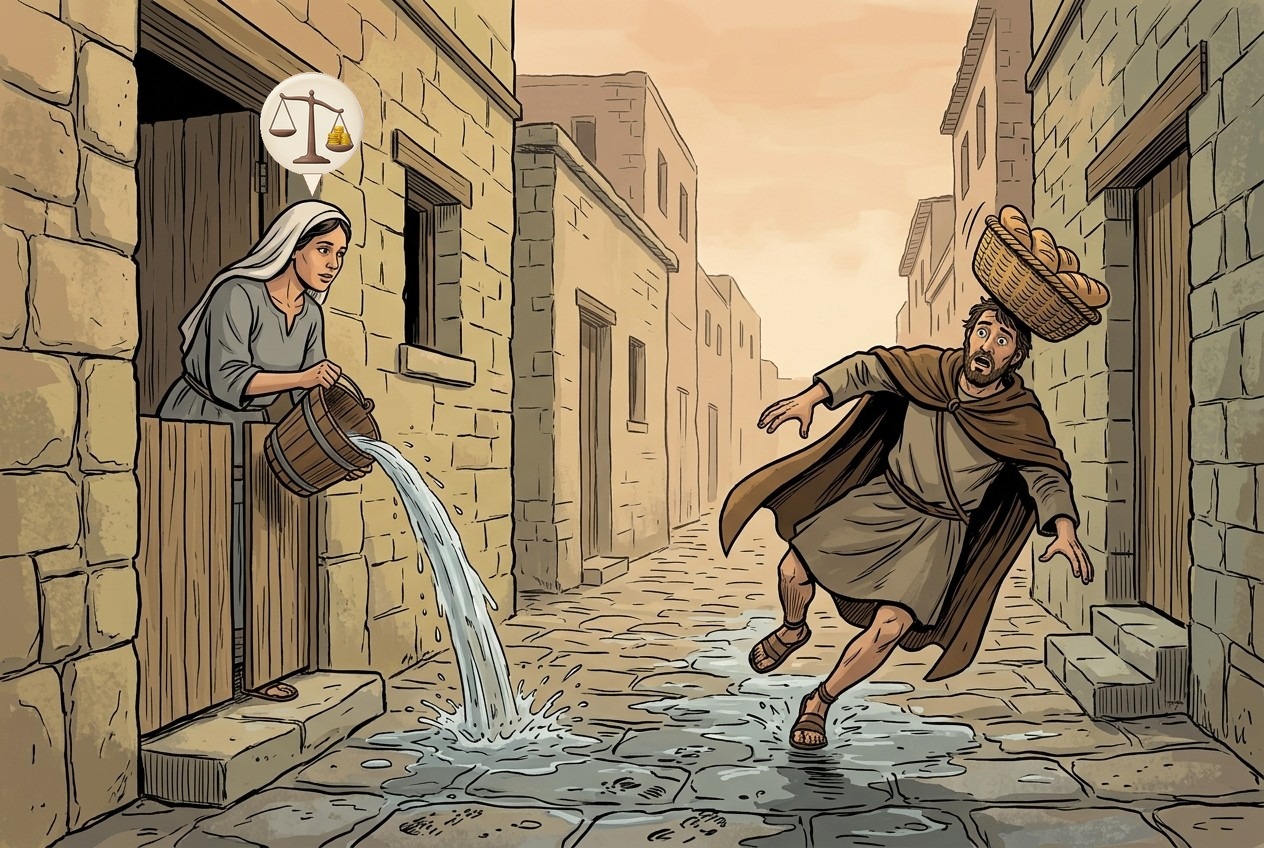
 pays?
 pays?
Mishnah 3: Straw and dung in the public domain
What a person puts out in the public domain and does damage with, anyone may take, and he still pays for the injury.
Straw and stubble
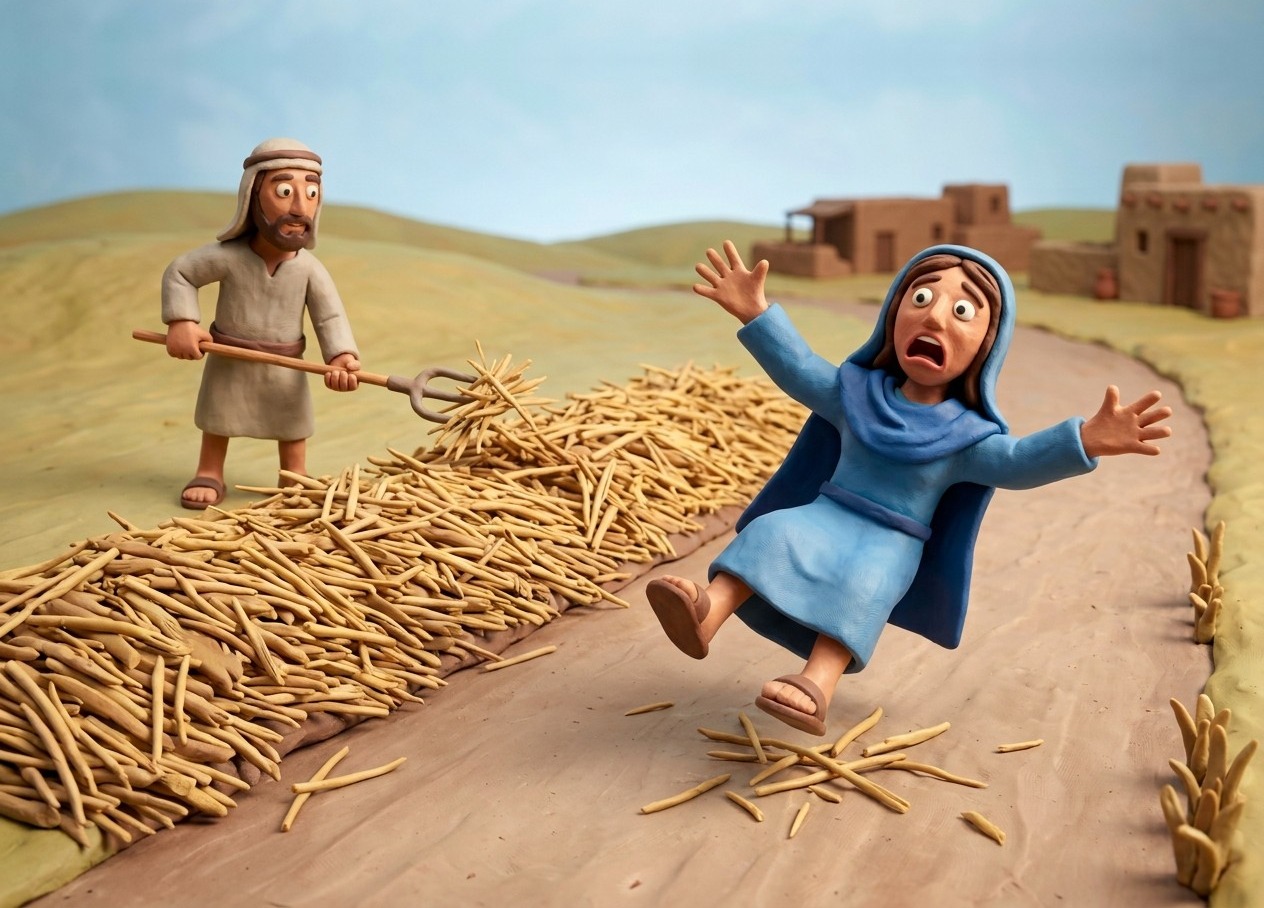
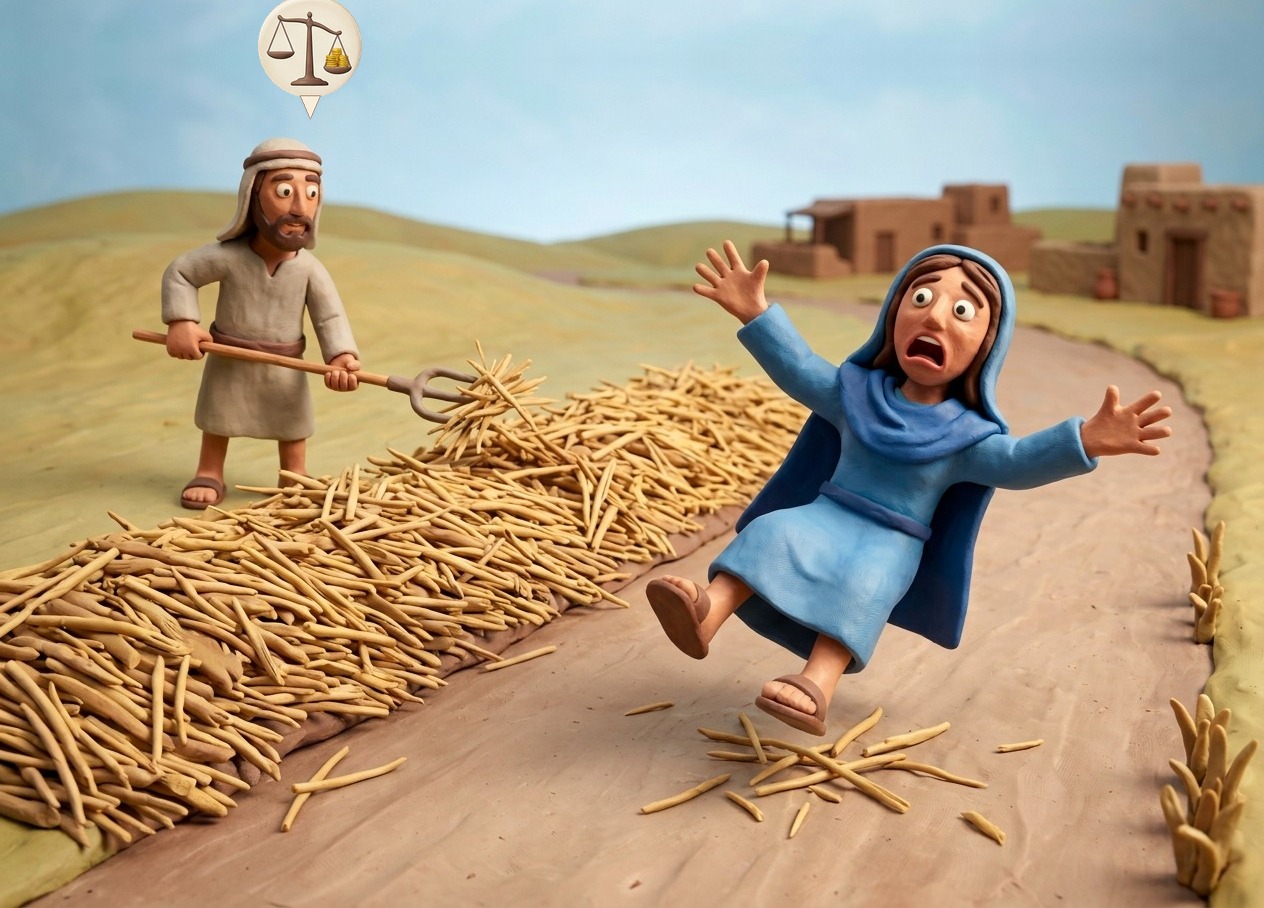
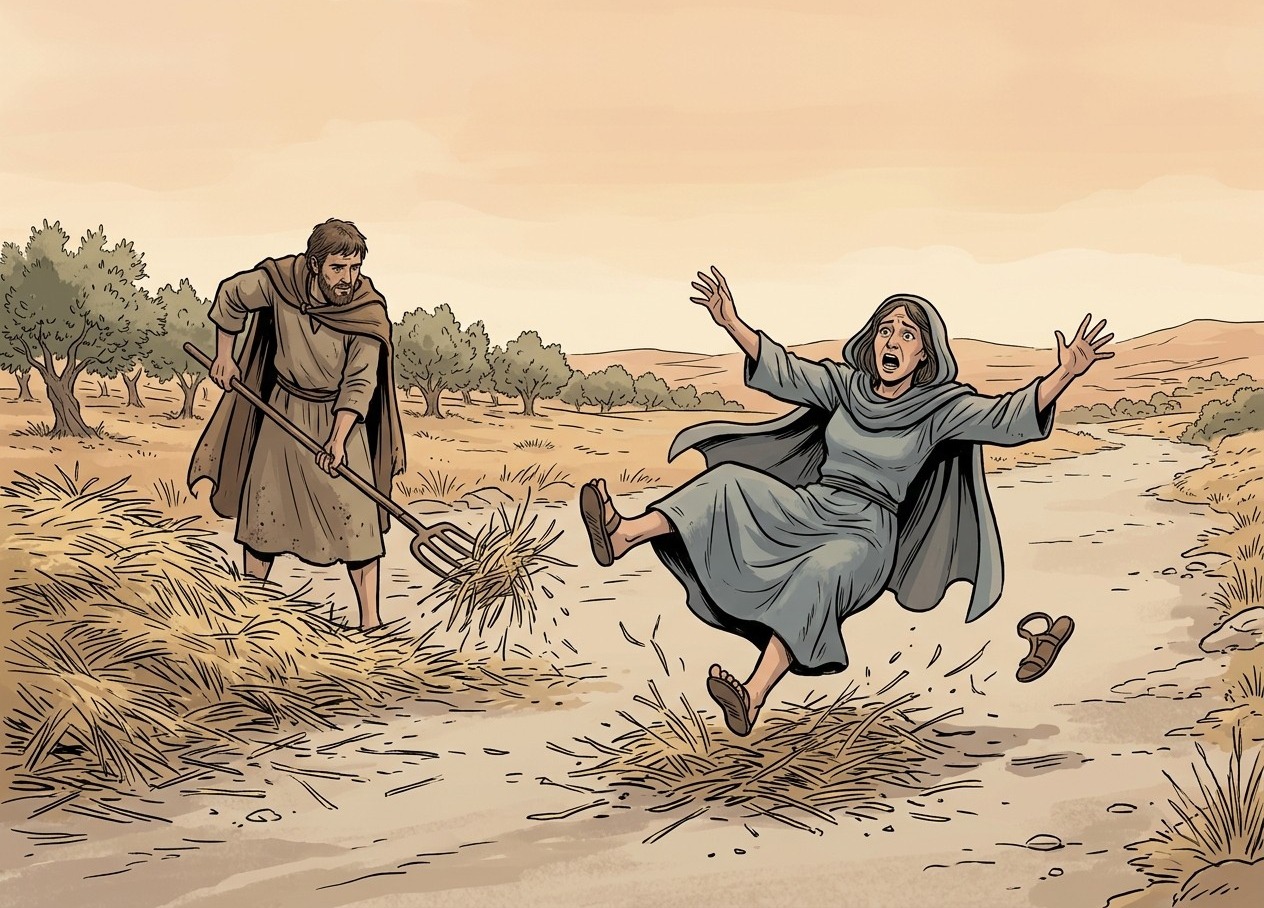
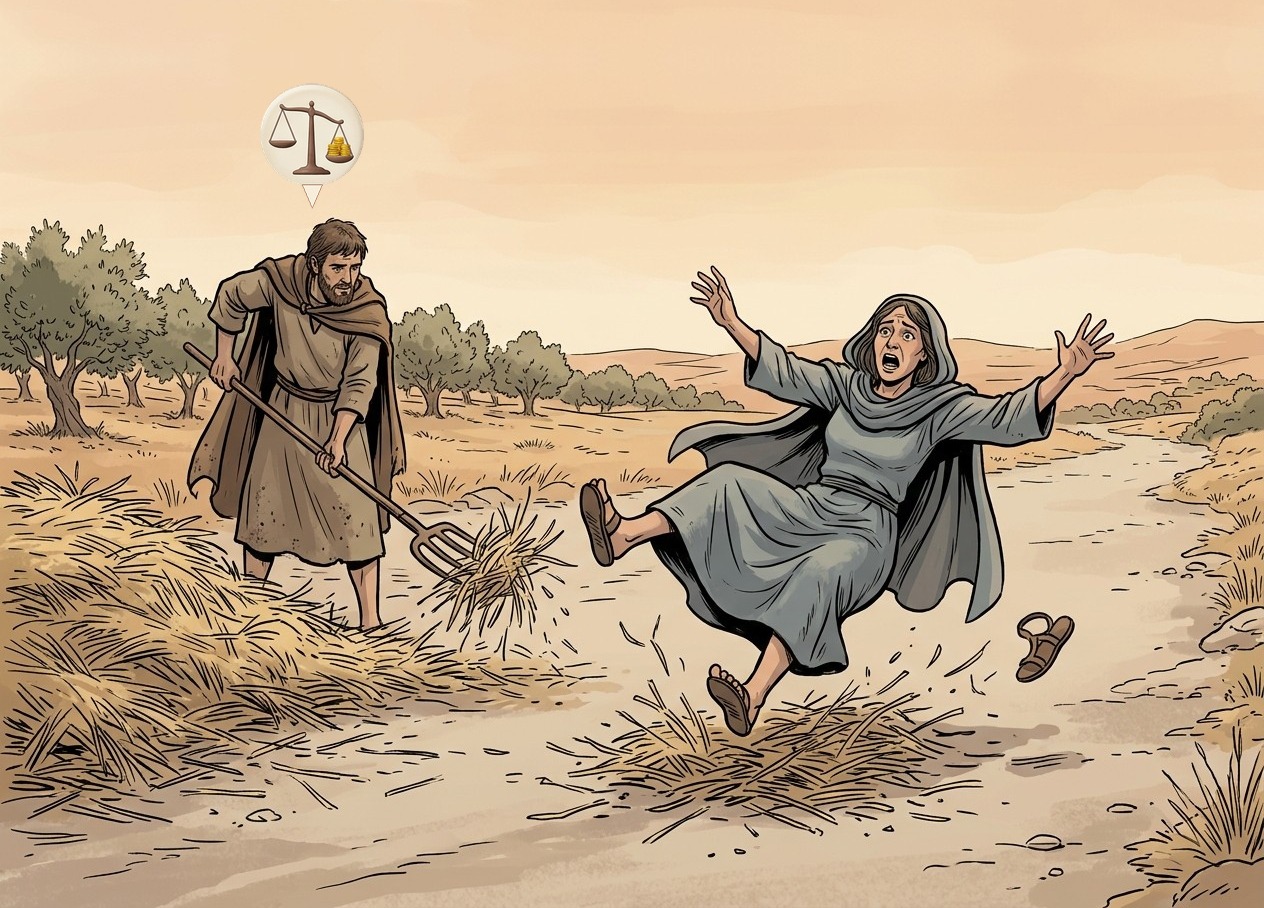
- A man put out his chopped straw and stubble in the public domain to make fertilizer and another was injured: he is liable for the injury, and whoever comes first may take possession of them.
- Rabban Shimon ben Gamliel: all who obstruct the public domain and cause damage must pay for it, and whoever takes the objects first acquires them.
Cattle dung
- If a man turned over a piece of cattle dung in the public domain and another was injured, he is liable.
- The dung is ownerless, and by turning it over in order to take it, he became its owner, so he is liable for the injury it causes.
Kehati's notes
- The Rabbis made the straw ownerless as a fine, so that he would not spoil the public domain.
- Rabban Shimon ben Gamliel's "all who spoil the public domain" includes even those who put things out with permission, such as dung put out for the permitted time.
המוציא את תבנו ואת קשו לרשות הרבים לזבלים. והוזק בהן אחר. חייב בנזקו. וכל הקודם בהן זכה.
רבן שמעון בן גמליאל אומר כל המקלקלין ברשות הרבים והזיקו. חייבין לשלם. וכל הקודם בהן זכה.
ההופך את הגלל ברשות הרבים והוזק בהן אחר חייב בנזקו:
One who takes out his straw and his hay to the public domain for fertilizer, and another incurred damage due to them, is liable for his damage, and whoever takes possession of them first acquires them.
Rabban Shimon ben Gamliel says: Anyone who places obstacles in the public domain and they cause damage is liable to pay, and whoever takes possession of them first acquires them.
One who turns over dung in the public domain, and another incurred damage due to it, is liable for his damage.
 pays?
 pays?
Mishnah 4: Two pot-sellers
If one pot-seller stumbles and the one behind falls on him, the first pays for the injury he caused, if he could have got up in time.
The case
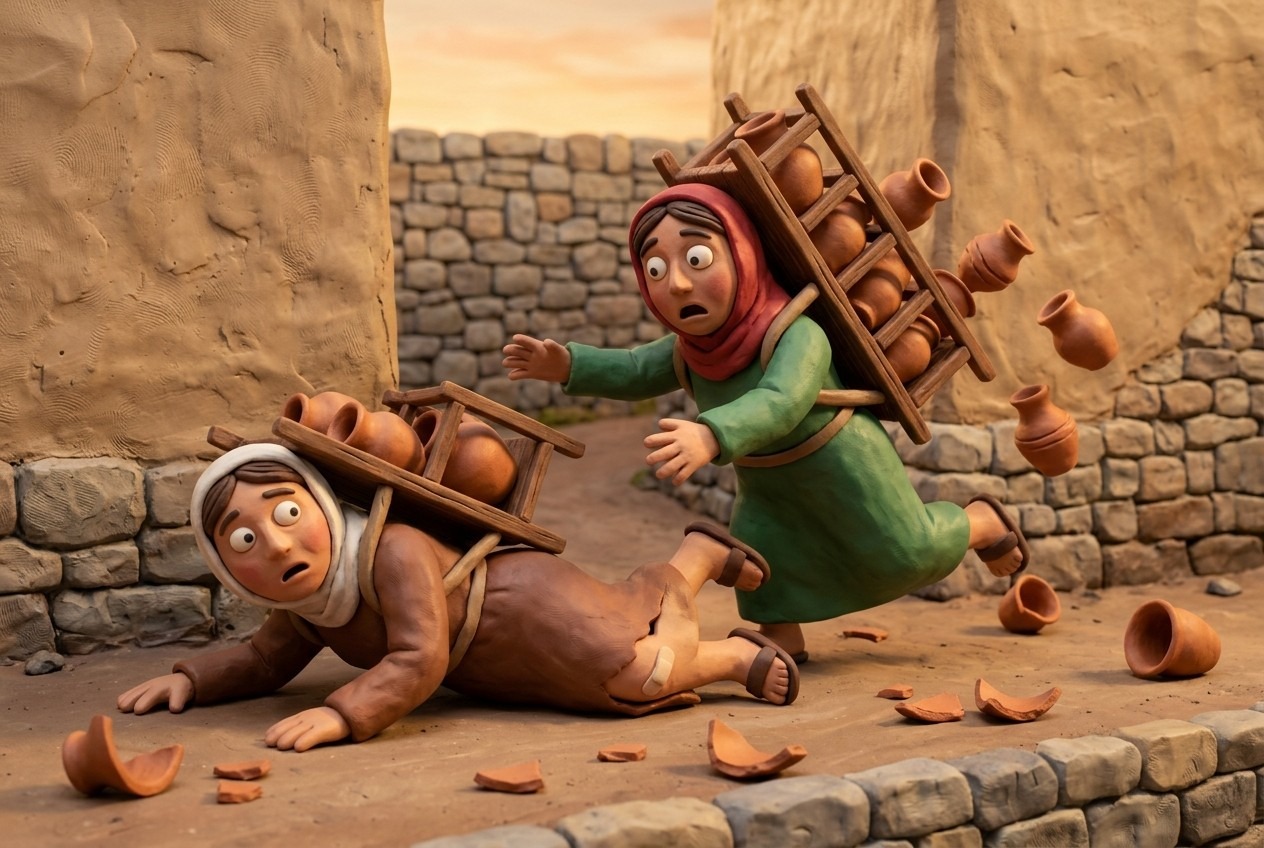
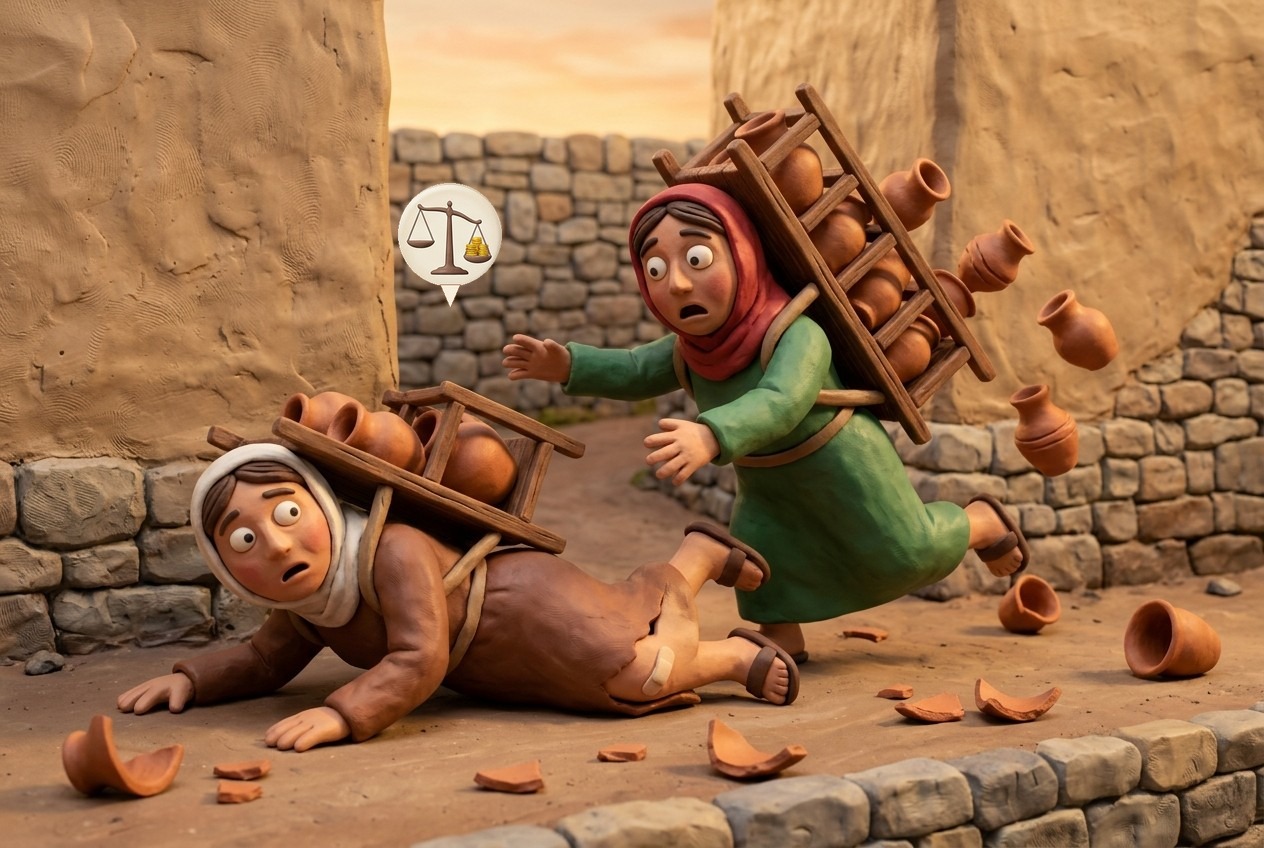
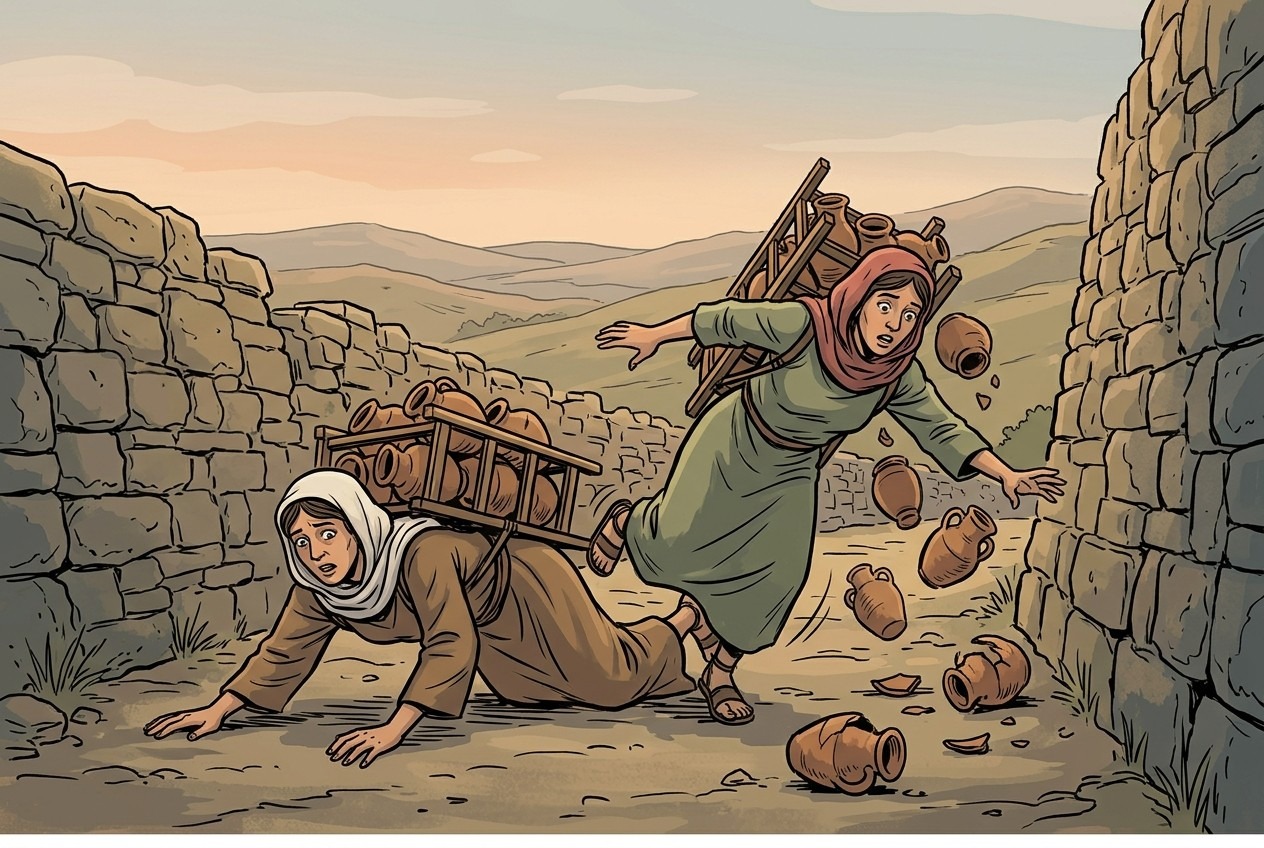
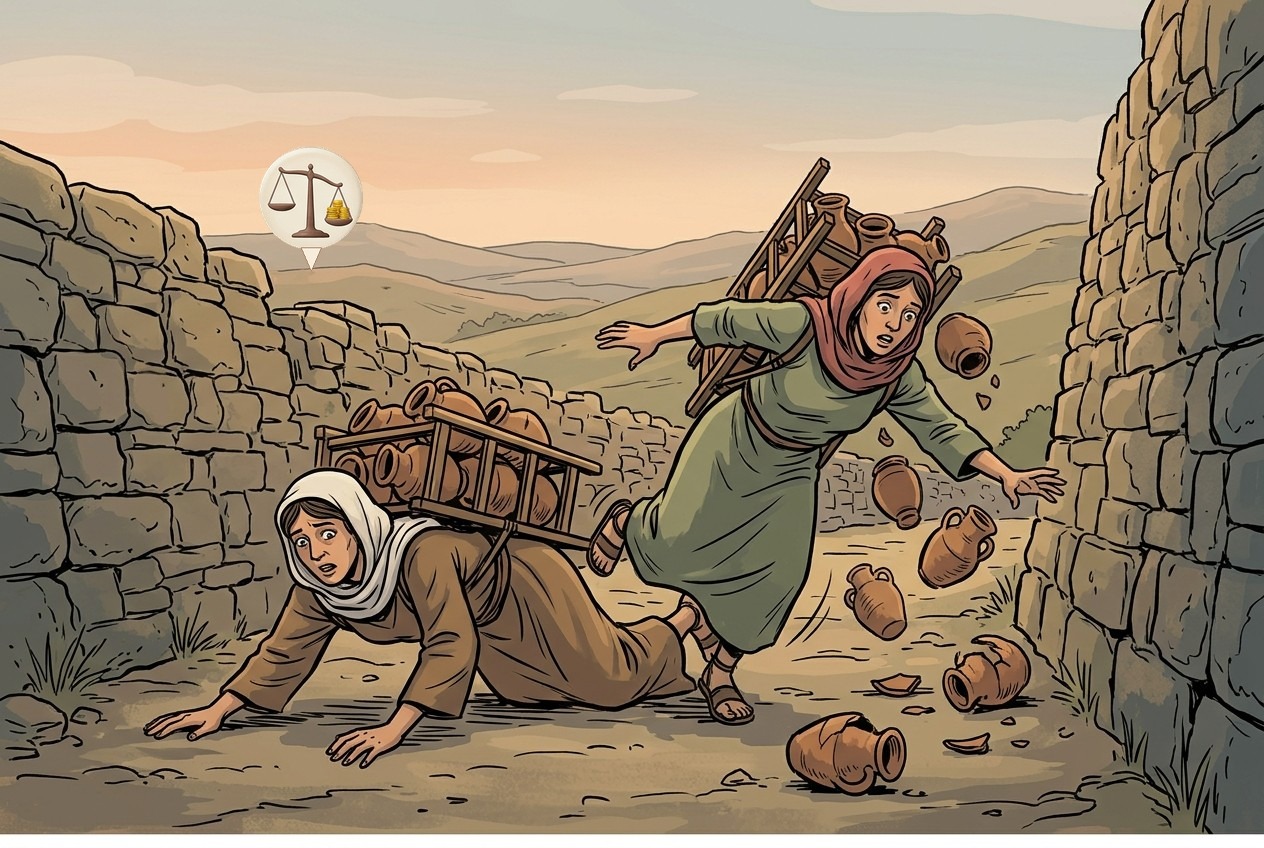
- Two pot-sellers were walking one behind the other, the first stumbled and fell, and the second fell on the first: the first is liable for the injury to the second.
- He is liable if he could have got up before the second tripped over him, since then he should have been more careful. If he could not get up in time, it was an accident and he is exempt.
Kehati's notes
- Rav Nachman bar Yitzchak holds the first is liable even if he could not get up, if he could have warned the one behind.
- He pays only for bodily injury to the second. If only her vessels were damaged he is exempt, since this is like the damage of a pit, and a pit does not make one liable for vessels.
Halakha
- The first is liable only if he could have got up before the second tripped over him. Rif and Rambam rule this way.
שני קדרין שהיו מהלכין זה אחר זה. ונתקל הראשון ונפל. ונתקל השני בראשון. הראשון חייב בנזקי שני:
Two potters who were walking one after the other, and the first stumbled and fell, and the second stumbled over the first, the first is liable for the damage of the second.
 pays?
 pays?
Mishnah 5: A jar and a beam
In the public domain each has the right to walk. Who pays when the beam breaks the jar depends on who was in front, and on a sudden stop or a warning.
Side by side
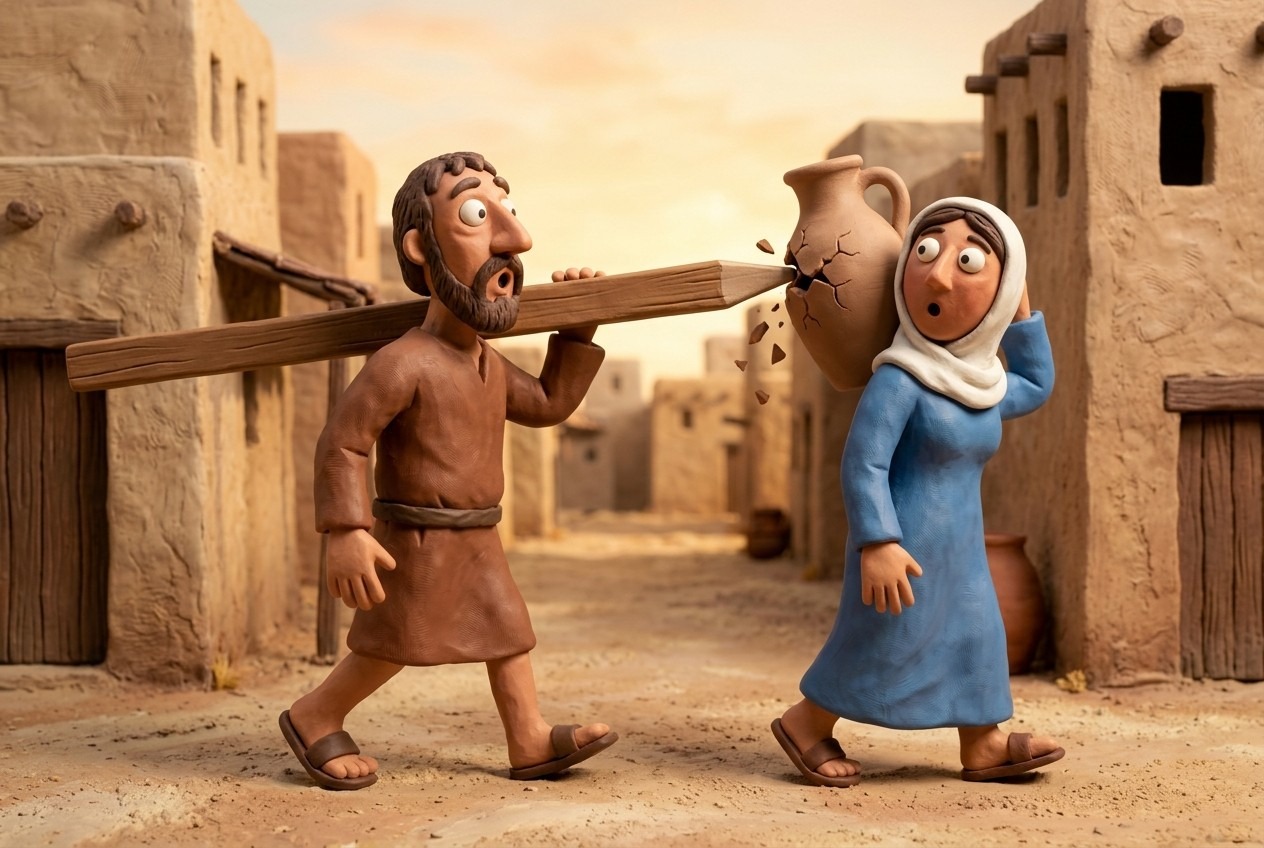
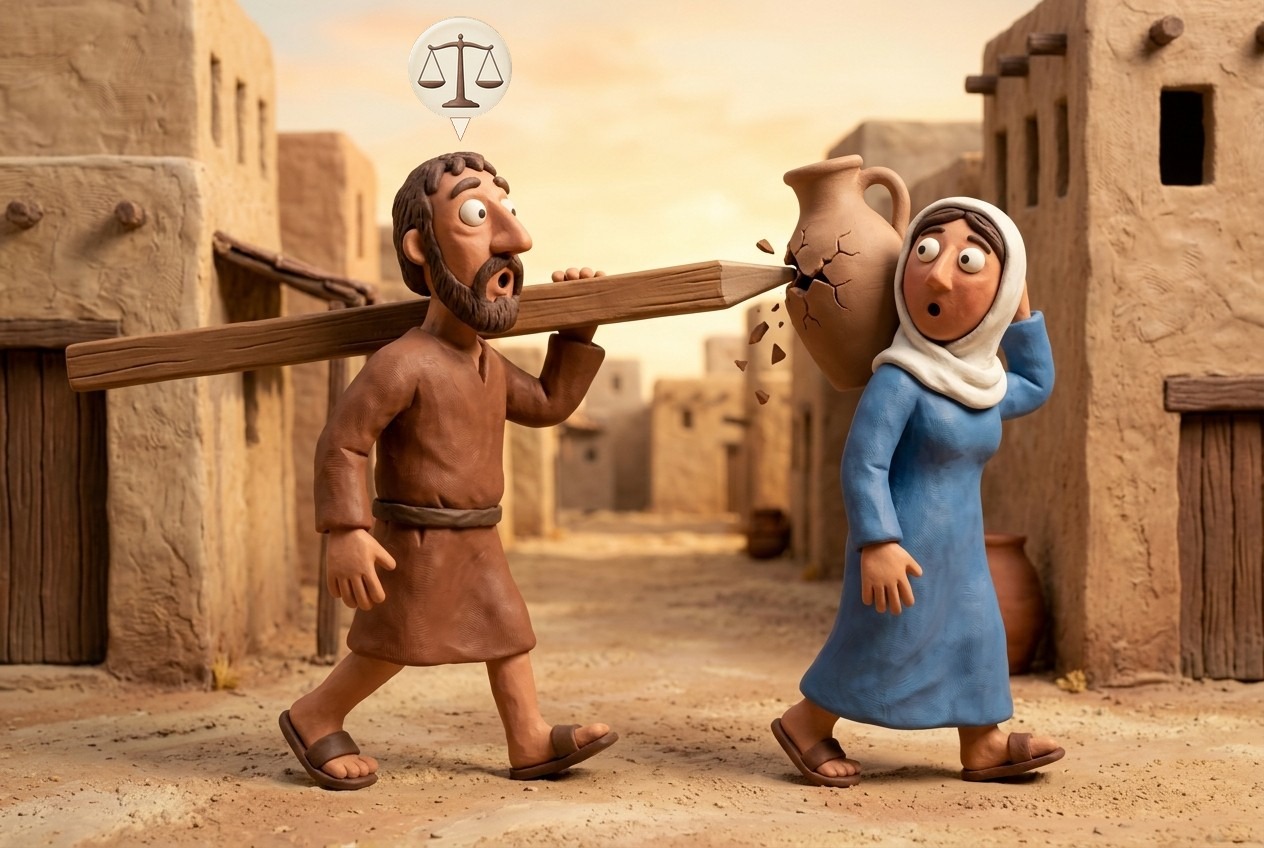
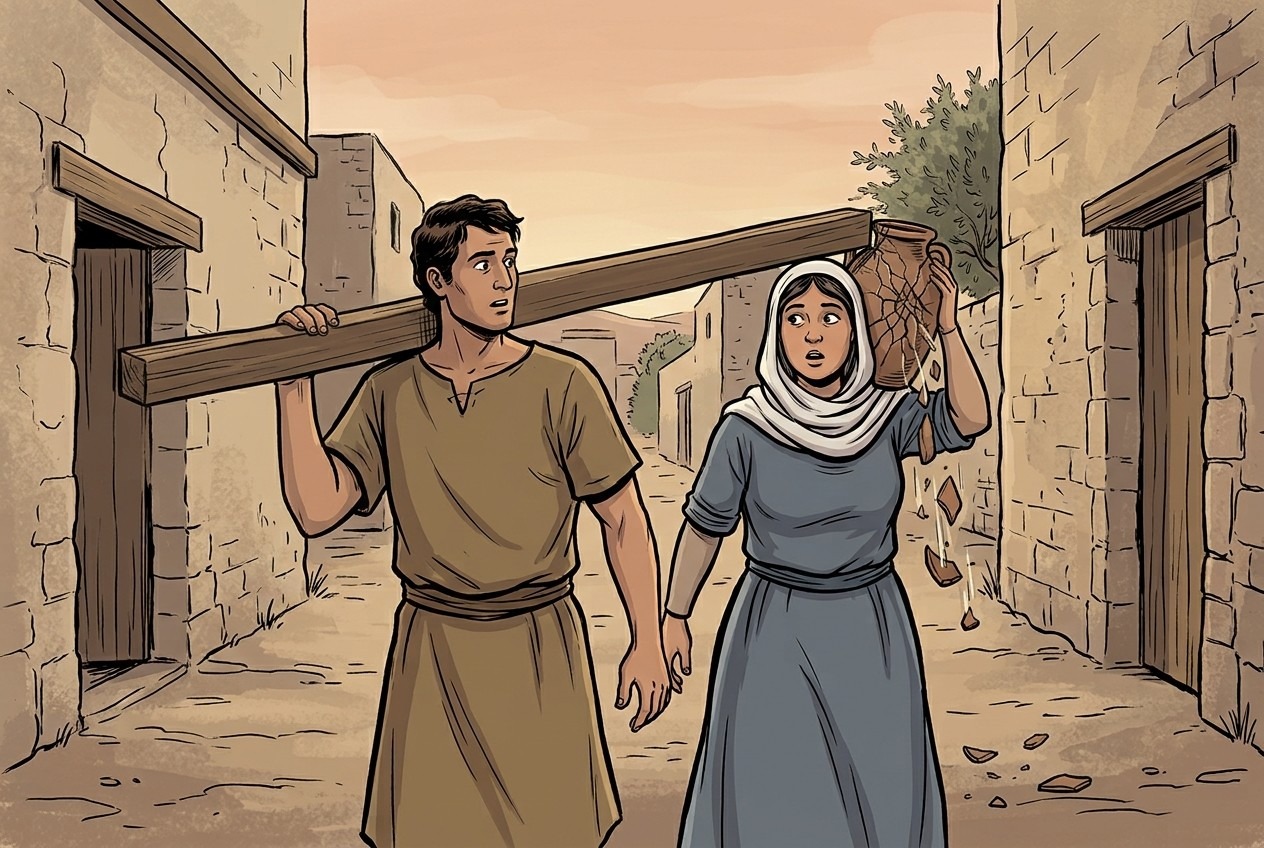
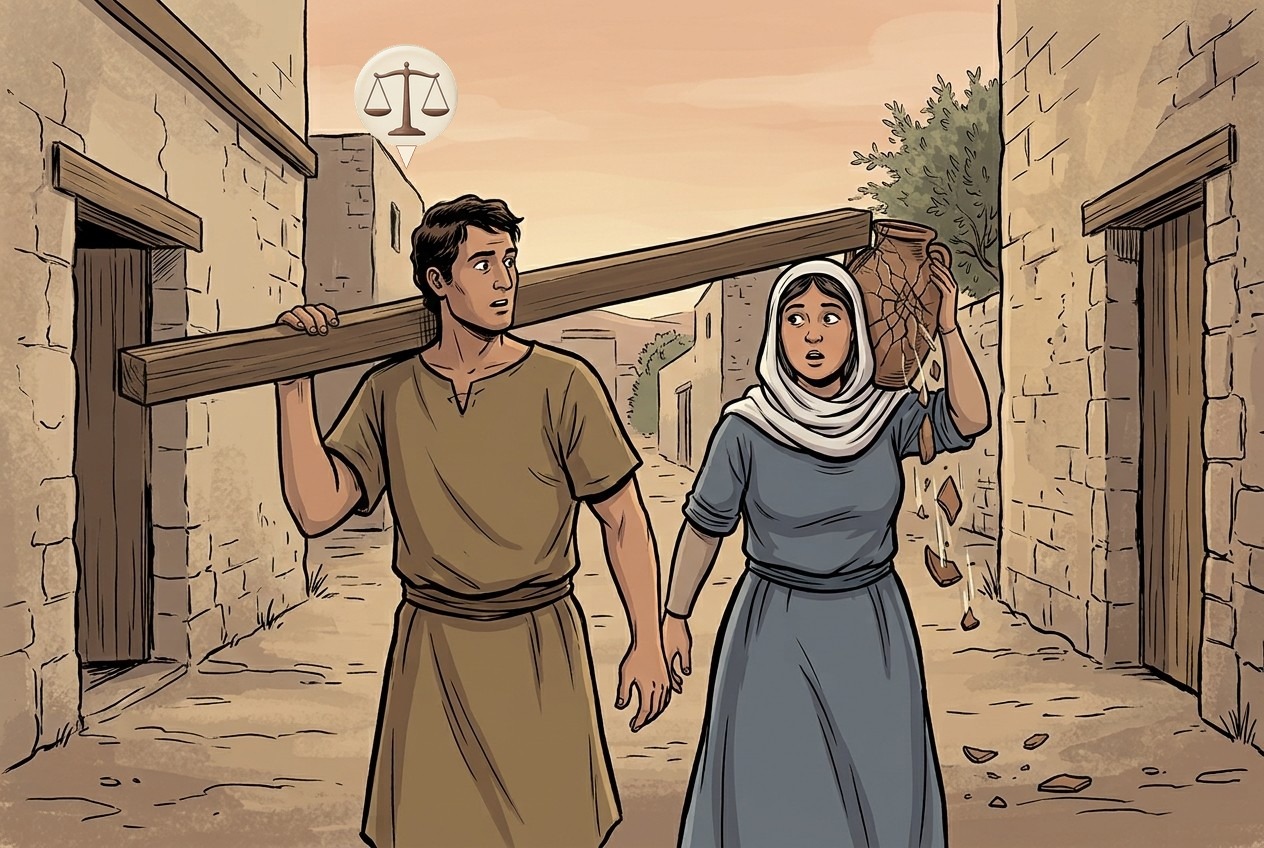
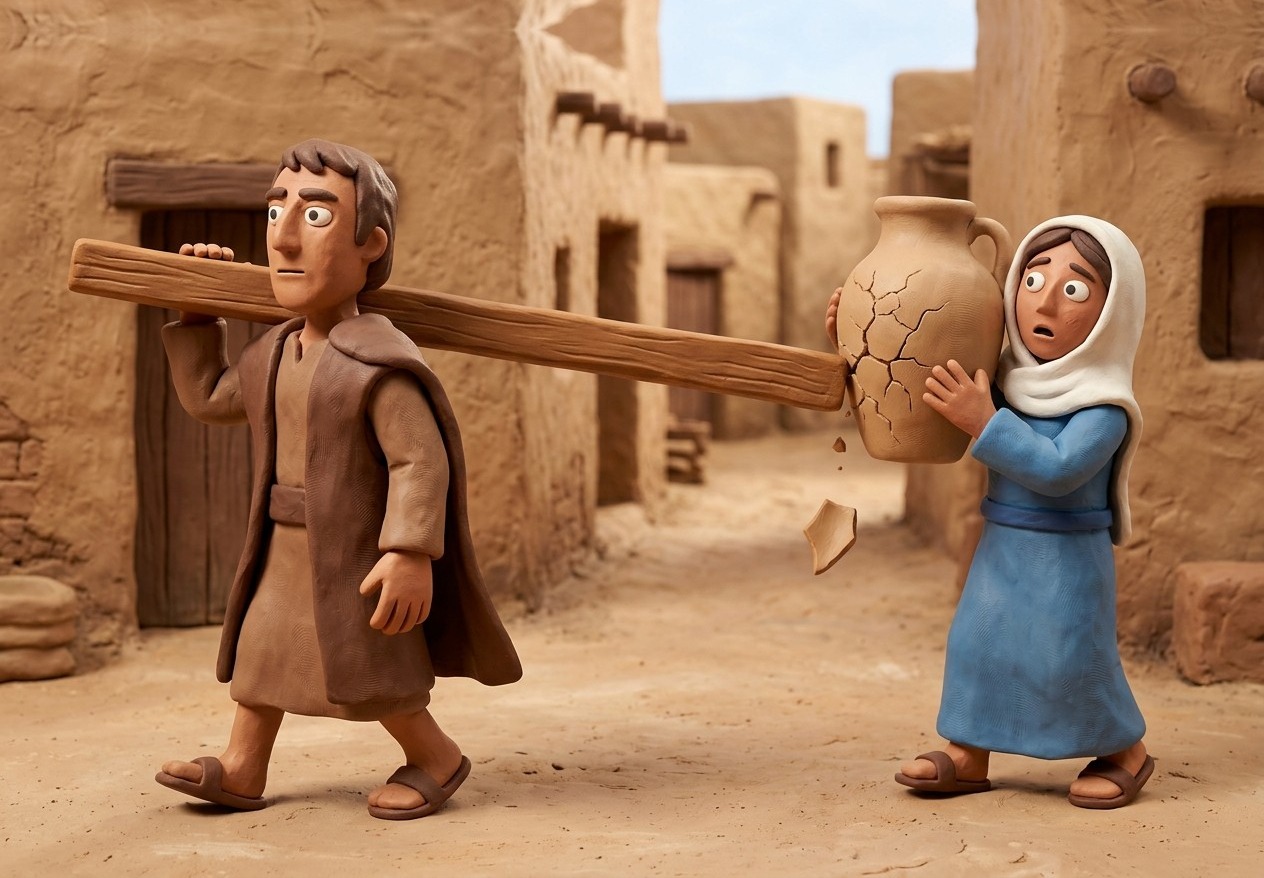
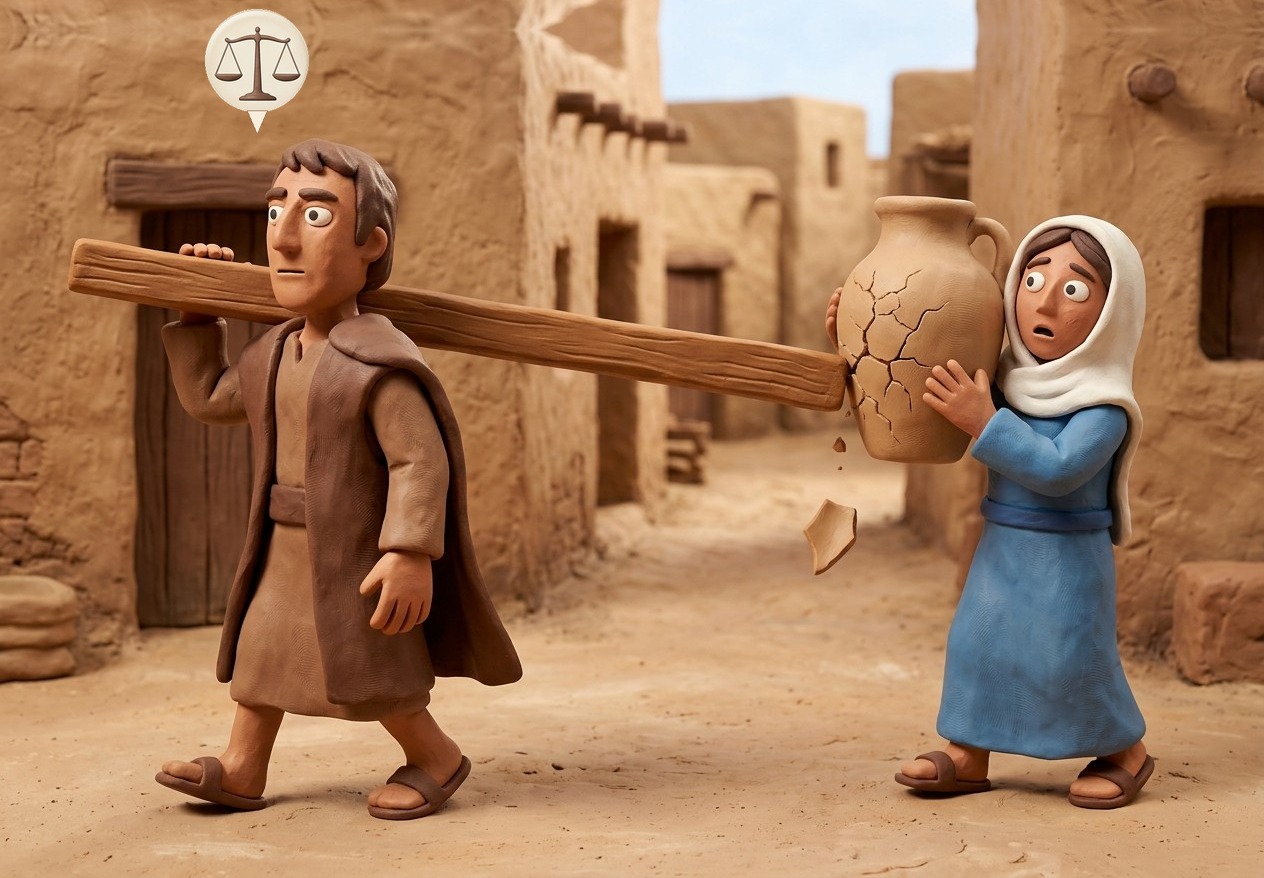
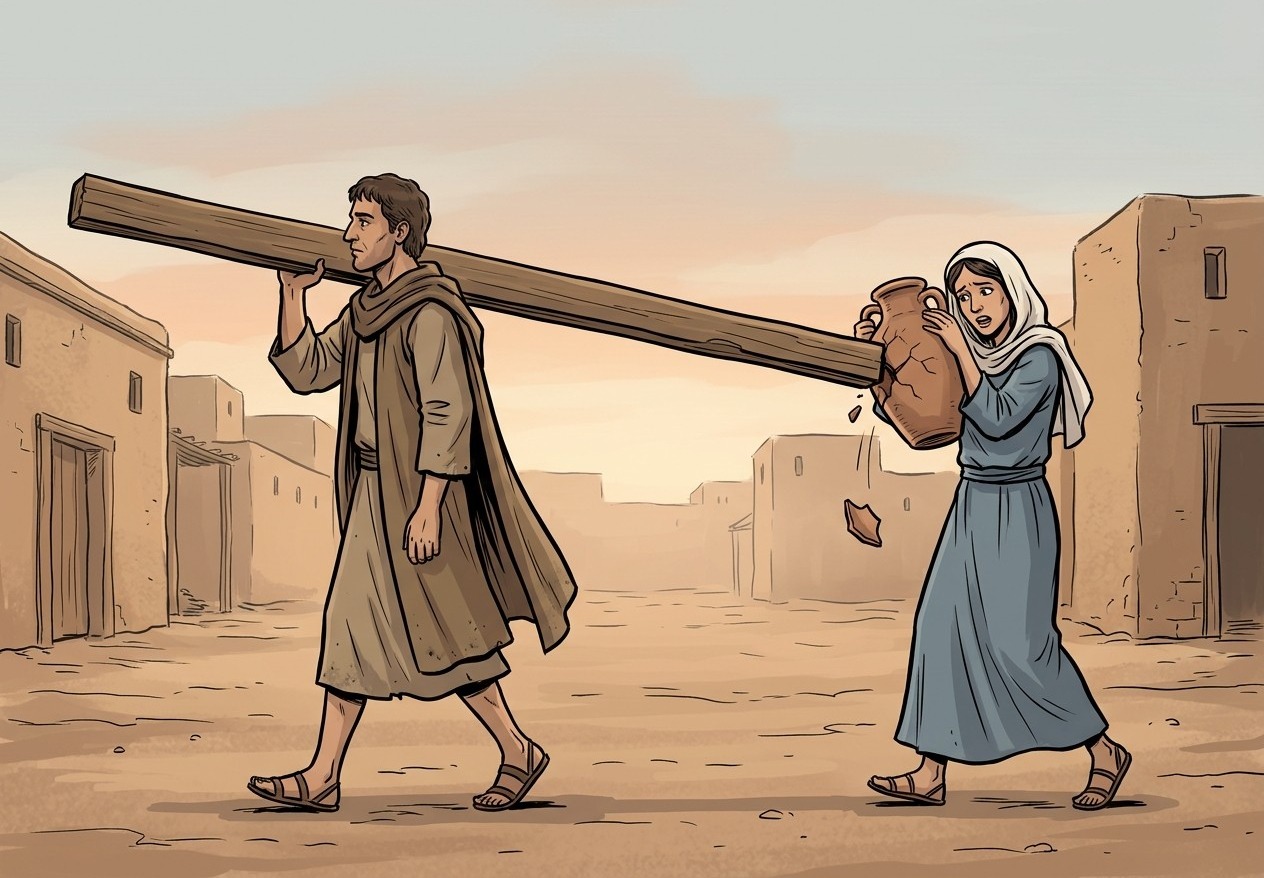
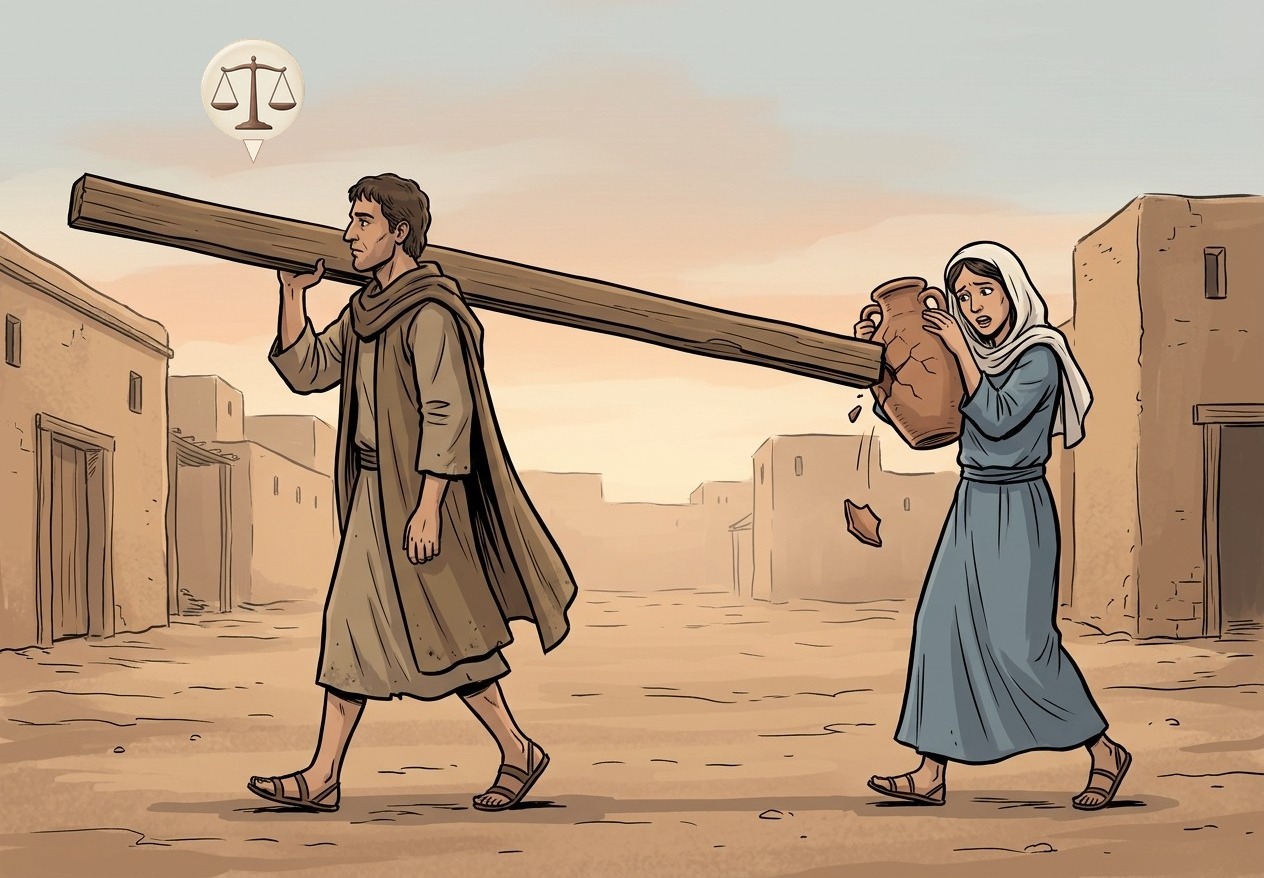
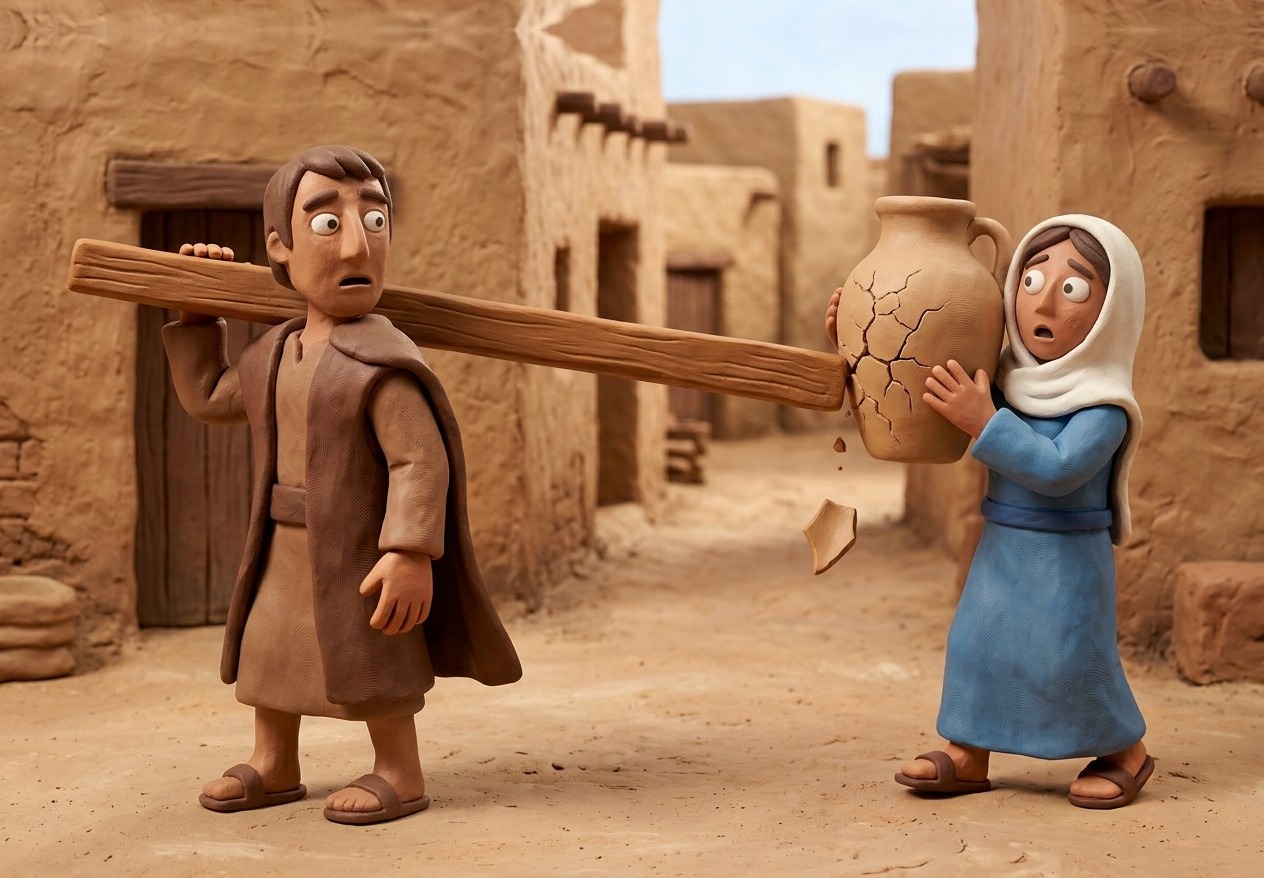
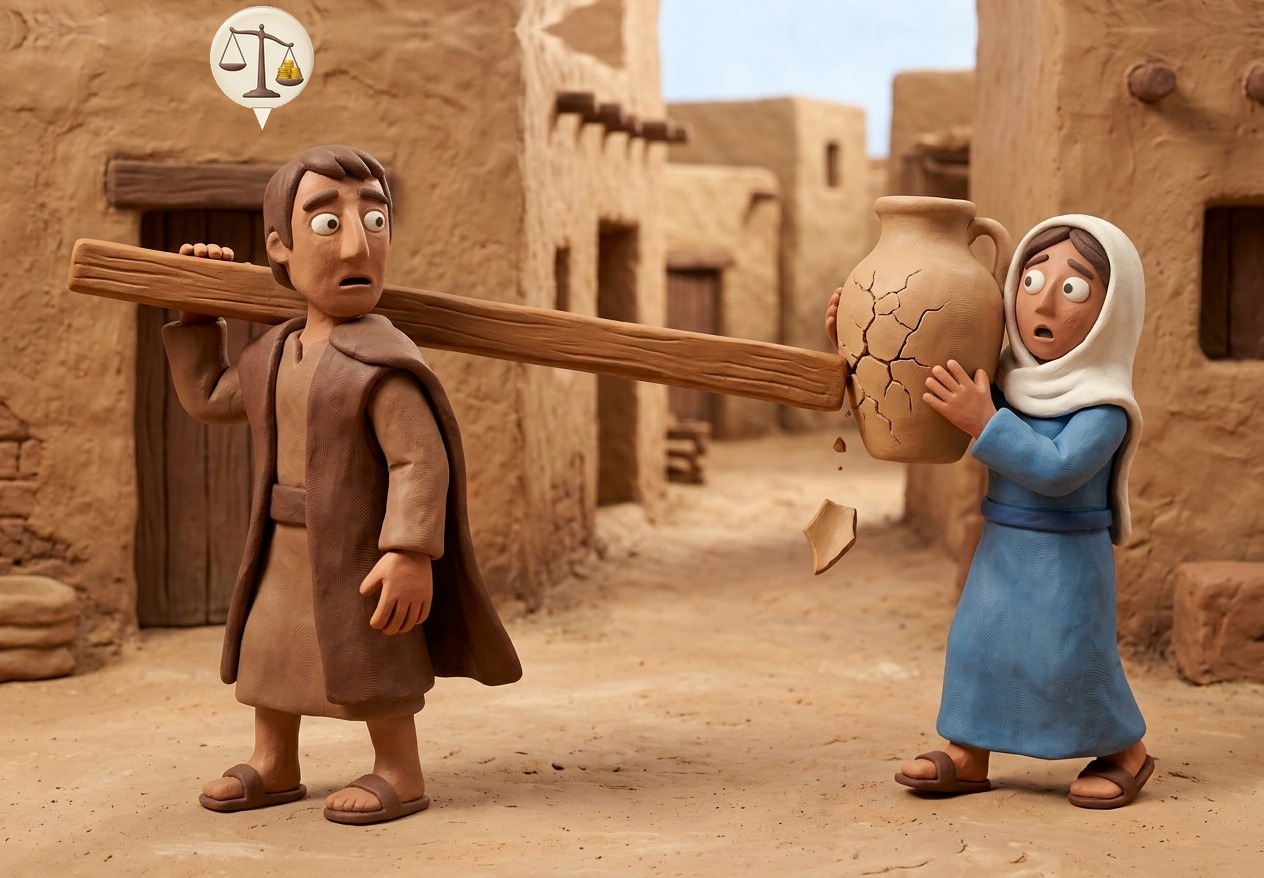
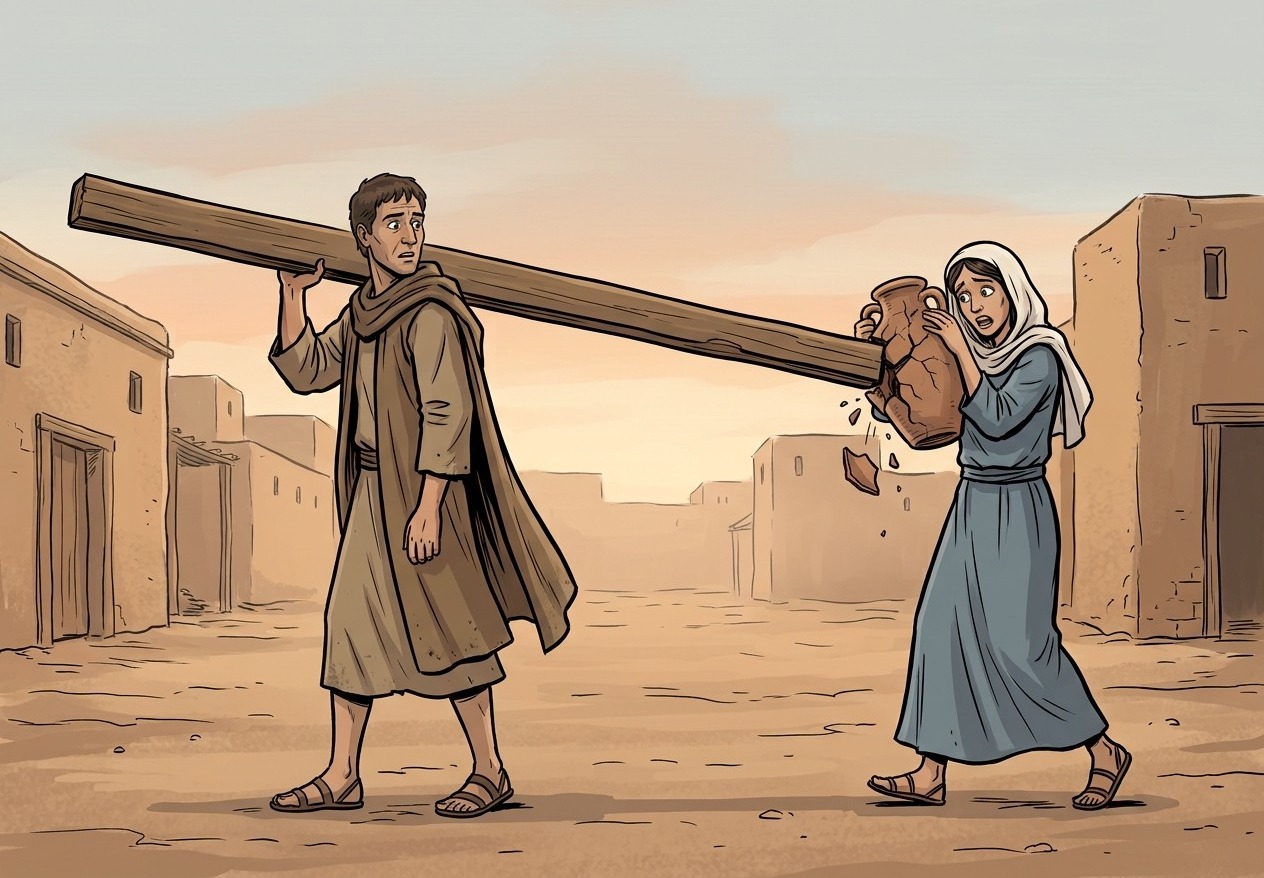
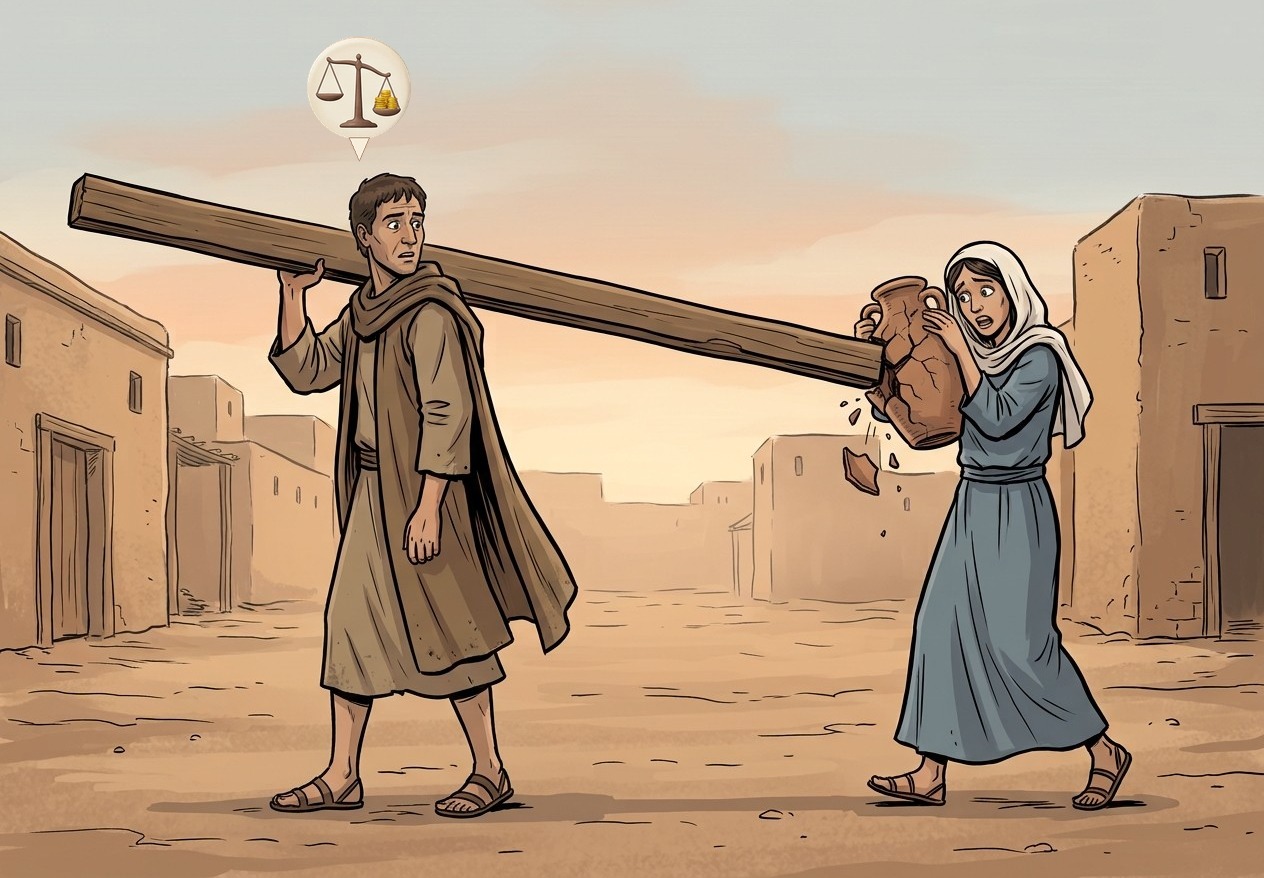
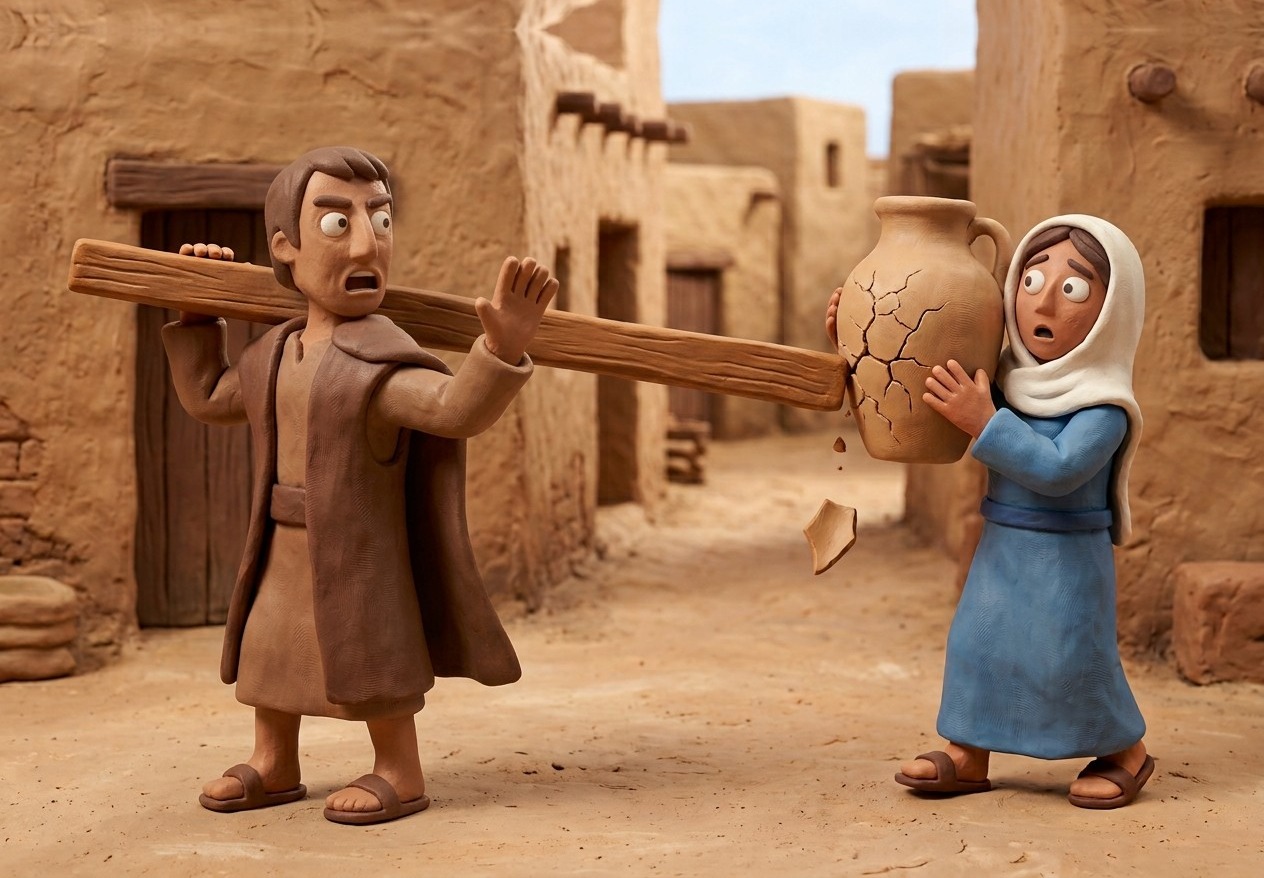
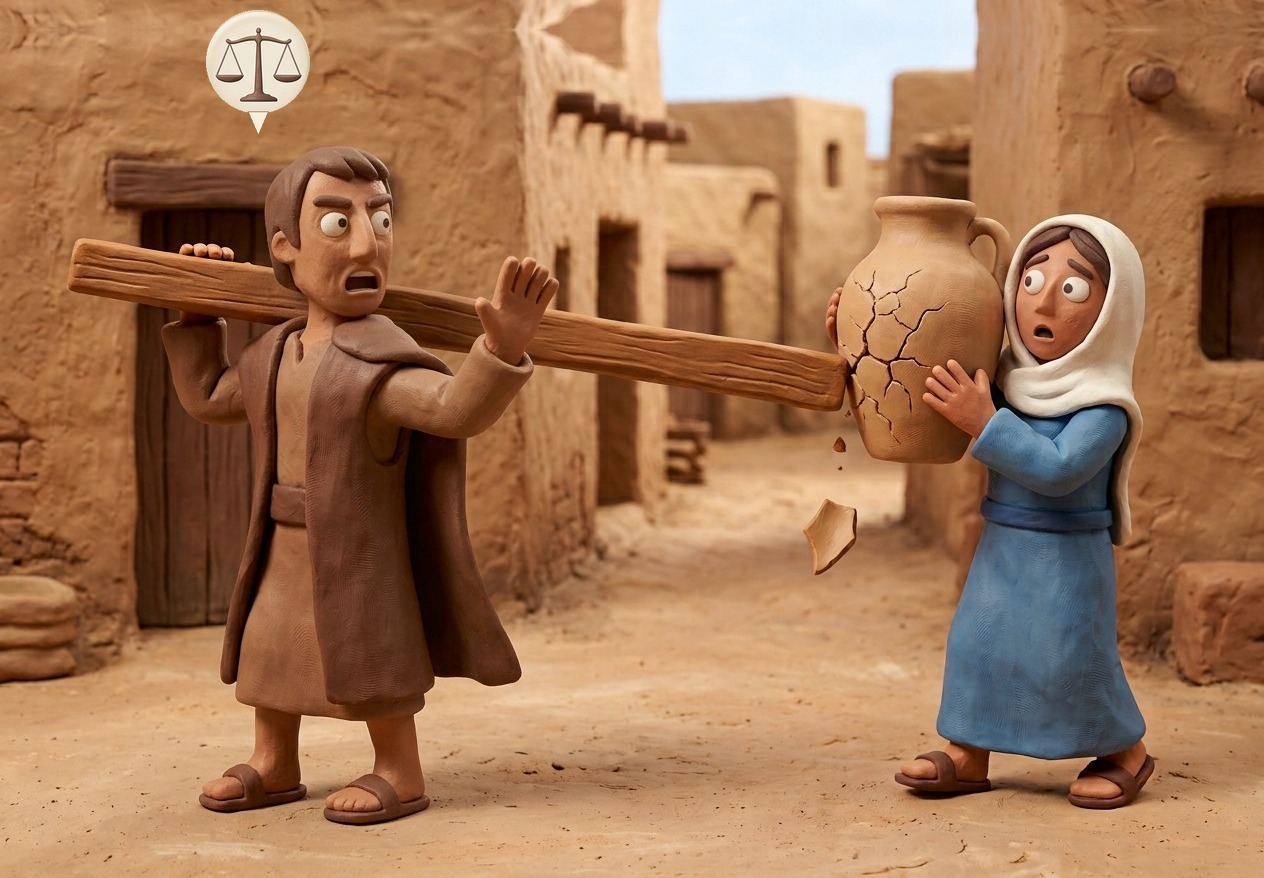
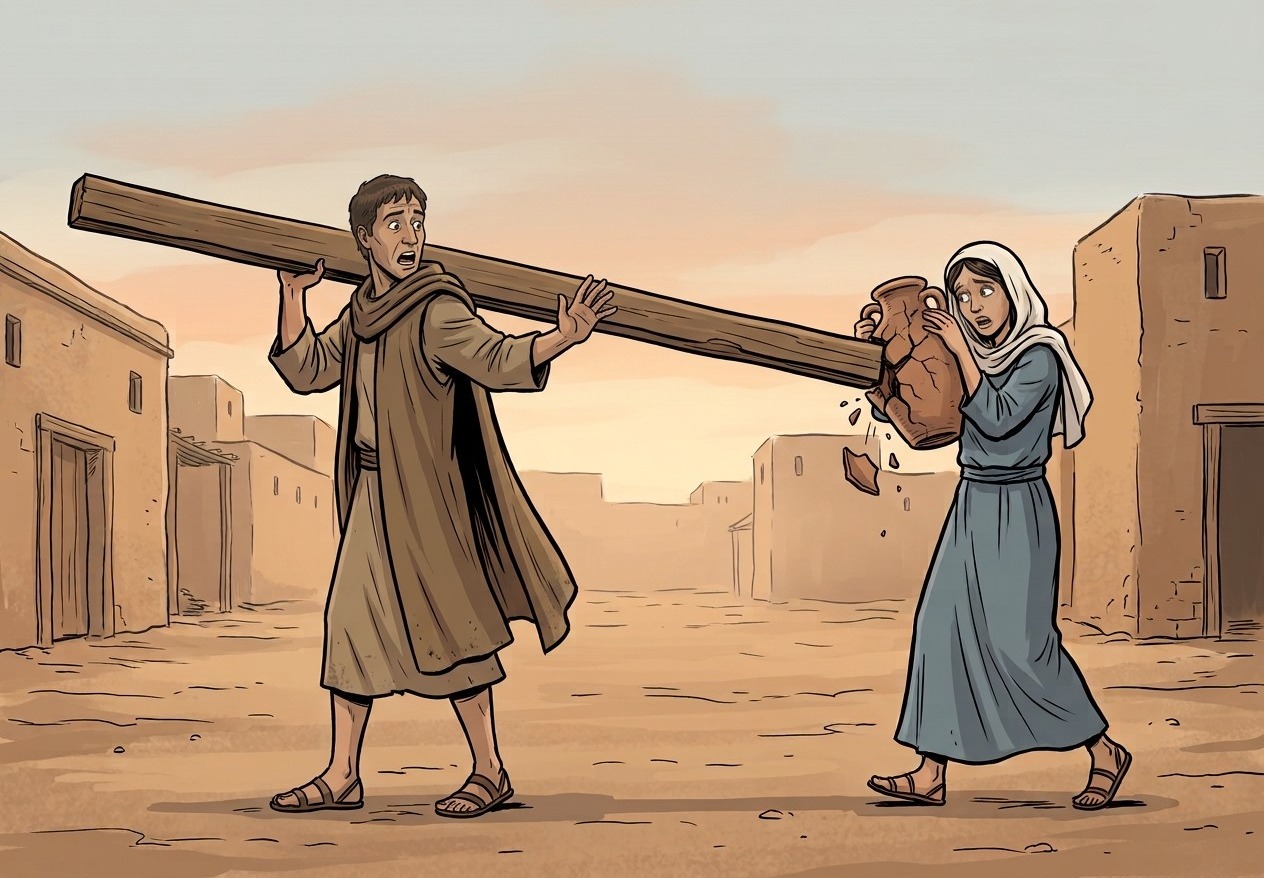
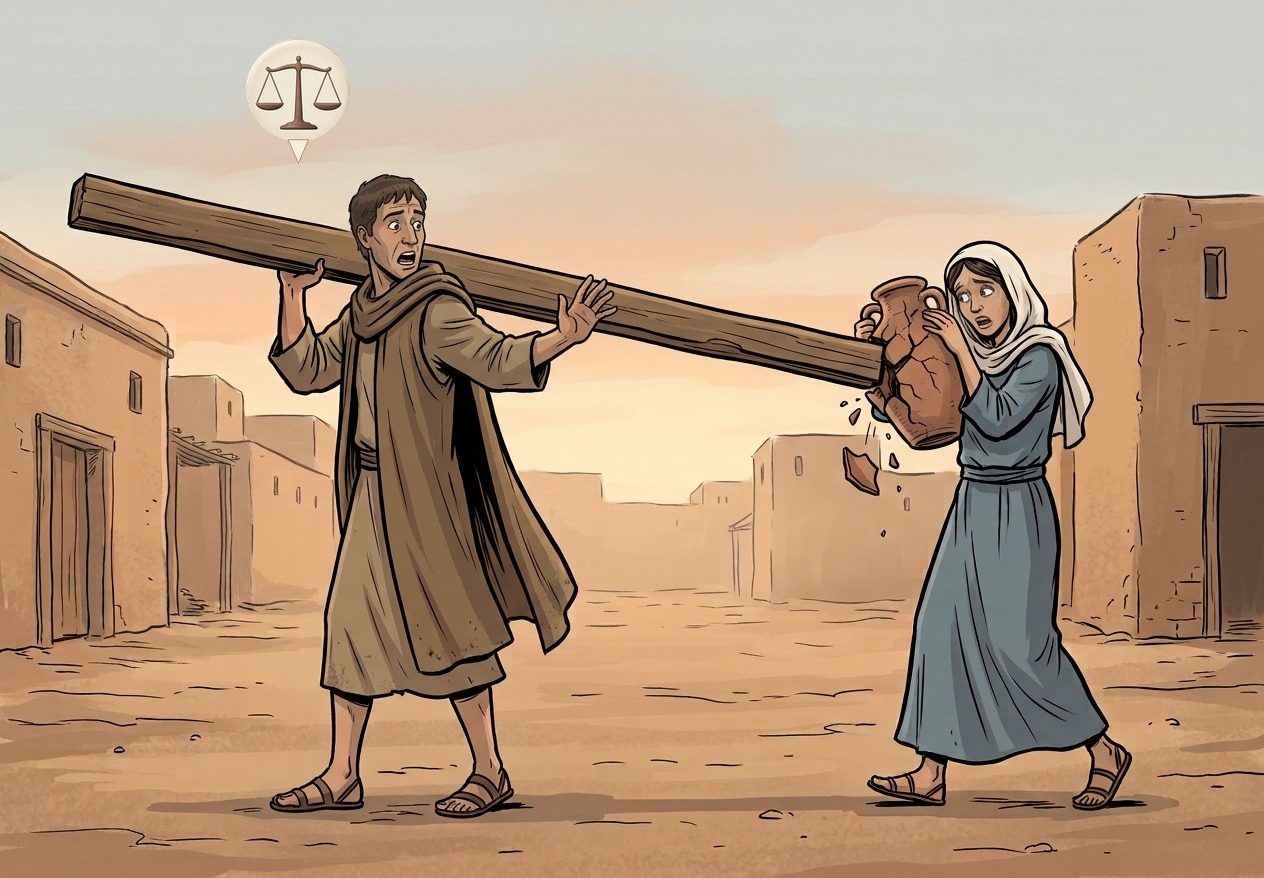
- One comes carrying a jar and another a beam, and the jar is broken by the beam: the owner of the beam is exempt, since each has the right to walk along.
The beam in front
- The owner of the beam came first and the owner of the jar came after, and the jar was broken by the beam: the owner of the beam is exempt. If he stopped suddenly, he is liable. If he said "Stop" to the owner of the jar, he is exempt.
- The jar owner walking behind had to take care not to come close to the beam, so the beam owner is exempt. If he stopped suddenly, for instance to rest, with no warning, he is liable; if he warned the other to stop in time, he is exempt.
The jar in front
- The owner of the jar came first and the owner of the beam came after: the owner of the beam is liable. If the owner of the jar stopped suddenly, the owner of the beam is exempt. If the owner of the jar said "Stop" to the owner of the beam, the owner of the beam is liable.
- So too one who comes with his candle and one with his flax.
What it teaches
- The one walking behind must always take care, as long as the one in front does not stop suddenly without warning; so too for the candle and the flax.
Is the owner of the beam liable?
| The situation | The owner of the beam |
|---|---|
| They walk side by side | exempt |
| Beam in front, jar owner walks into it | exempt |
| Beam in front, the beam owner stopped suddenly | liable |
| Beam in front, the beam owner said "Stop" | exempt |
| Jar in front, the beam owner walks into it | liable |
| Jar in front, the jar owner stopped suddenly | exempt |
| Jar in front, the jar owner said "Stop" | liable |
זה בא בחביתו וזה בא בקורתו. נשברה כדו של זה בקורתו של זה פטור. שלזה רשות להלך ולזה רשות להלך.
היה בעל קורה ראשון ובעל חבית אחרון. נשברה חבית בקורה פטור בעל הקורה. ואם עמד בעל הקורה חייב. ואם אמר לבעל החבית עמוד פטור.
היה בעל חבית ראשון ובעל קורה אחרון. נשברה חבית בקורה חייב. ואם עמד בעל חבית פטור. ואם אמר לבעל קורה עמוד חייב. וכן זה בא בנרו וזה בפשתנו:
If this one came with his barrel and that one came with his beam, and this one's jug was broken by that one's beam, he is exempt, because this one had permission to walk and that one had permission to walk.
If the owner of the beam was first and the owner of the barrel last, and the barrel was broken by the beam, the owner of the beam is exempt. But if the owner of the beam stopped, he is liable. And if he said to the owner of the barrel: Stop, he is exempt.
If the owner of the barrel was first and the owner of the beam last, and the barrel was broken by the beam, he is liable. But if the owner of the barrel stopped, he is exempt. And if he said to the owner of the beam: Stop, he is liable. And similarly, if this one came with his lamp and that one came with his flax.
 does not pay?
 does not pay?
 does not pay?
 does not pay?
 pays?
 pays?
 does not pay?
 does not pay?
Mishnah 6: Running and walking
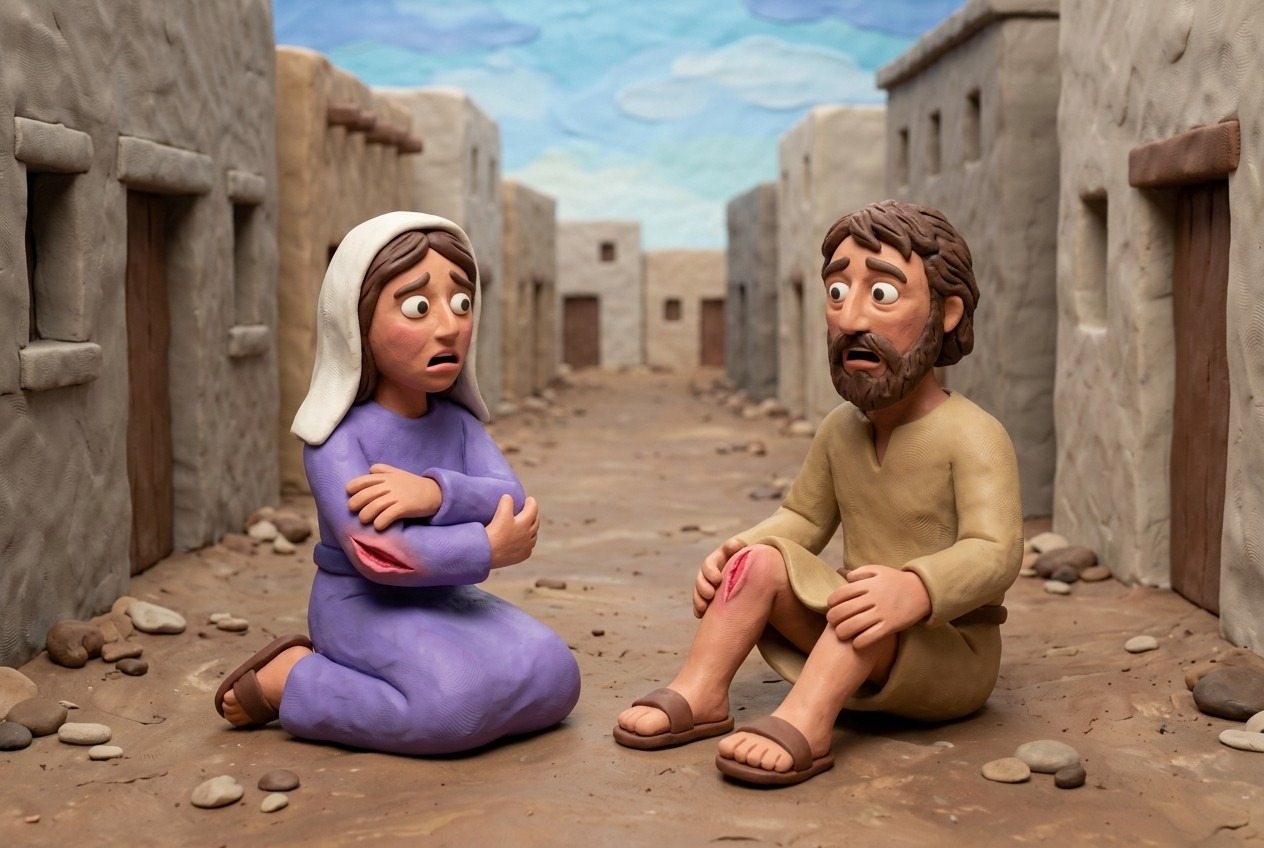
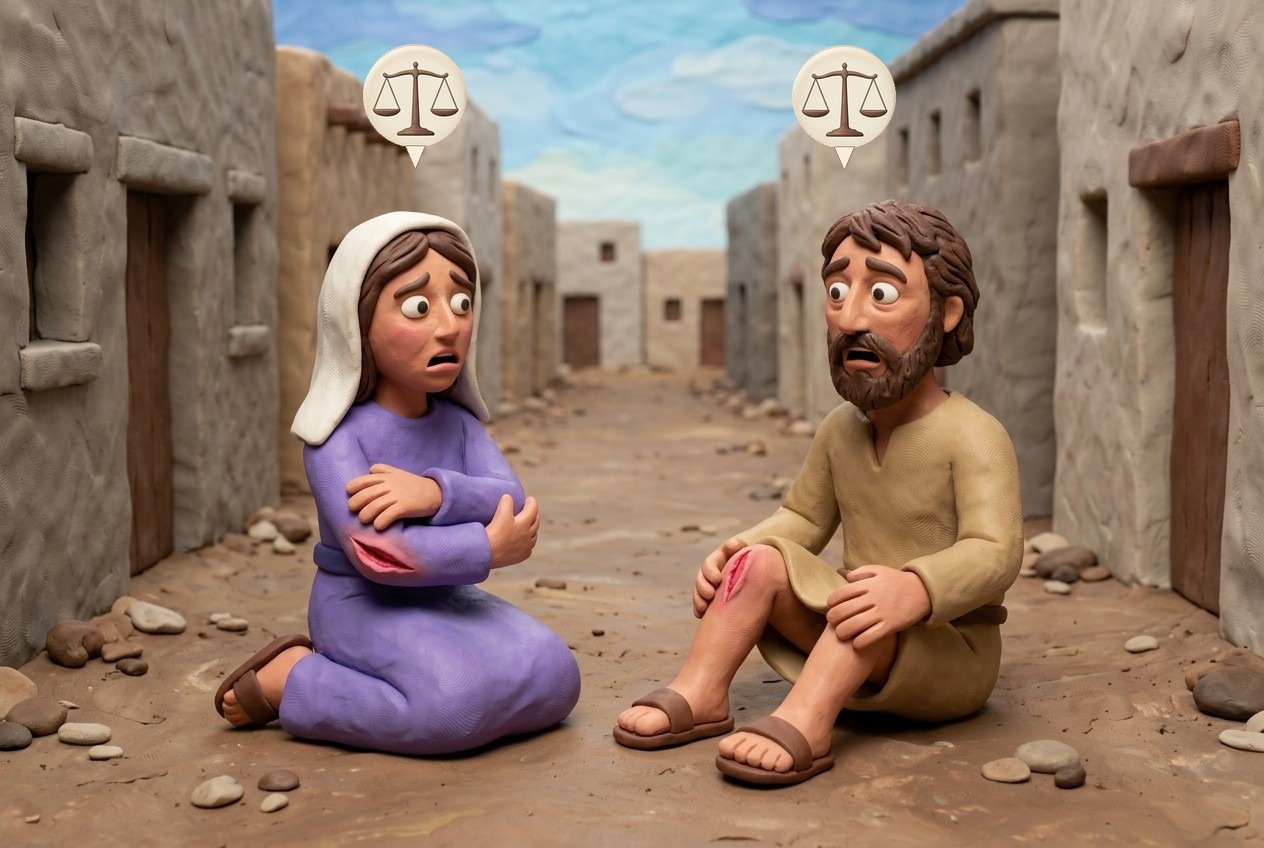
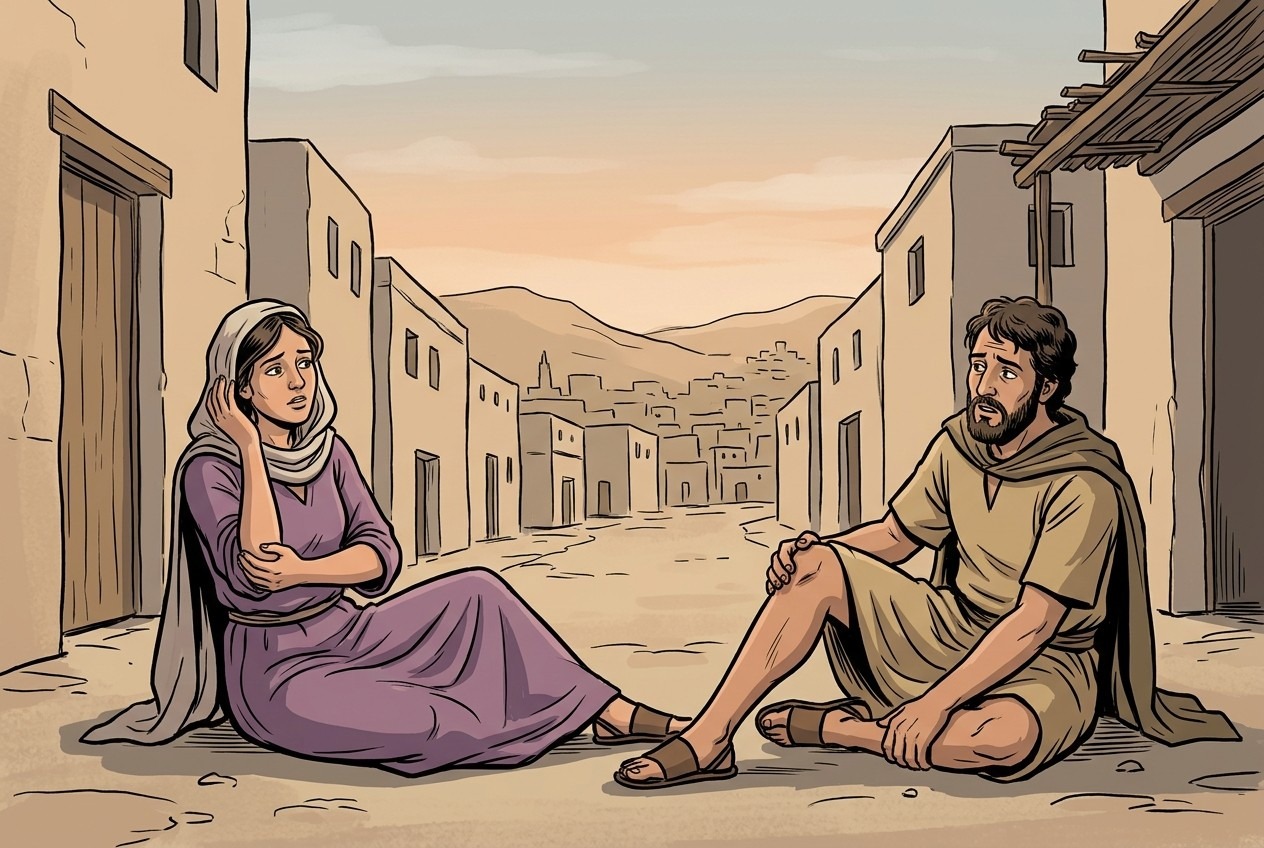
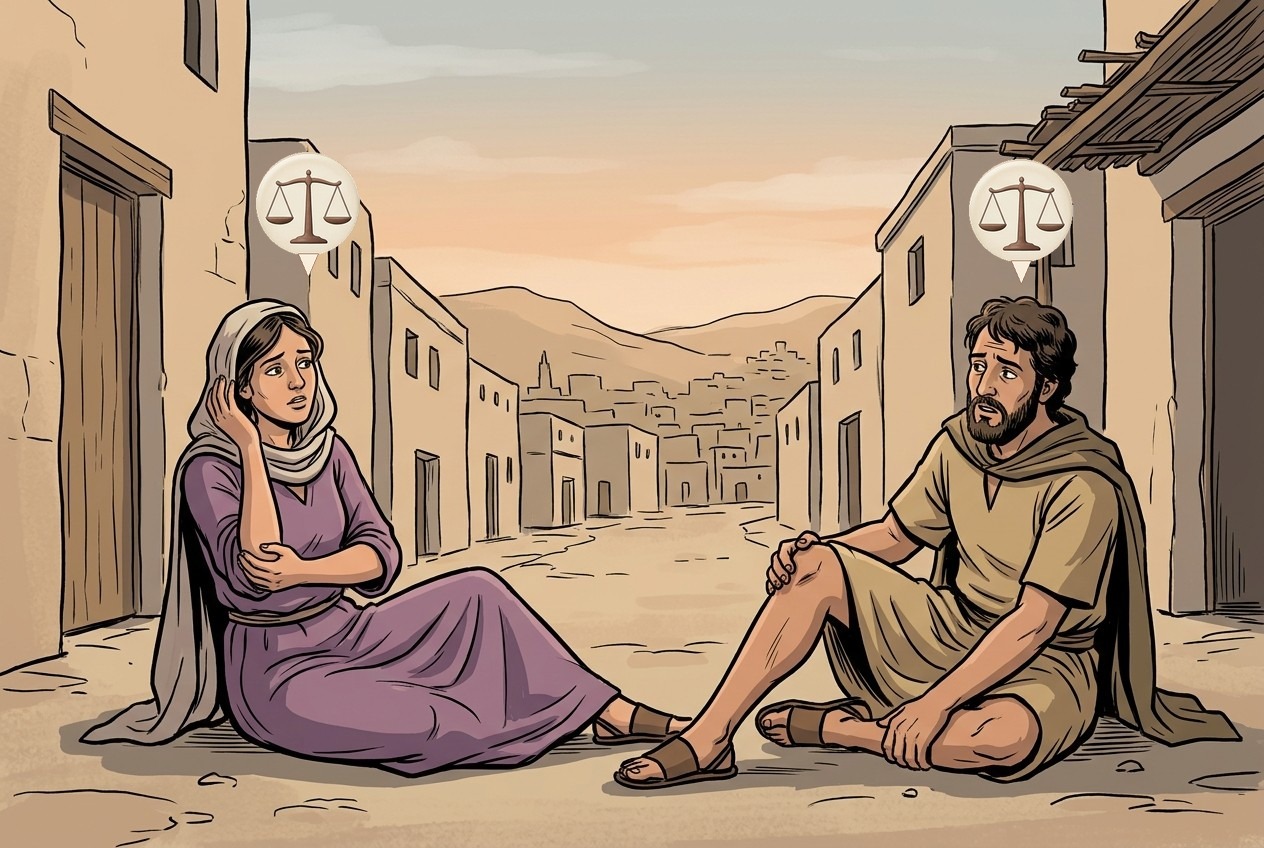
Two people in the public domain, one running and one walking or both running, who injure each other: neither is liable.
The case
- Two were walking in the public domain, one running and the other walking, or both running, and they injured one another: neither is liable.
- Each of them caused the injury to himself, and neither acted with intent, so both are exempt.
Kehati's notes
- The Gemara says that the "one running" is on the eve of Shabbat or a festival, when running is allowed. On other days a runner who injures a walker is liable. If both were running, both are exempt, since both departed from the usual way. Kehati cites Rambam (Hilkhot Chovel uMazik 6:9) for this.
שנים שהיו מהלכין ברשות הרבים. אחד רץ ואחד מהלך. או שהיו שניהם רצים. והזיקו זה את זה. שניהם פטורין:
Two people who were walking in the public domain, one running and one walking, or both running, and they damaged one another, both are exempt.
 does not paydoes not pay12
 does not paydoes not pay12
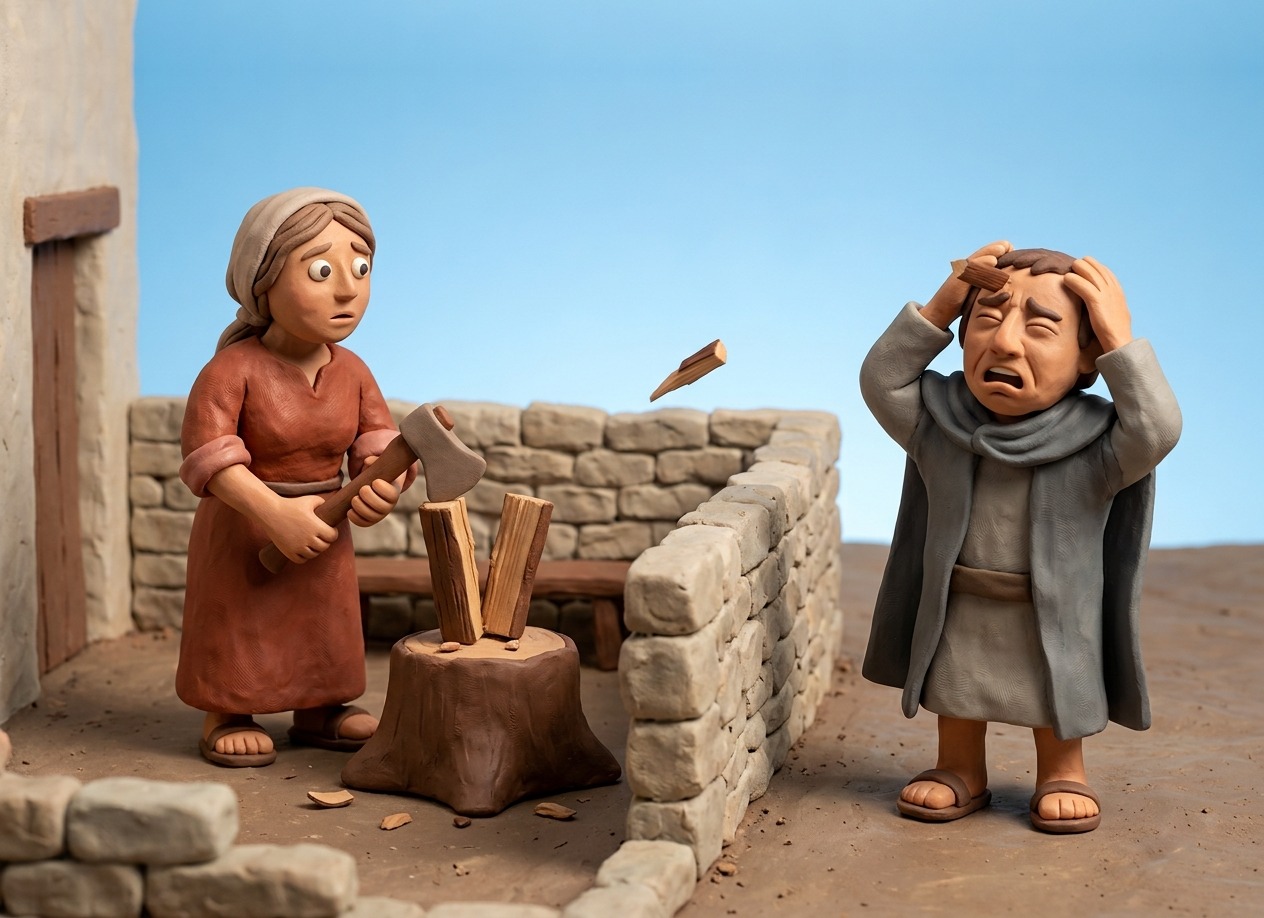
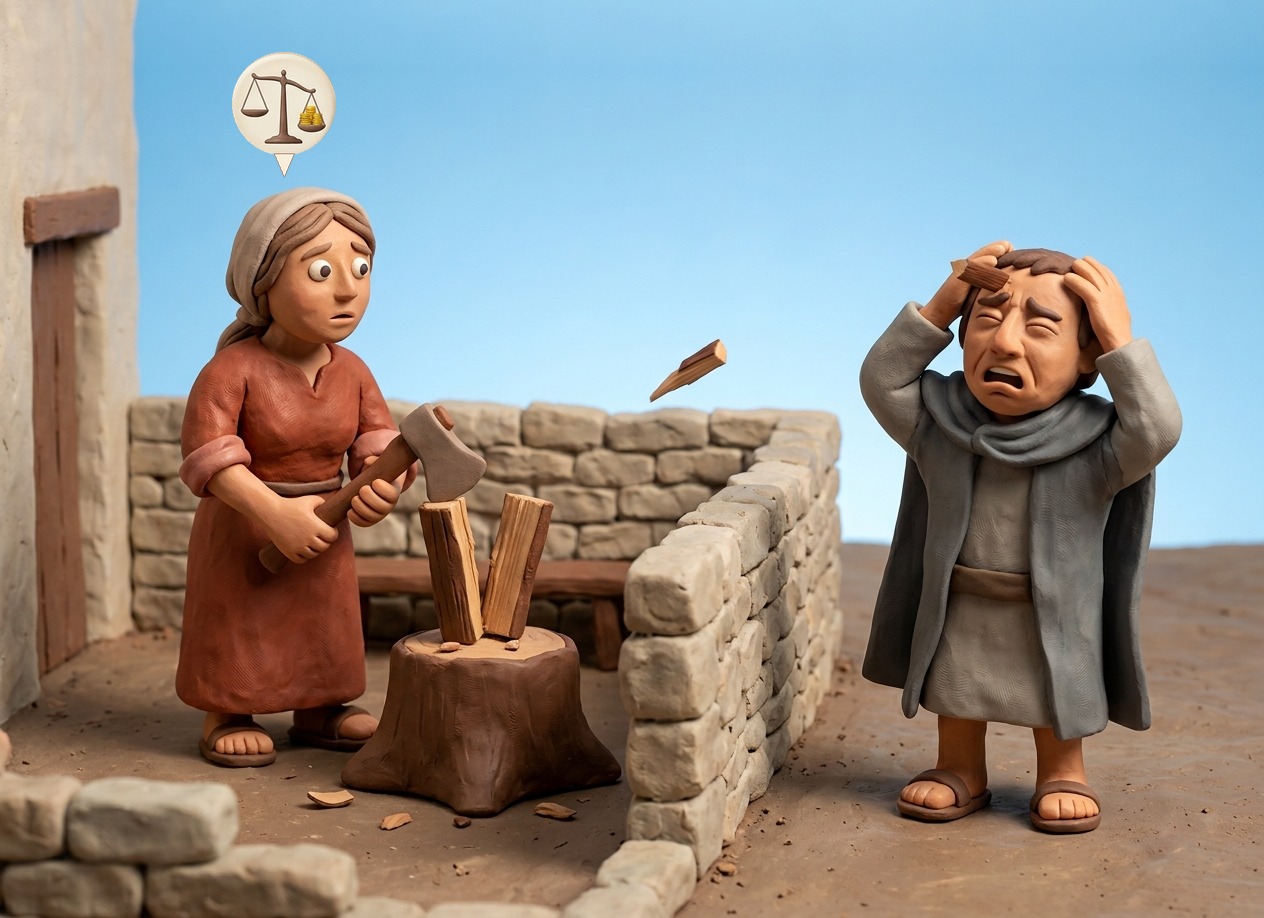
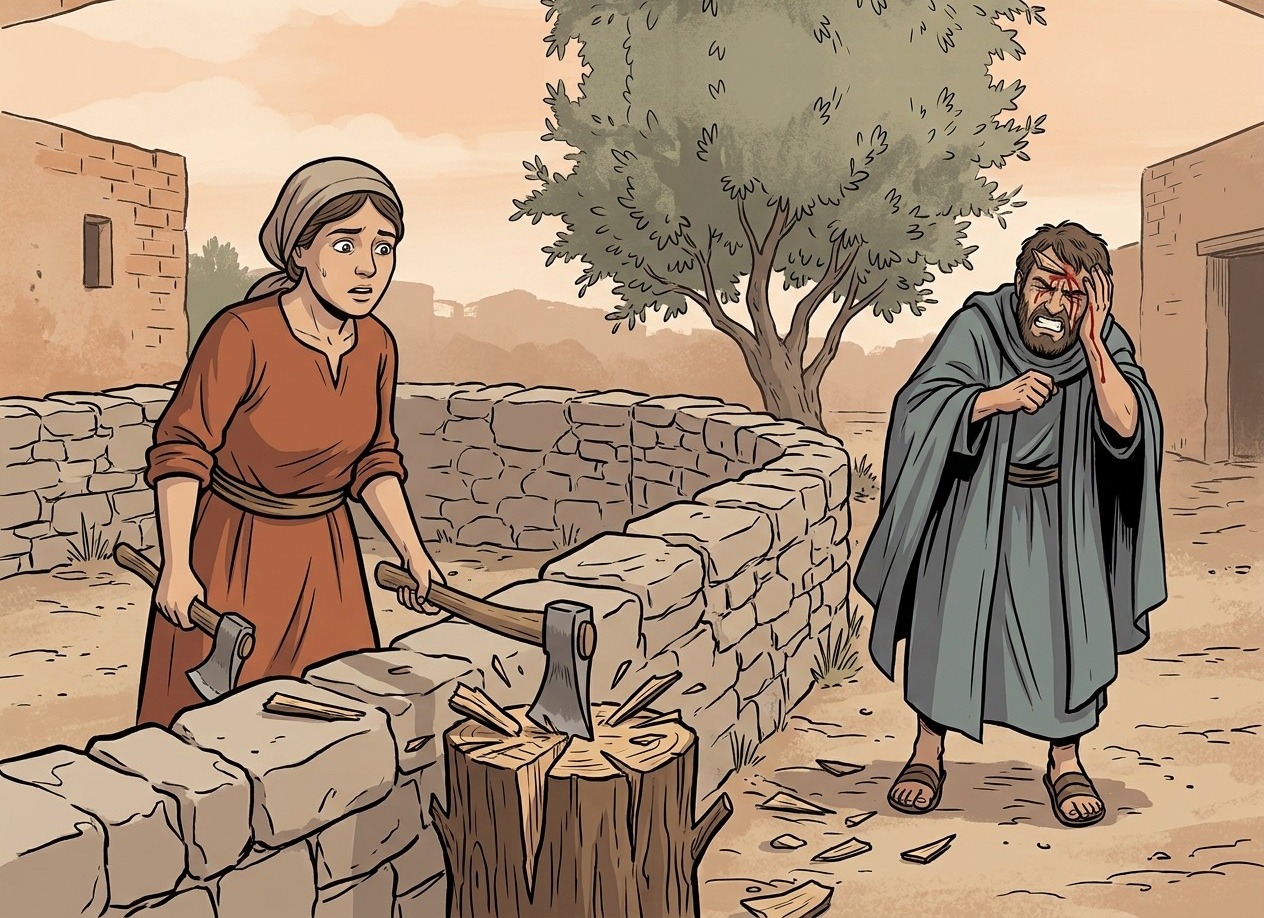
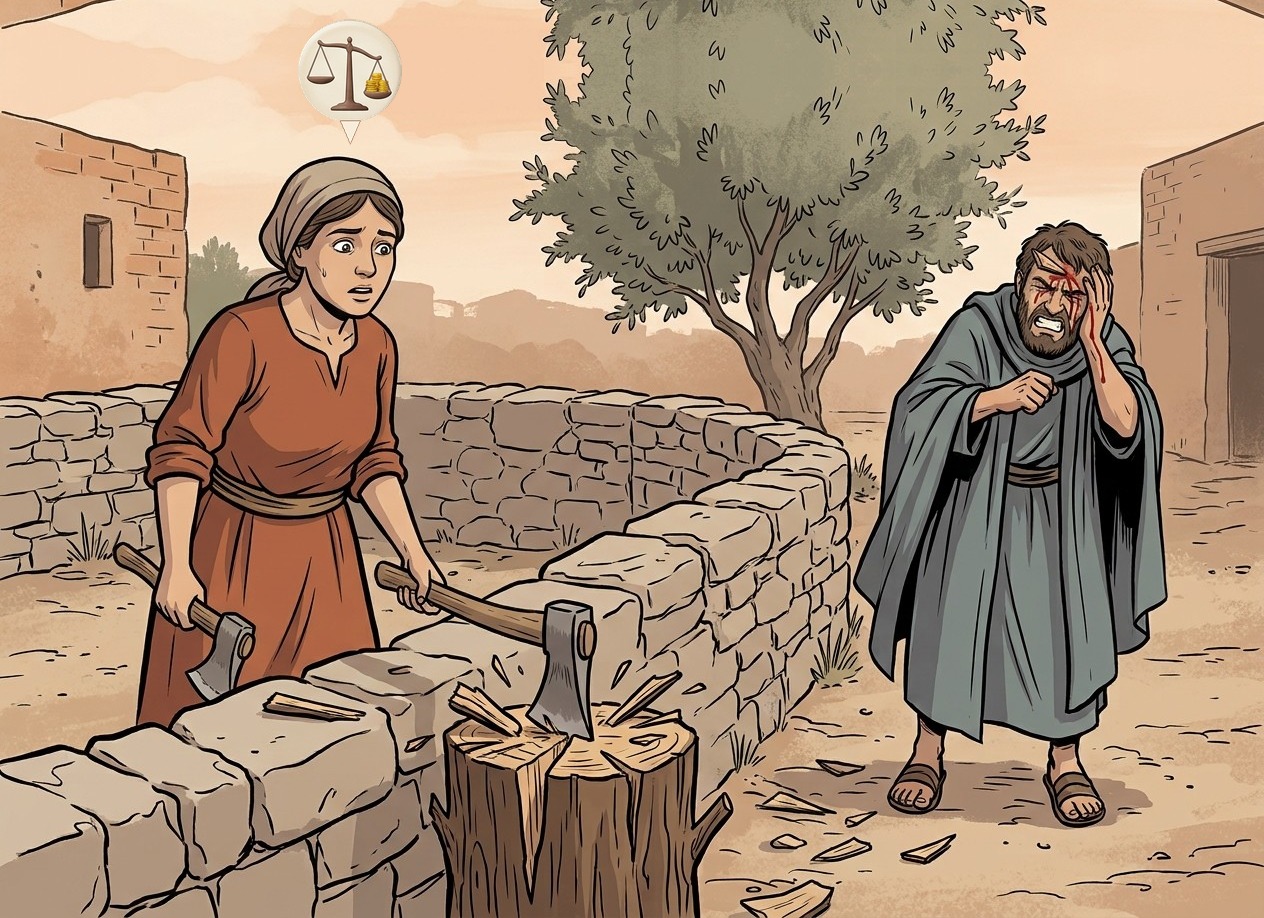
Mishnah 7: Splitting wood
Someone who splits wood and hurts anyone is liable, whichever domain he and the injured person are in.
The case
- A man was splitting wood in a private domain and injured anyone in the public domain, or was in the public domain and injured anyone in a private domain, or was in a private domain and injured anyone in another private domain: he is liable.
- He pays in all these cases even if he did not intend harm, because a person is always an attested danger: he should have realized that splitting wood sends splinters flying, and taken extra care.
המבקע ברשות היחיד והזיק ברשות הרבים. ברשות הרבים והזיק ברשות היחיד. ברשות היחיד והזיק ברשות היחיד אחר. חייב:
One who was chopping wood in private property and caused damage in public property, or in public property and caused damage in private property, or in private property and caused damage in another's private property, is liable.
 pays?
 pays?
Mishnah 8: When two oxen or two people hurt each other
Two oxen or two people who hurt each other pay on the surplus, the difference between the two hurts: half of it for tam oxen, all of it for oxen that are attested dangers and for people.
The cases in the mishnah
- Two tam oxen hurt one another: the owner pays half damages on the surplus.
- If both were attested dangers: full damages on the surplus.
- One a tam and one an attested danger: the attested danger pays full damages on the surplus; the tam pays half damages on the surplus.
- Two men who hurt one another: full damages for the one who suffered the surplus.
- A man and a tam ox: the man pays full damages; the ox's owner pays half damages.
- Rabbi Akiva: even if a tam ox hurt a man, full damages are paid for the one who suffered the surplus.
Background
- The mishnah covers three groups: oxen that damaged each other, people that damaged each other, and a person and an ox that damaged each other.
- A human being is always an attested danger (as in 2:6).
Kehati's notes
- The payment is only on the surplus. Example: one ox did 100 of damage and the other 40, so the difference is 60. Two tam oxen: the first owner pays half of it, 30. Two attested dangers: he pays all of it, 60.
- For an attested danger against a tam ox Kehati gives two readings. The Rosh reads "surplus" as the difference between the damages, so the surplus is 60 and is paid in full by the danger. The Rambam reads it as the difference between the payments each owes: the danger owes 100, the tam ox owes half of 40, which is 20, so the danger pays 80.
Halakha
- The halakha follows the first view: a tam ox that hurt a man pays only half damages. It does not follow Rabbi Akiva.
Who pays on the surplus
| Who hurt each other | The payment |
|---|---|
| Two tam oxen | half damages |
| Two attested dangers | full damages |
| One attested danger, one a tam | the dangerous one pays full damages; the tam half |
| Two men | full damages |
| A man and a tam ox | the man pays full damages; the ox's owner half (R. Akiva: full) |
שני שוורים תמים שחבלו זה את זה משלמים במותר חצי נזק. שניהם מועדים משלמים במותר נזק שלם. אחד תם. ואחד מועד. מועד בתם משלם במותר נזק שלם. תם במועד משלם במותר חצי נזק.
וכן שני אנשים שחבלו זה בזה משלמים במותר נזק שלם. אדם במועד. ומועד באדם. משלם במותר נזק שלם. אדם בתם ותם באדם. אדם בתם משלם במותר נזק שלם. תם באדם משלם במותר חצי נזק.
רבי עקיבא אומר אף תם שחבל באדם משלם במותר נזק שלם:
Two unattested dangers (tamim)tamim (unattested dangers) that injured each other pay half the damage with regard to the difference. If both were attested dangers (mu'adim)mu'adim (attested dangers), they pay the full damage with regard to the difference. If one was an unattested dangera tam and one an attested dangera mu'ad: the attested dangerthe mu'ad that injured the unattested dangerthe tam, pays the full damage with regard to the difference; the unattested dangerthe tam that injured the attested dangerthe mu'ad, pays half the damage with regard to the difference.
And similarly, two people who injured each other pay the full damage with regard to the difference. A person who injured an attested dangera mu'ad and an attested dangera mu'ad that injured a person, pays the full damage with regard to the difference. A person who injured an unattested dangera tam and an unattested dangera tam that injured a person: the person who injured the unattested dangerthe tam pays the full damage with regard to the difference; the unattested dangerthe tam that injured the person pays half the damage with regard to the difference.
Rabbi Akiva says: Even an unattested dangera tam that injured a person pays the full damage with regard to the difference.
Mishnah 9: Selling the live ox and dividing
The Torah says to sell the live ox and divide the price. The mishnah shows how this works out when the two oxen are worth different amounts.
The verse
- Exodus 21:35: "they shall sell the live ox and divide its price, and they shall also divide the dead one." The verse teaches that the owner of a tam ox pays half damages from the body of the ox that gored.
The cases
- An ox worth 100 gored an ox worth 200 and the carcass is worth nothing: the owner of the gored ox takes the live ox.
- An ox worth 200 gored an ox worth 200 and the carcass is worth nothing: Rabbi Meir says this is the case of the verse, "sell the live ox and divide its money".
- Rabbi Judah: that is the halakhah, but it fulfils only half the verse. If an ox worth 200 gored an ox worth 200 and the carcass is worth 50, each takes half of the live ox and half of the dead ox.
- When the carcass is worth 50, the damage is 150 and half the damage is 75. Each owner ends up with 125 and has lost 75.
Halakha
- The halakha follows Rabbi Judah.
שור שוה מנה שנגח שור שוה מאתים ואין הנבלה יפה כלום. נוטל את השור.
שור שוה מאתים שנגח שור שוה מאתים ואין הנבלה יפה כלום.
אמר רבי מאיר על זה נאמר (שמות כא, לה) ומכרו את השור החי וחצו את כספו.
אמר לו רבי יהודה וכן הלכה. קיימת ומכרו את השור החי וחצו את כספו. ולא קיימת וגם את המת יחצון. ואיזה. זה שור שוה מאתים שנגח שור שוה מאתים והנבלה יפה חמשים זוז. שזה נוטל חצי החי וחצי המת. וזה נוטל חצי החי וחצי המת:
An ox that is an unattested danger (tam)a tam (unattested danger) worth one hundred dinars that gored an ox worth two hundred, and the carcass is worth nothing, the injured party takes the ox.
An ox worth two hundred that gored an ox worth two hundred, and the carcass is worth nothing—
Rabbi Meir said: About this it is stated: "Then they shall sell the live ox and divide its monetary value" (Exodus 21:35).
Rabbi Yehuda said to him: That is the halakha, but you have upheld "Then they shall sell the live ox and divide its monetary value," and you have not upheld "And the dead they shall also divide." To which case does this refer? An ox worth two hundred that gored an ox worth two hundred, and the carcass is worth fifty dinars, so that this one takes half the living and half the dead, and that one takes half the living and half the dead.
Mishnah 10: What the person owes and what the ox's owner owes
The same injury can create an obligation for the owner of the ox but not for the person who did it himself, and the reverse.
Five pairs
- Embarrassment: his ox caused it, he is exempt; he caused it himself, he is obligated.
- A slave's eye or tooth: his ox put it out, he is exempt from freeing the slave; he did it himself, he must free him.
- His father or mother: his ox injured them, he is obligated; he injured them himself, he is exempt.
- A heap of produce on Shabbat: his ox lit it, he is obligated; he lit it himself, he is exempt, because he is liable for his life.
Why
- An ox pays only for damage (nezek)nezek (damage), not for shame, pain, healing or loss of time, so the owner whose ox shamed someone is exempt.
- Freeing a slave is the penalty only for one who himself blinds or knocks out the tooth of his slave (Exodus 21:26-27); when his ox does it he does not free him.
- A person liable to death does not also pay: a man does not both die and pay. So one who wounds his parents or lights a fire on Shabbat himself is exempt from payment, while for his ox he pays.
Kehati's notes
- One who lit a stack on Shabbat is exempt from payment even if he acted unintentionally, since a person does not both die and pay.
If his ox did it, and if he did it himself
| The act | If his ox did it | If he did it himself |
|---|---|---|
| Embarrassment | exempt | obligated |
| A slave's eye or tooth | exempt from freeing him | must free him |
| Injury to his father or mother | obligated | exempt |
| A heap of produce lit on Shabbat | obligated | exempt (liable for his life) |
יש חייב על מעשה שורו ופטור על מעשה עצמו. פטור על מעשה שורו וחייב על מעשה עצמו.
שורו שבייש פטור והוא שבייש חייב. שורו שסימא את עין עבדו והפיל את שינו פטור. והוא שסימא את עין עבדו והפיל את שינו חייב.
שורו שחבל באביו ואמו חייב. והוא שחבל באביו ואמו פטור.
שורו שהדליק את הגדיש בשבת חייב. והוא שהדליק את הגדיש בשבת פטור. מפני שהוא מתחייב בנפשו:
There are cases where one is liable for an act of his ox but exempt for his own action, and exempt for an act of his ox but liable for his own action.
If his ox caused humiliation, he is exempt, but if he himself caused humiliation, he is liable. If his ox blinded the eye of his slave or knocked out his tooth, he is exempt, but if he himself blinded his slave's eye or knocked out his tooth, he is liable.
If his ox injured his father or mother, he is liable, but if he himself injured his father or mother, he is exempt.
If his ox set fire to a haystack on Shabbat, he is liable, but if he himself set fire to a haystack on Shabbat, he is exempt, because he is liable to receive the death penalty.
Mishnah 11: Who has to prove it?
The one who wants payment must bring the proof. If he cannot, the other is exempt.
One ox pursuing another
- If an ox was pursuing another ox and it was injured, and one says your ox caused it and the other says a rock did: on the one who wishes to exact compensation lies the burden of proof.
Two oxen pursuing a third
- Two oxen were pursuing a third and each owner says the other's ox did it: both are exempt. If both were owned by one man, both are obligated.
- Each owner can push away the injured owner's claim by saying the other's ox did it, so neither pays. If both oxen are one man's, he cannot say that, so he pays.
Big and small, tam and mu'ad
- If one was big and one small, or one a tam and one an attested danger, and the owners dispute which caused the injury: on the one who wishes to exact compensation lies the burden of proof.
- The injured owner says the bigger ox, or the attested danger, did it, since that pays more; the defendant says it was the smaller or a tam one. The burden is still on the claimant.
Two injured, two injuring
- The same rule applies when two oxen were injured by two oxen: the burden of proof is on the plaintiff.
The principle
- The burden of proof is on the one who wishes to exact compensation (hamotzi mechavero alav hara'ayah): without positive proof the defendant is found exempt.
- Kehati calls this the legal foundation of the mishnah. Even if the defendant admits part, he does not owe what the claimant cannot prove.
Kehati's notes
- In the case of two oxen with one owner, the Gemara explains that both are tamim and present in court. A tam ox pays only from its own body, so the claimant collects from the lesser of the two.
שור שהיה רודף אחר שור אחר והוזק. זה אומר שורך הזיק. וזה אומר לא כי אלא בסלע לקה. המוציא מחבירו עליו הראיה.
היו שנים רודפים אחר אחד. זה אומר שורך הזיק וזה אומר שורך הזיק שניהם פטורין. אם היו שניהן של איש אחד שניהן חייבים.
היה אחד גדול ואחד קטן. הניזק אומר גדול הזיק. והמזיק אומר לא כי אלא קטן הזיק. אחד תם ואחד מועד. הניזק אומר מועד הזיק. והמזיק אומר לא כי אלא תם הזיק. המוציא מחברו עליו הראיה.
היו הניזוקין שנים אחד גדול ואחד קטן. והמזיקים שנים אחד גדול ואחד קטן. הניזק אומר גדול הזיק את הגדול וקטן את הקטן. ומזיק אומר לא כי אלא קטן את הגדול וגדול את הקטן. אחד תם ואחד מועד. הניזק אומר מועד הזיק את הגדול ותם את הקטן. והמזיק אומר לא כי אלא תם את הגדול ומועד את הקטן. המוציא מחברו עליו הראיה:
An ox that was pursuing another ox and it became injured, and this one says: Your ox caused the injury, and that one says: No, rather it was hurt by a rock—the burden of proof rests upon the claimant.
If two oxen were pursuing one, and this one says: Your ox caused the injury, and that one says: Your ox caused the injury, both are exempt. If both belonged to one person, both are liable.
If one was large and one small, and the injured party says: The large one caused the injury, and the one liable for damage says: No, rather the small one caused the injury; or one was an unattested danger (tam)a tam (unattested danger) and one an attested danger (mu'ad)a mu'ad (attested danger), and the injured party says: The attested dangerThe mu'ad caused the injury, and the one liable for damage says: No, rather the unattested dangerthe tam caused the injury—the burden of proof rests upon the claimant.
If the injured animals were two, one large and one small, and those that caused the damage were two, one large and one small, and the injured party says: The large one injured the large one and the small one injured the small one, and the one liable for damage says: No, rather the small one injured the large one and the large one injured the small one; or one was an unattested dangera tam and one an attested dangera mu'ad, and the injured party says: The attested dangerThe mu'ad injured the large one and the unattested dangerthe tam injured the small one, and the one liable for damage says: No, rather the unattested dangerthe tam injured the large one and the attested dangerthe mu'ad injured the small one—the burden of proof rests upon the claimant.
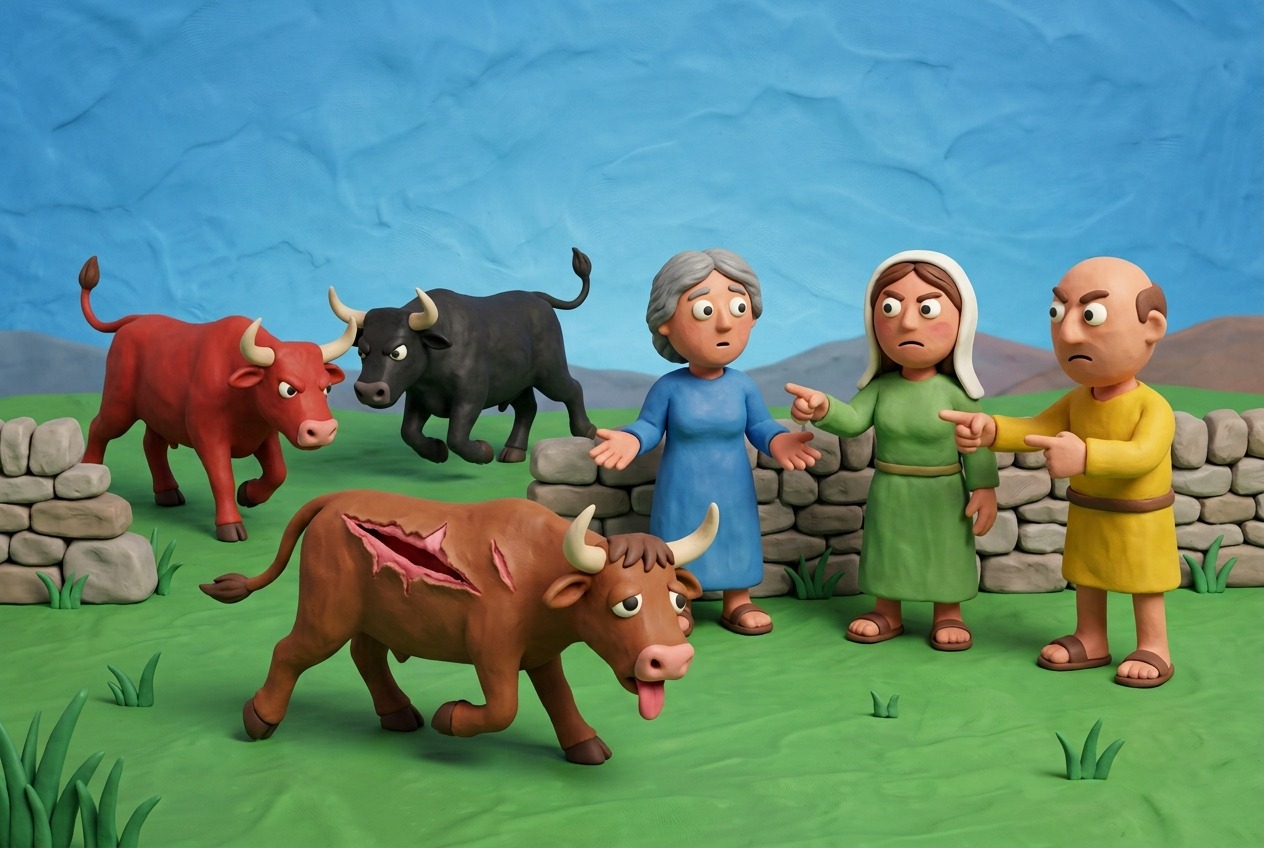 does not paydoes not pay12
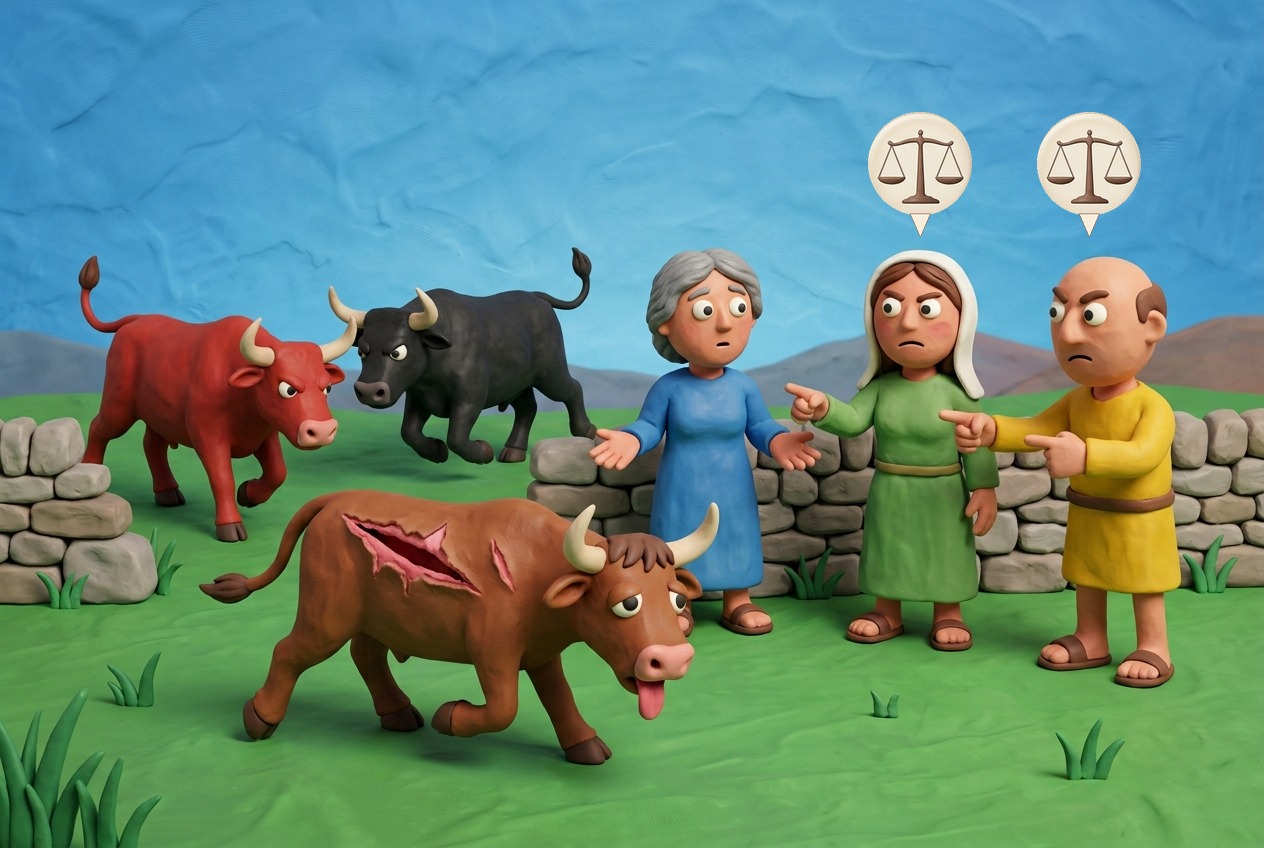
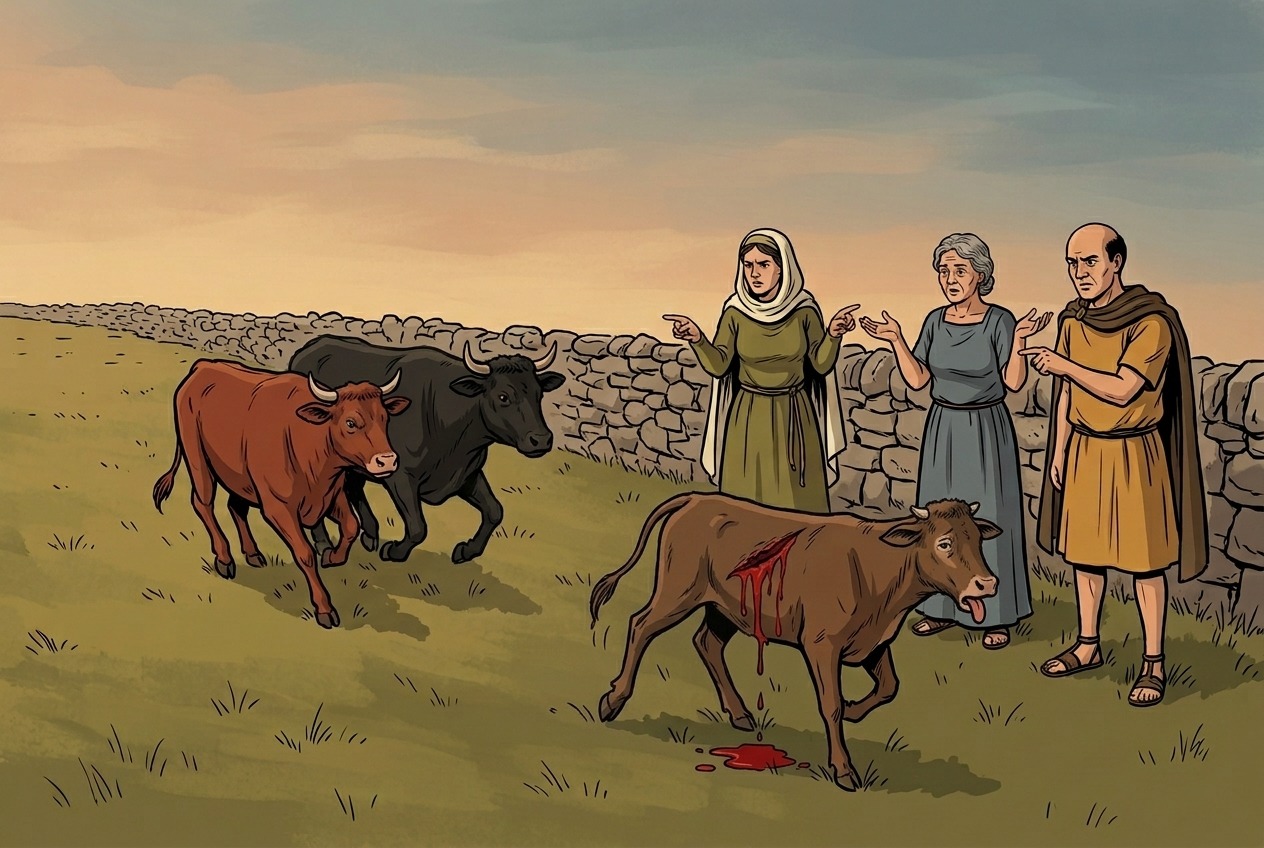 does not paydoes not pay12
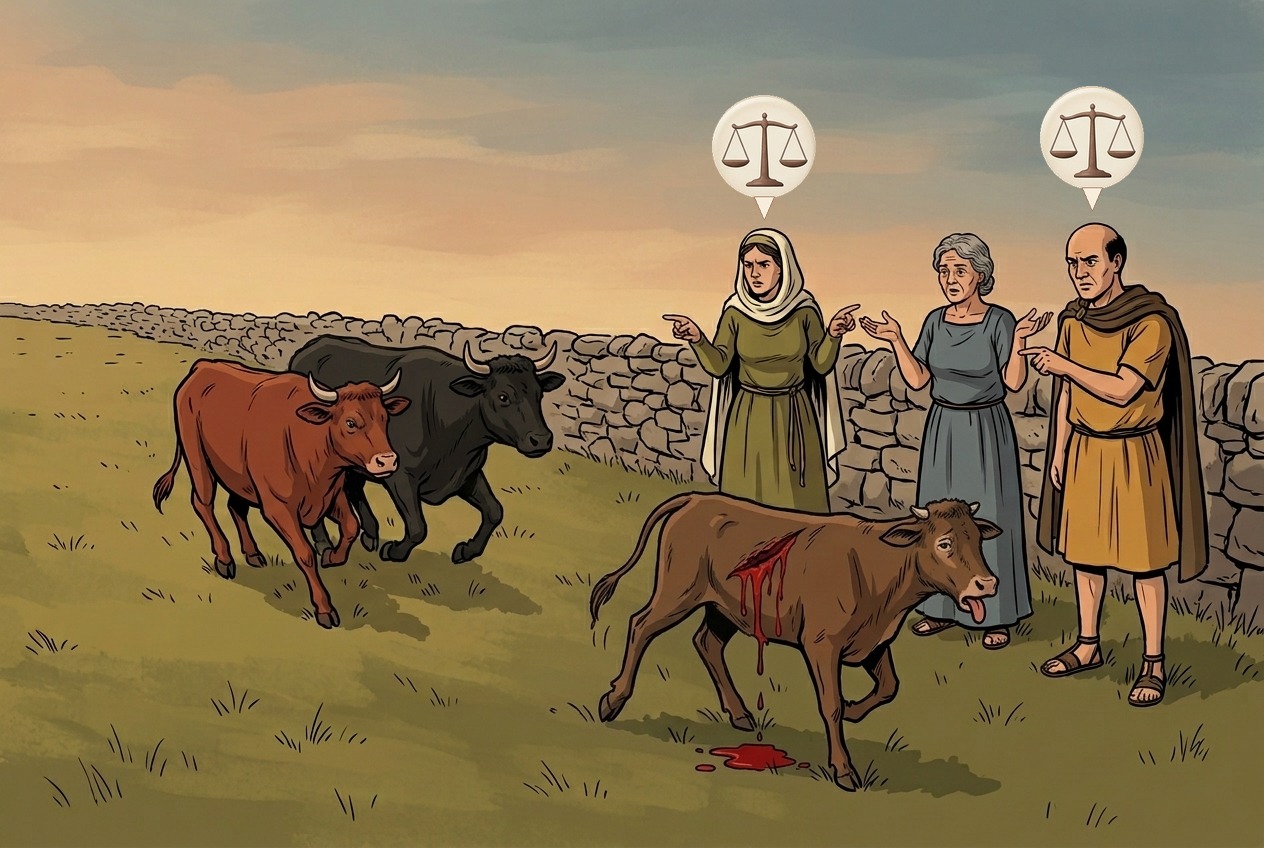
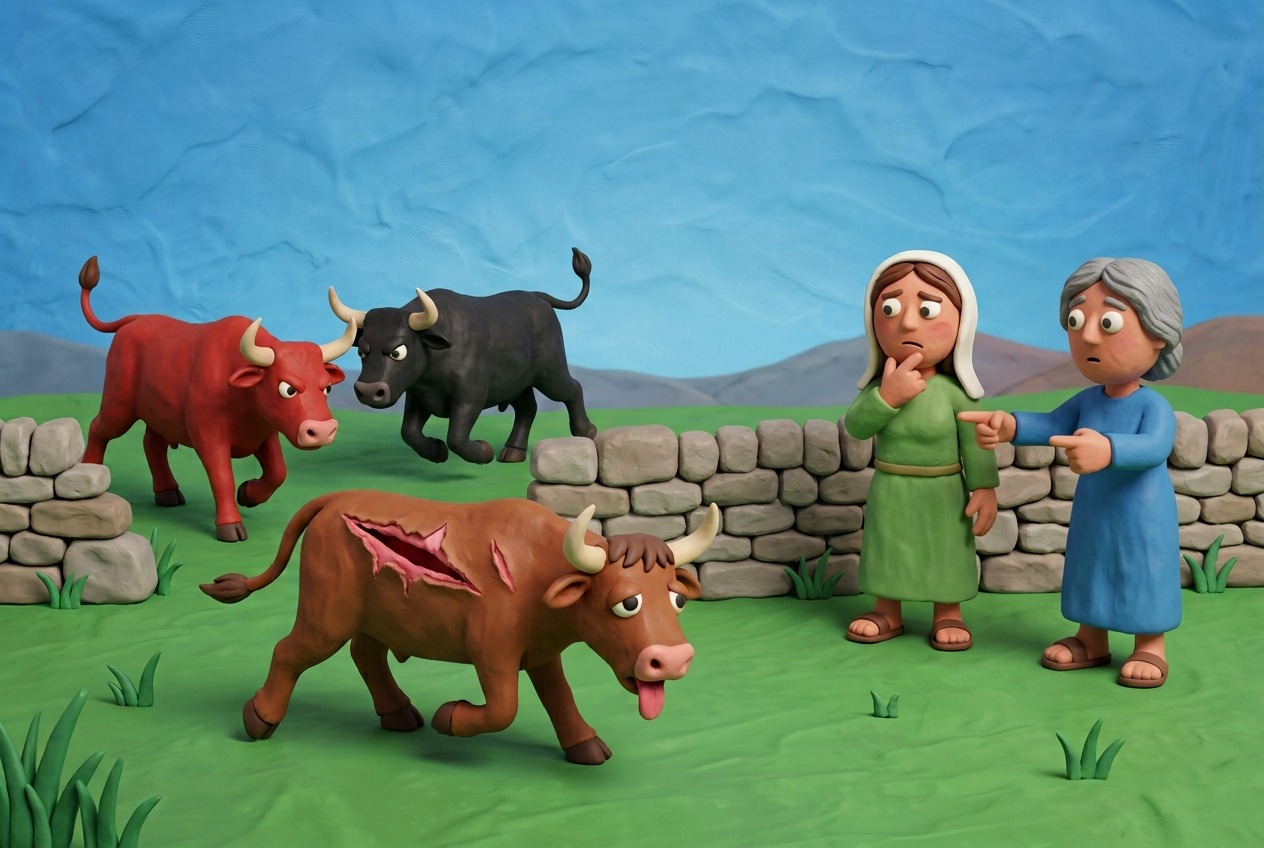 pays?
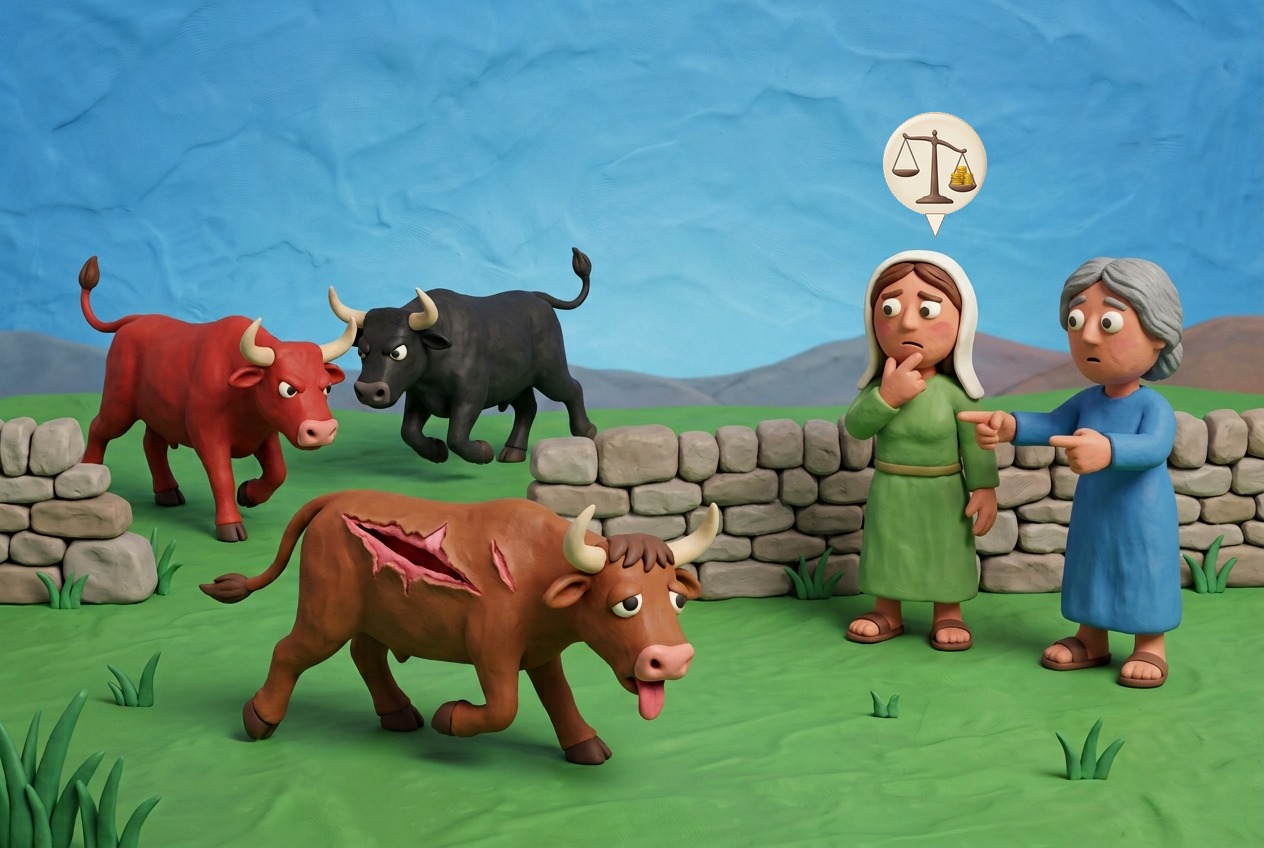
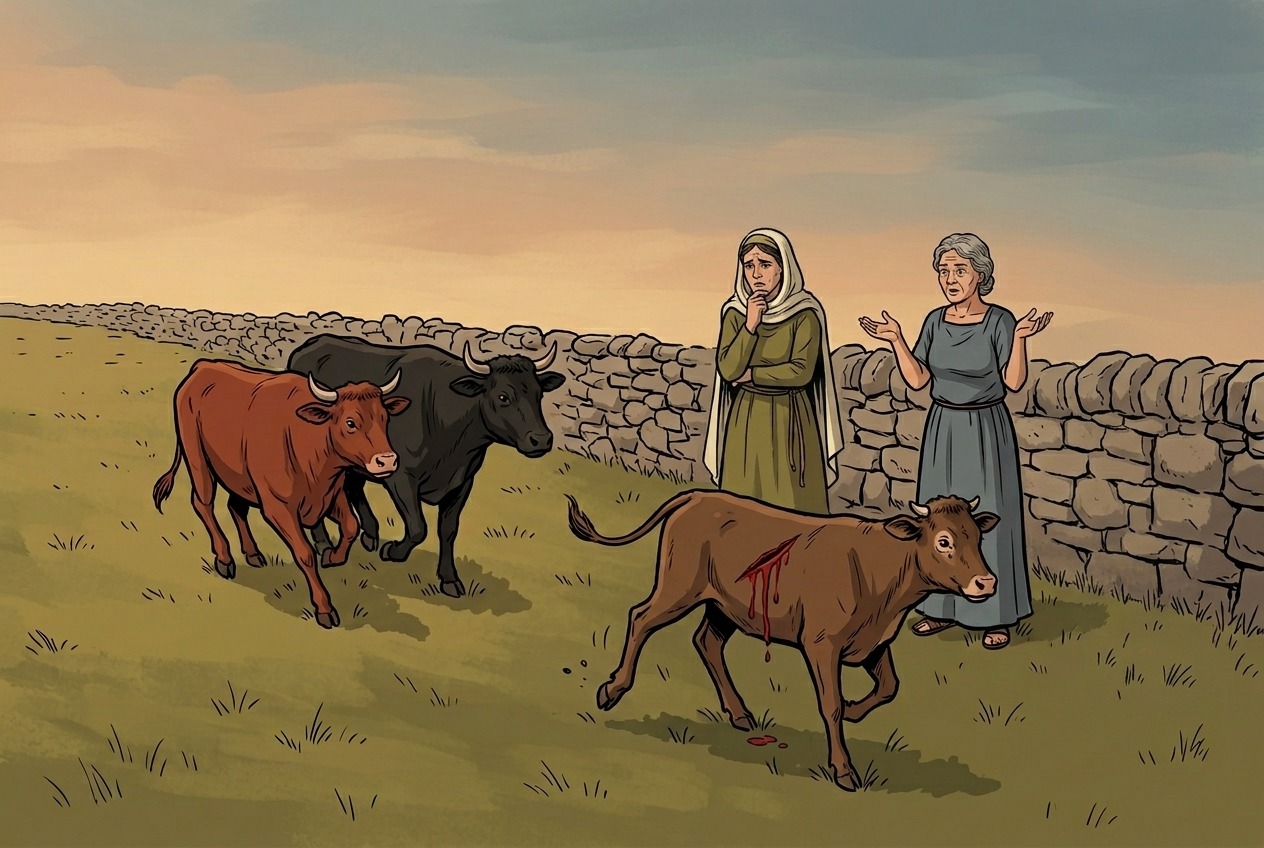 pays?
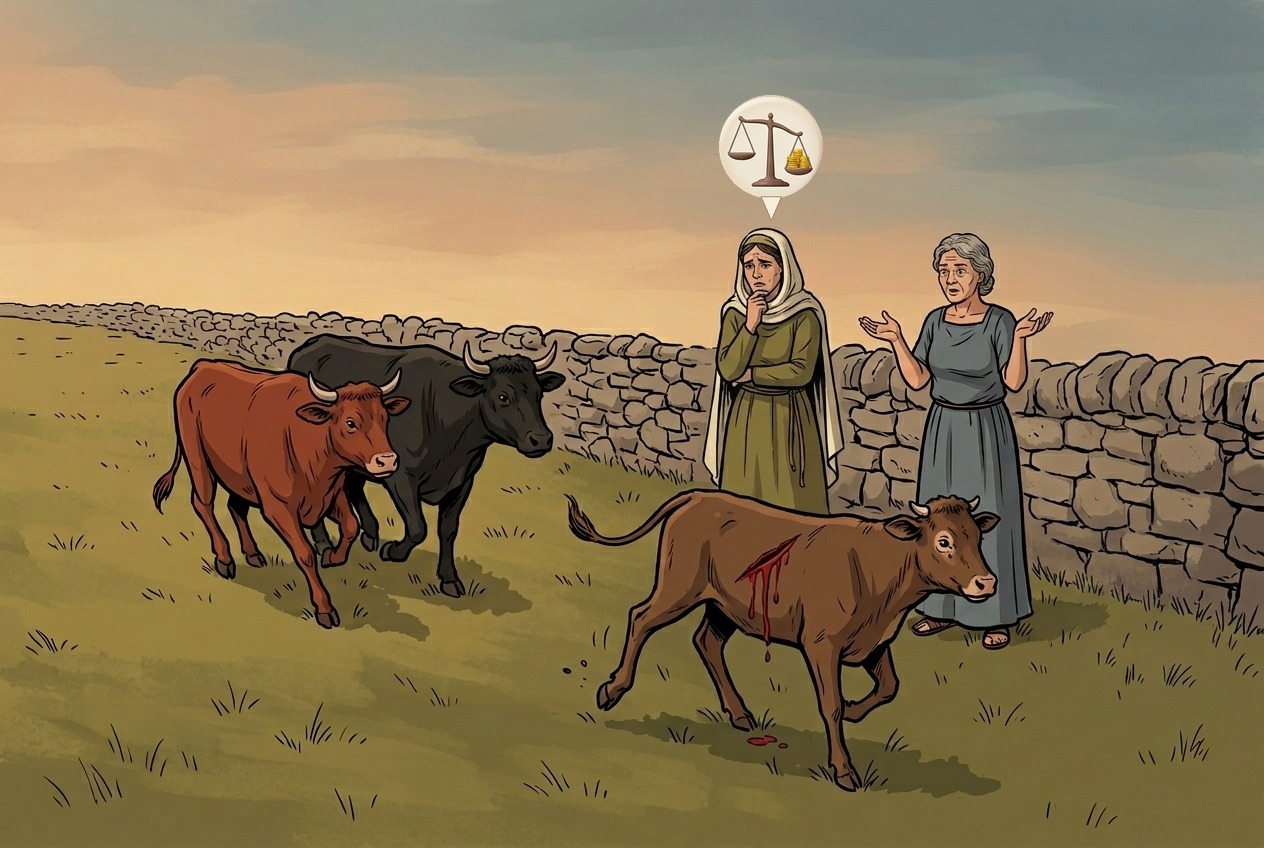
Chapter summary
Draft for review. The outlines are in our own words.
Key principles
- The one who stumbles over an object left in the public domain is exempt, since walkers are not watching the ground; if he is hurt, the owner of the object pays for the injury. 3:1
- Pouring water, hiding thorns or glass, or letting a thorn fence fall into the public domain makes one liable for the injury, as for a pit: he left a hazard where he had no right to. 3:2
- What a person puts out in the public domain and damages with, he pays for, yet anyone who comes first may take it. One who turns over ownerless dung to take it becomes its owner and is liable for its injuries. 3:3
- The one who stumbles pays for the injury he causes if he could have got up in time. If he could not, it is an accident and he is exempt. 3:4
- In a collision in the public domain the one walking behind must always take care, as long as the one in front does not stop suddenly without warning. If both ran, neither pays, since each caused it to himself. 3:53:6
- One who splits wood is liable for any injury he causes, whichever domain either is in, since a person is always an attested danger and should have taken extra care. 3:7
- When two oxen or people hurt each other, the payment is on the surplus (the difference between the two hurts): half of it for oxen that are unattested dangers (tam)tam (unattested dangers), all of it for attested dangers (mu'ad)mu'ad (attested dangers) and people. 3:8
- The same injury can bind the owner of the ox but not the person, and the reverse (embarrassment, a slave's eye, parents, fire on Shabbat). A man does not both die and pay. 3:10
- The burden of proof is on the one who wants payment (hamotzi mechavero alav hara'ayah). Without positive proof the defendant is exempt; two oxen with one owner make that owner liable. 3:11
Key terms
public domain רשות הרבים 3:13:2
The street and other common ground. No one may leave obstacles or hazards in it; one who does is liable for the injury.
tam (tam ox) תם 3:8
An ox that has not been warned against that kind of damage. Its owner pays half damages, from the value of the ox itself.
mu'ad (attested danger) מועד 3:8
An ox that has been warned, or an animal that damages in its usual way. Its owner pays full damages with the best of the land. A human being is always an attested danger.
half damages, full damages חצי נזק, נזק שלם 3:8
The payment for the harm done: half for a tam animal, the whole for an attested danger or a person.
burden of proof 3:11
The duty of the one who wants payment to bring proof. Without it the defendant pays nothing.
Key debates
Does intention matter for a jug that breaks in the public domain? 3:1
He is liable for the injury, with no distinction.
Only if he broke it with intention; without intention he is not liable.
Does Rabban Shimon ben Gamaliel disagree with the first view? 3:3
The one who put out the straw is liable for injuries, and whoever comes first may take it.
Whoever leaves disruptive things in the public domain must make restitution if they cause damage, and whoever comes first may take them. Kehati: this covers even those who put things out with permission.
What does a tam ox owe for hurting a man? 3:8
The ox's owner pays only half damages.
Even a tam ox that hurt a man pays full damages for the greater hurt.
How is Exodus 21:35 applied? 3:9
With two oxen worth 200 and a worthless carcass, sell the live ox and divide its price.
That is the halakhah, but it fulfils only half the verse. The verse speaks of selling the live ox and also dividing the dead animal, as when the carcass is worth 50.