
 keeps it
 has no claim
 returns it
 does not return it
 holds it
 follows the simpon (the attached note)
Mishnah 1: Two people grip a cloak
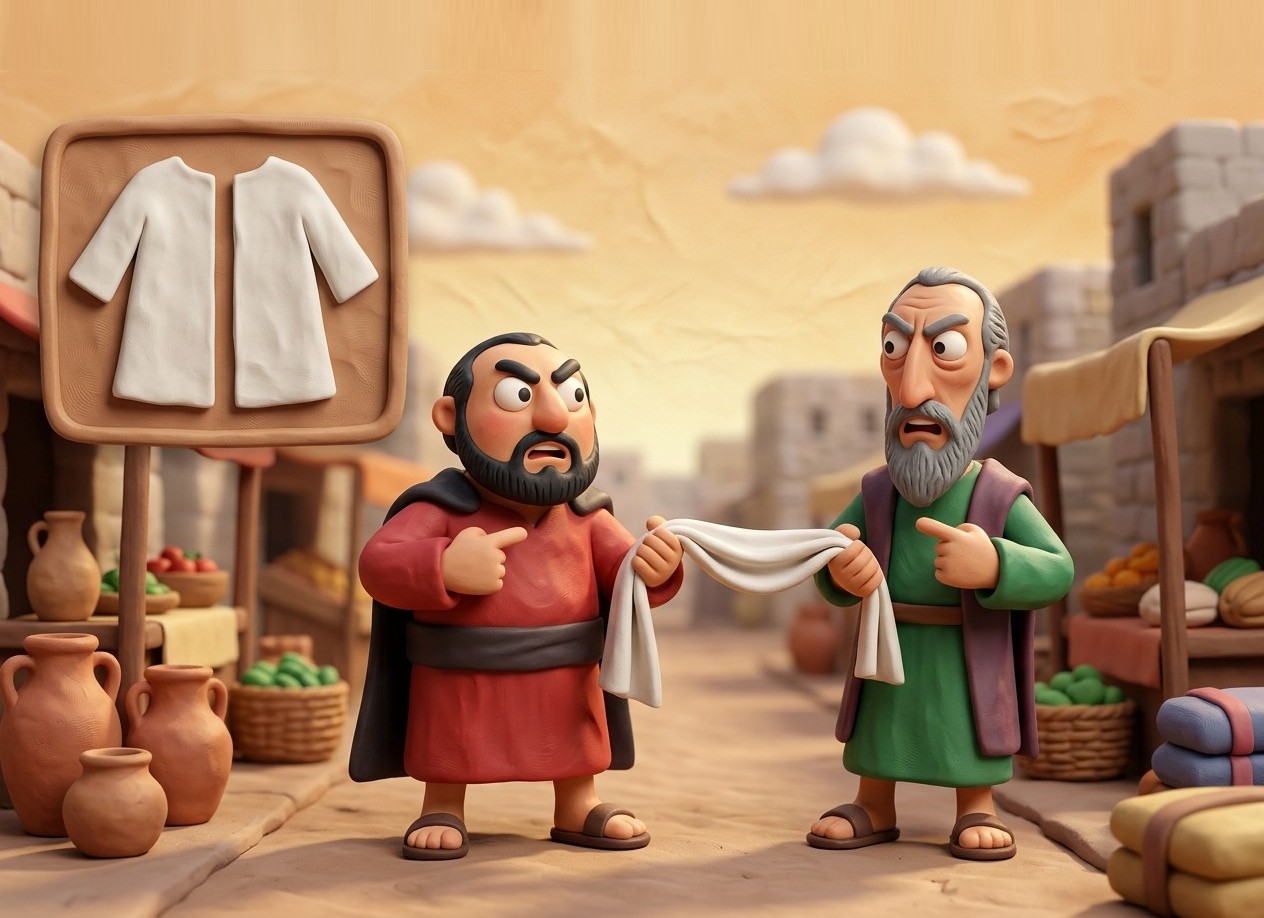
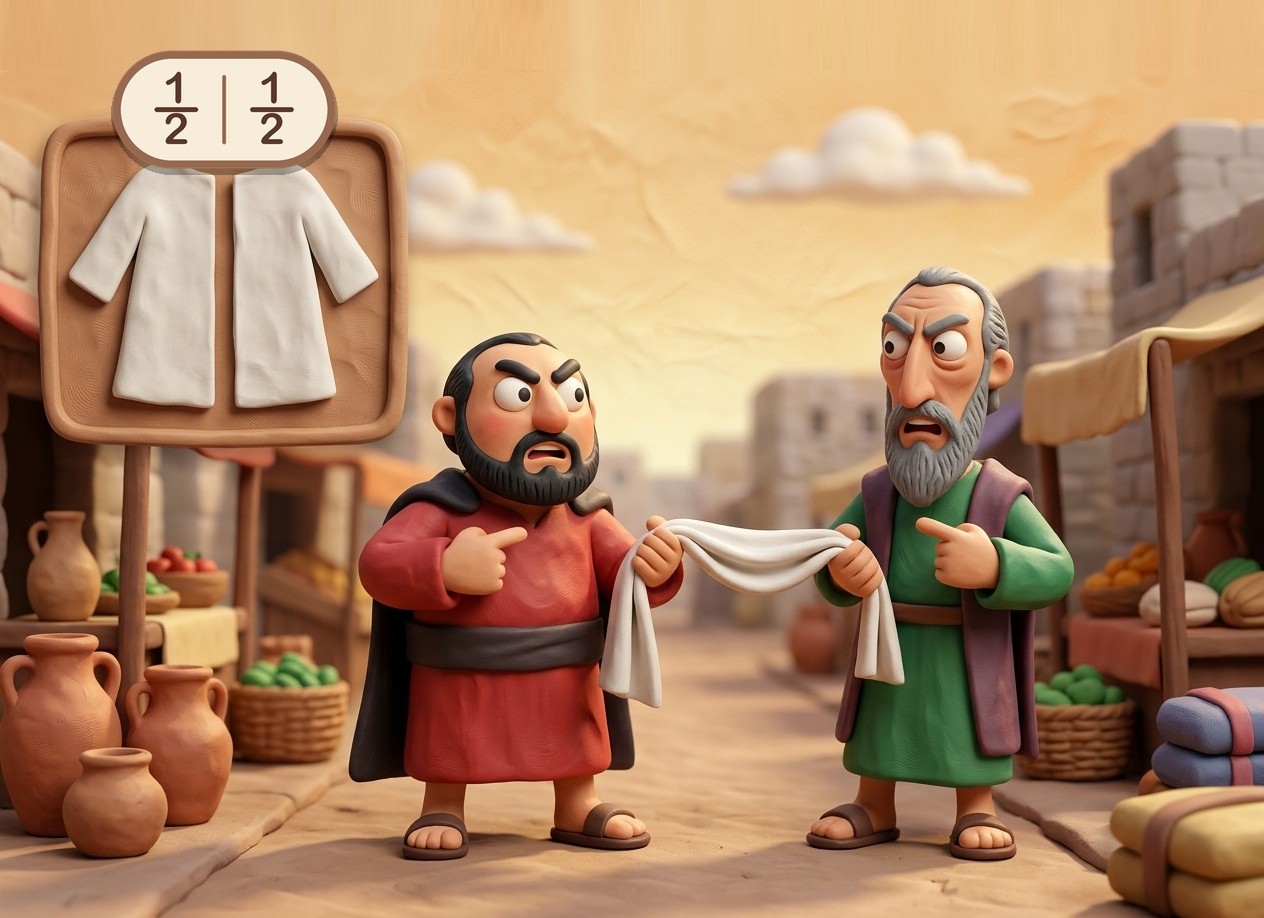
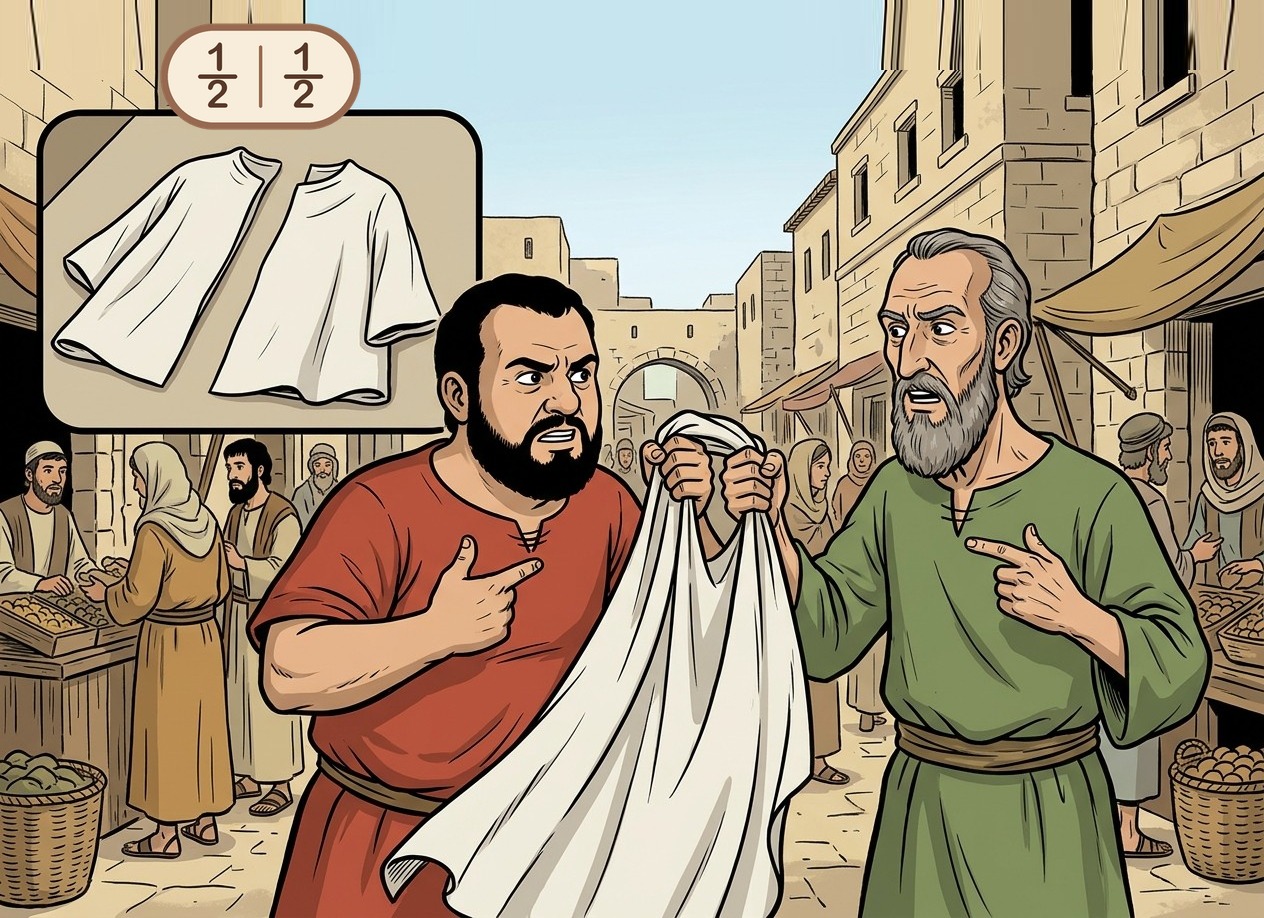
When two people each claim a cloak and neither can prove it, each swears and they divide it by what each claims.
The case
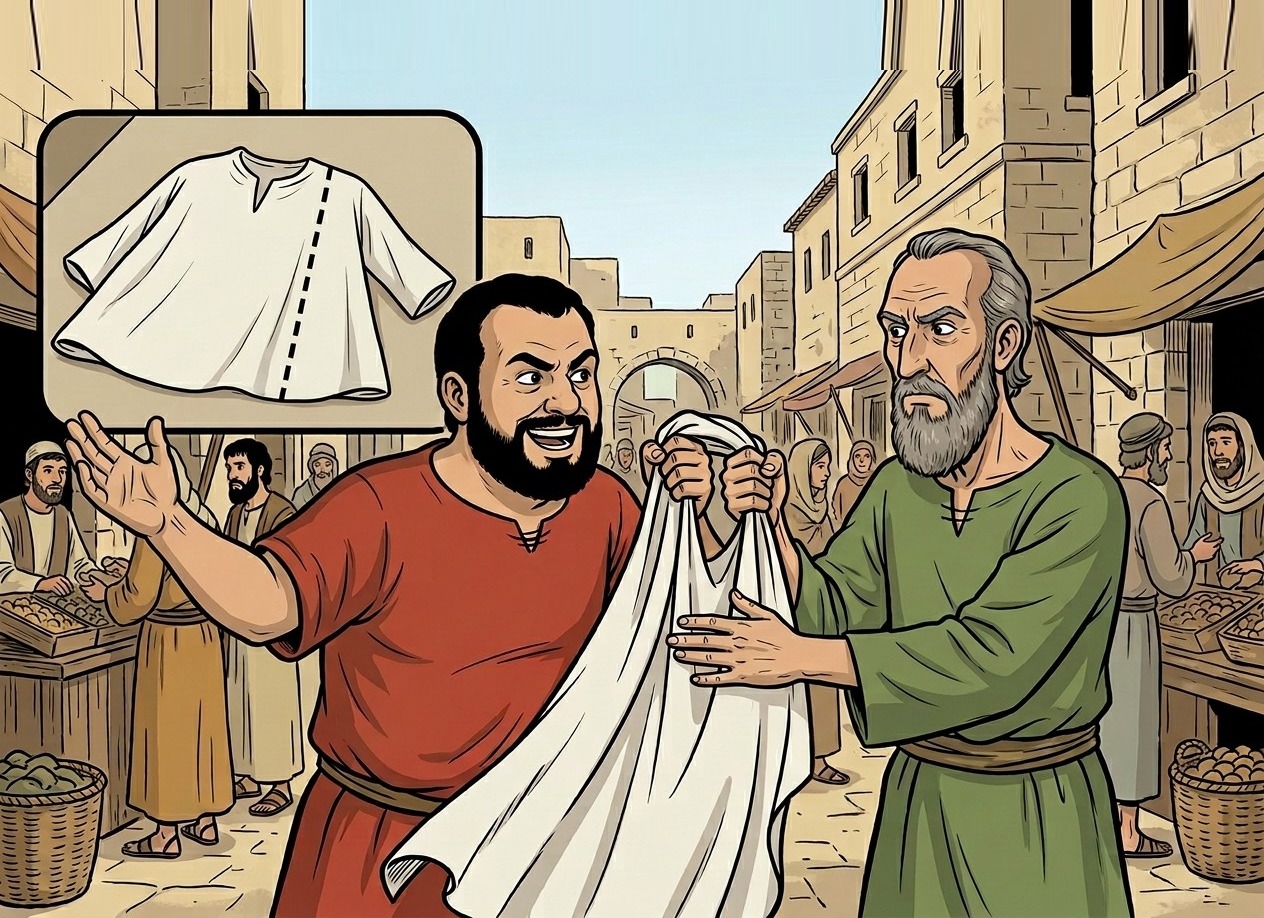
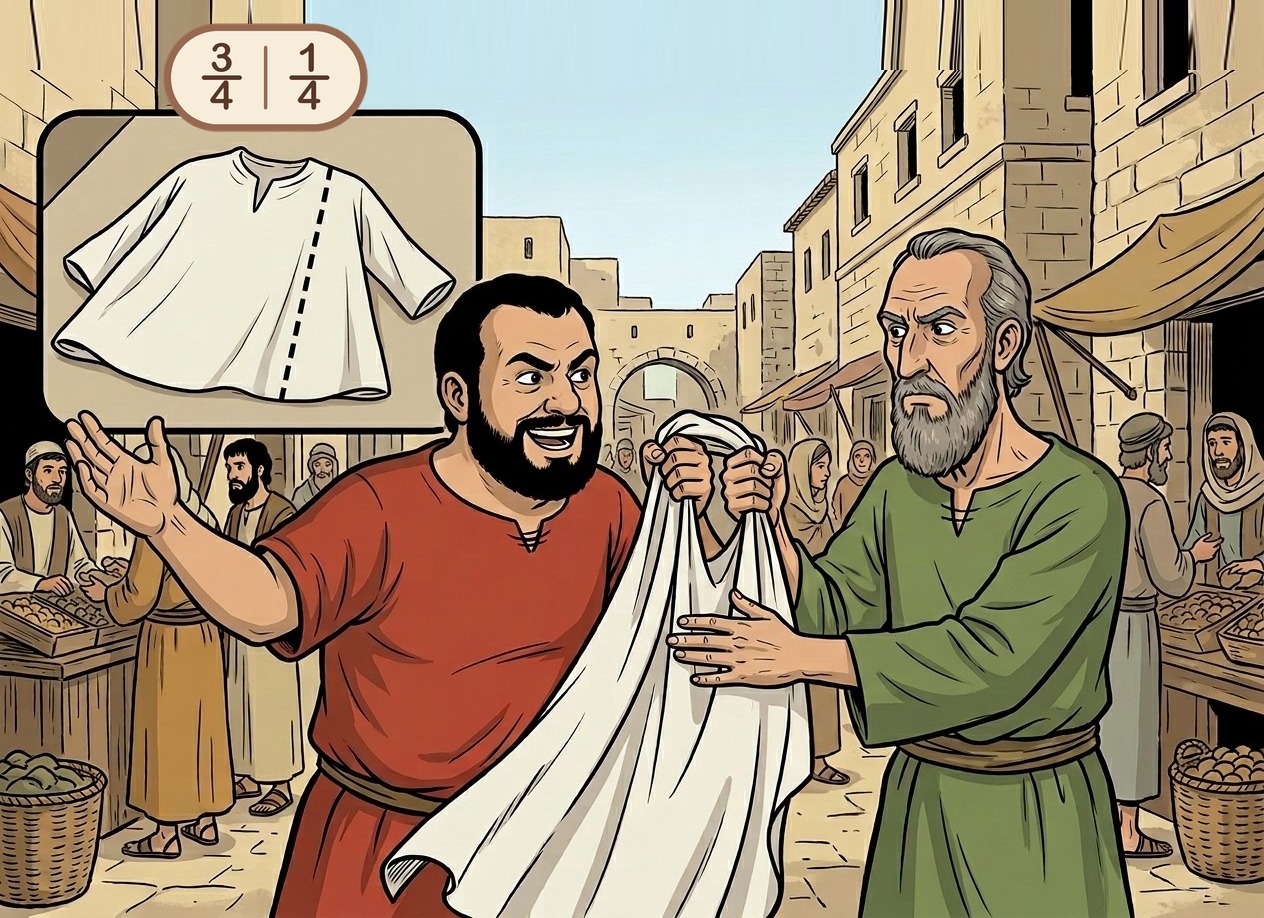
- Two people are holding a garment, each saying "I found it" and "it is all mine". Neither can bring proof, so each must take an oath.
- Each is in possession of the garment and each claims it, so the law is that they divide it. Taking the oath is how each shows his claim is genuine.
Both claim all of it
- Each swears that he owns no less than half of the cloak, and they split it.
One claims all, the other claims half
- The one who says "it's all mine" swears that he owns no less than three quarters; the one who says "half is mine" swears that he owns no less than a quarter.
- The first takes three quarters and the second takes a quarter.
How the cloak is divided
| What each claims | Each swears | They divide it |
|---|---|---|
| Both say all of it | no less than half | half and half |
| One says all, the other says half | three quarters / a quarter | three quarters and a quarter |
שנים אוחזין בטלית. זה אומר אני מצאתיה. וזה אומר אני מצאתיה. זה אומר כולה שלי וזה אומר כולה שלי. זה ישבע שאין לו בה פחות מחציה. וזה ישבע שאין לו בה פחות מחציה ויחלוקו.
זה אומר כולה שלי וזה אומר חציה שלי. האומר כולה שלי ישבע שאין לו בה פחות משלשה חלקים. והאומר חציה שלי ישבע שאין לו בה פחות מרביע. זה נוטל שלשה חלקים וזה נוטל רביע:
If two people are holding a garment, and this one says: I found it, and that one says: I found it; this one says: All of it is mine, and that one says: All of it is mine; then this one takes an oath that he does not have ownership of less than half of it, and that one takes an oath that he does not have ownership of less than half of it, and they divide it.
If this one says: All of it is mine, and that one says: Half of it is mine, then the one who says: All of it is mine, takes an oath that he does not have ownership of less than three parts of it, and the one who says: Half of it is mine, takes an oath that he does not have ownership of less than one-quarter of it. This one takes three parts, and that one takes one-quarter.
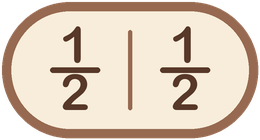 splits in half?
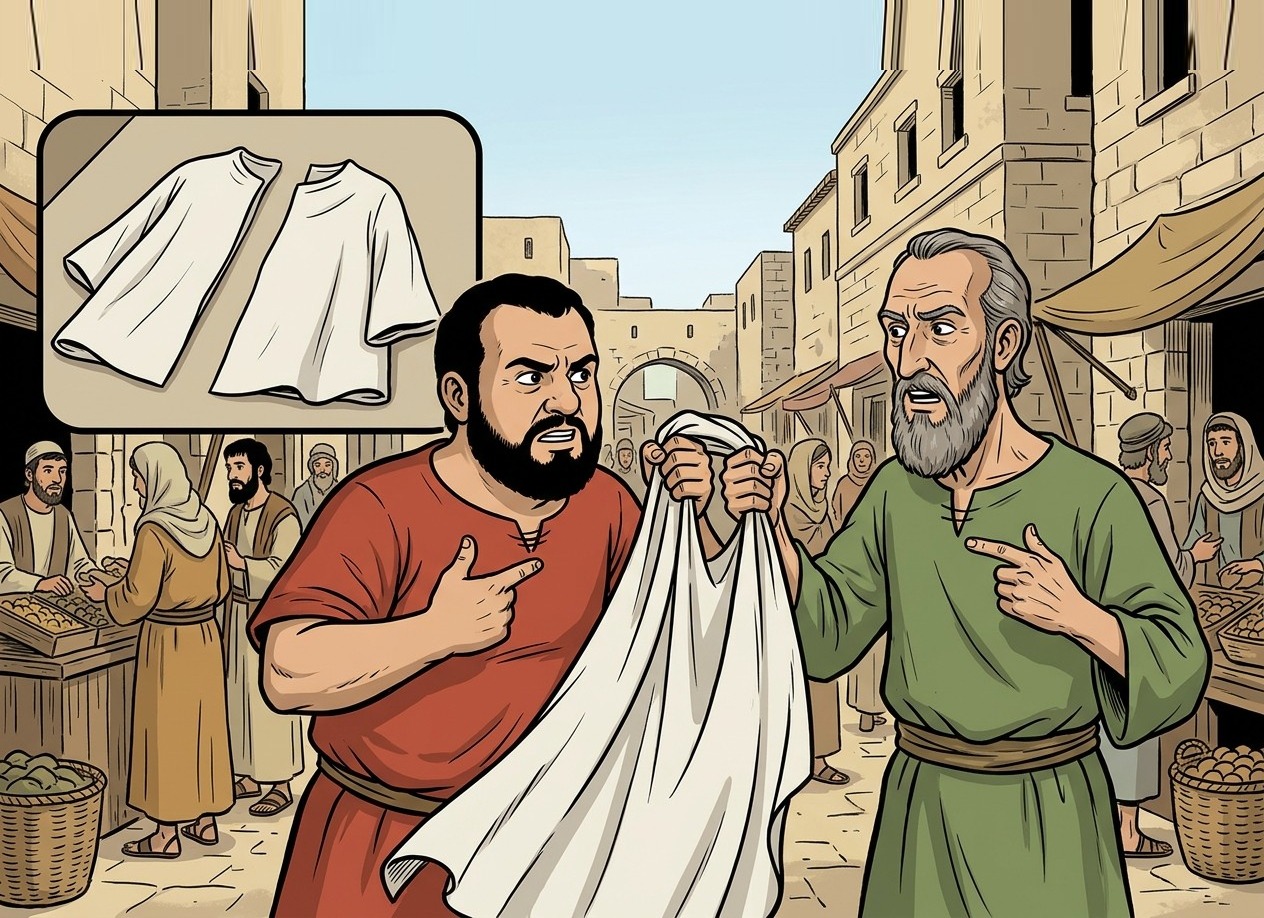 splits in half?
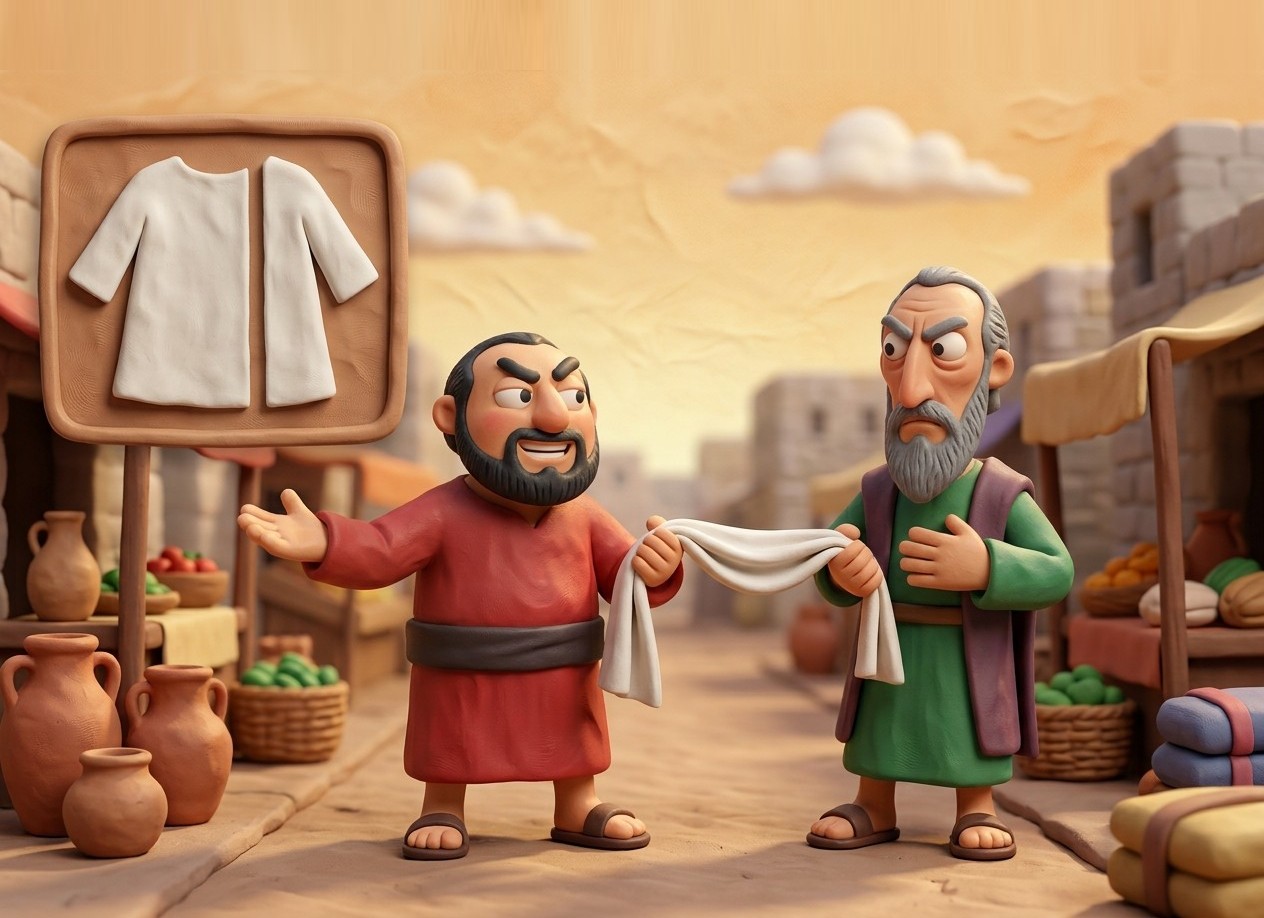
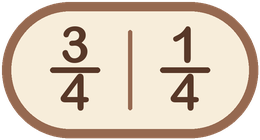 three quarters and a quarter?
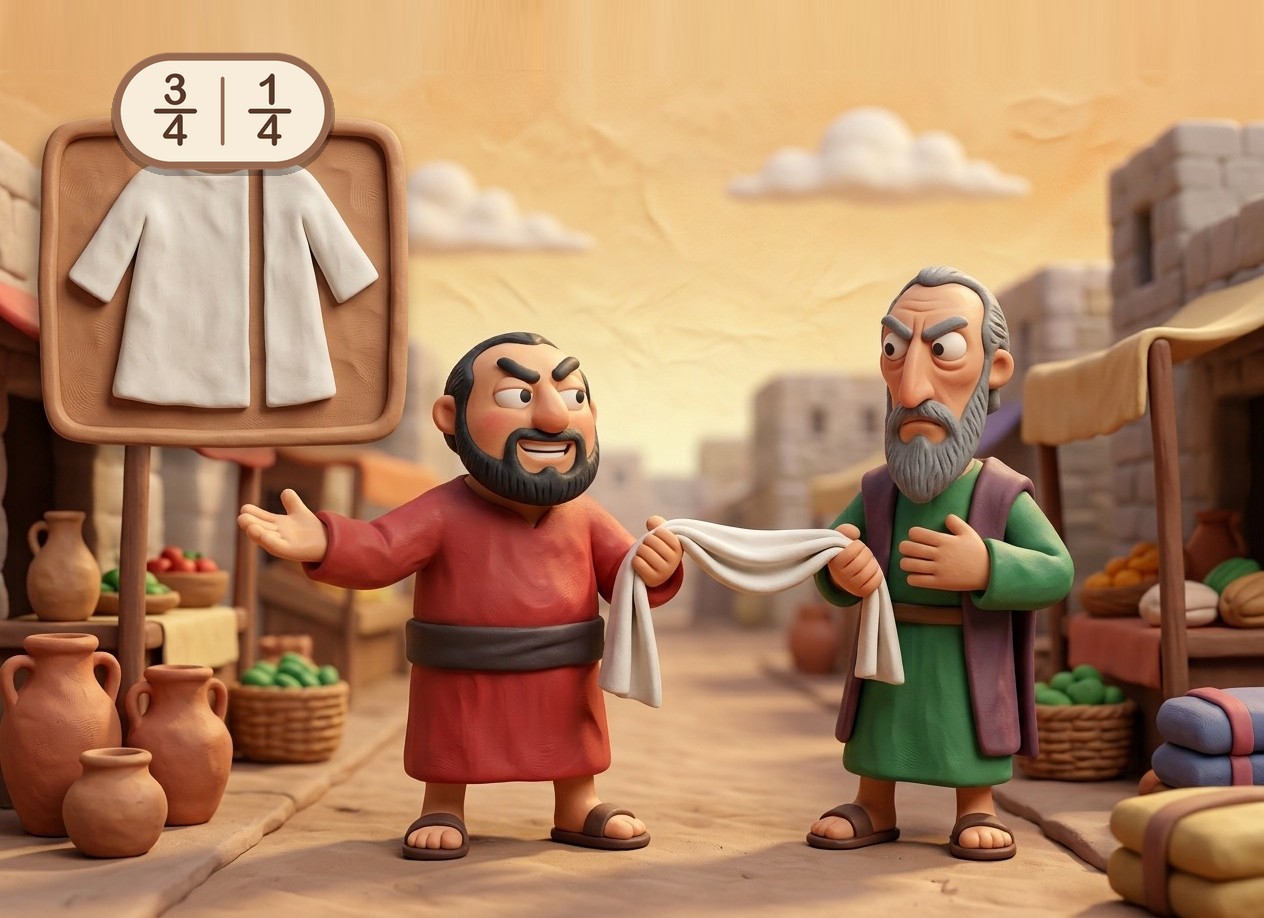
 three quarters and a quarter?
Mishnah 2: Two men and a donkey
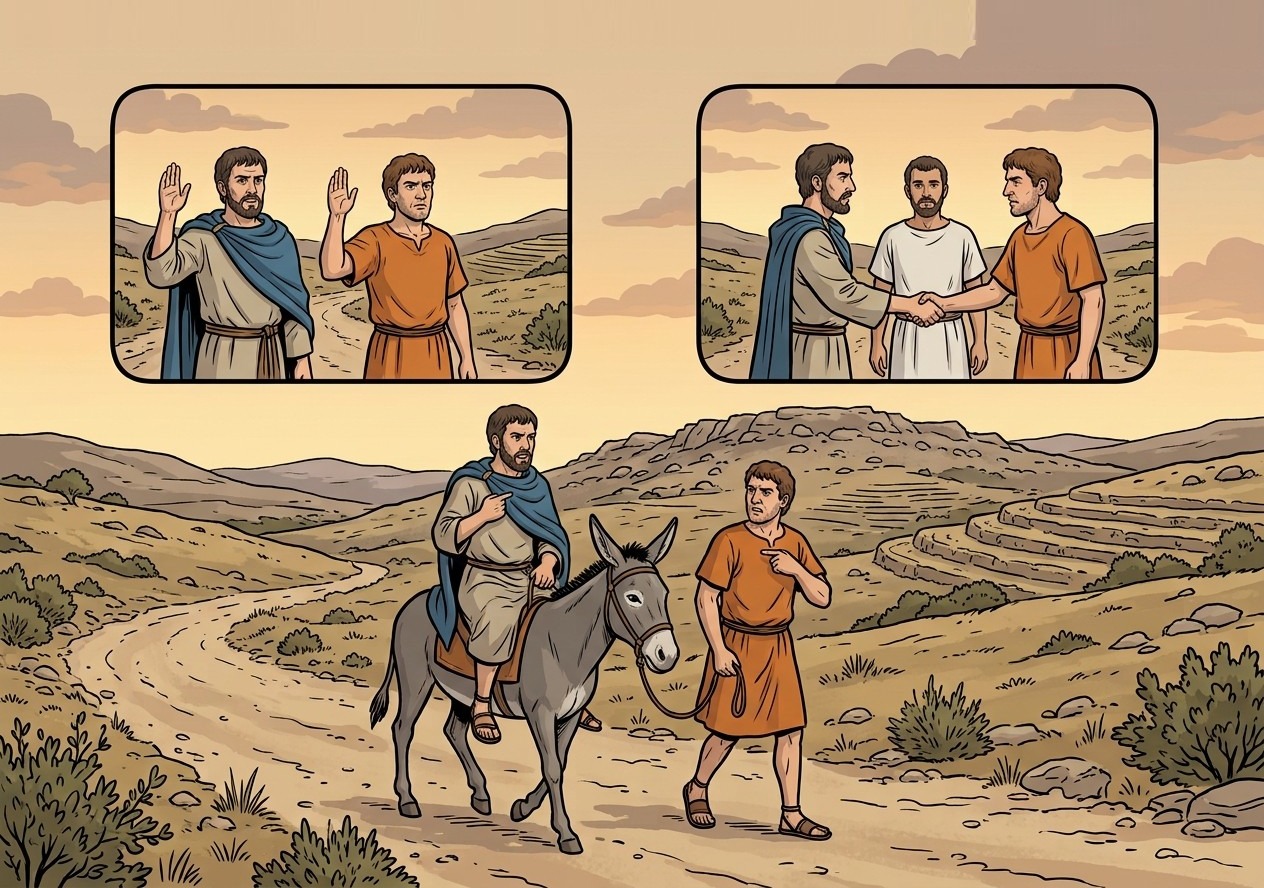
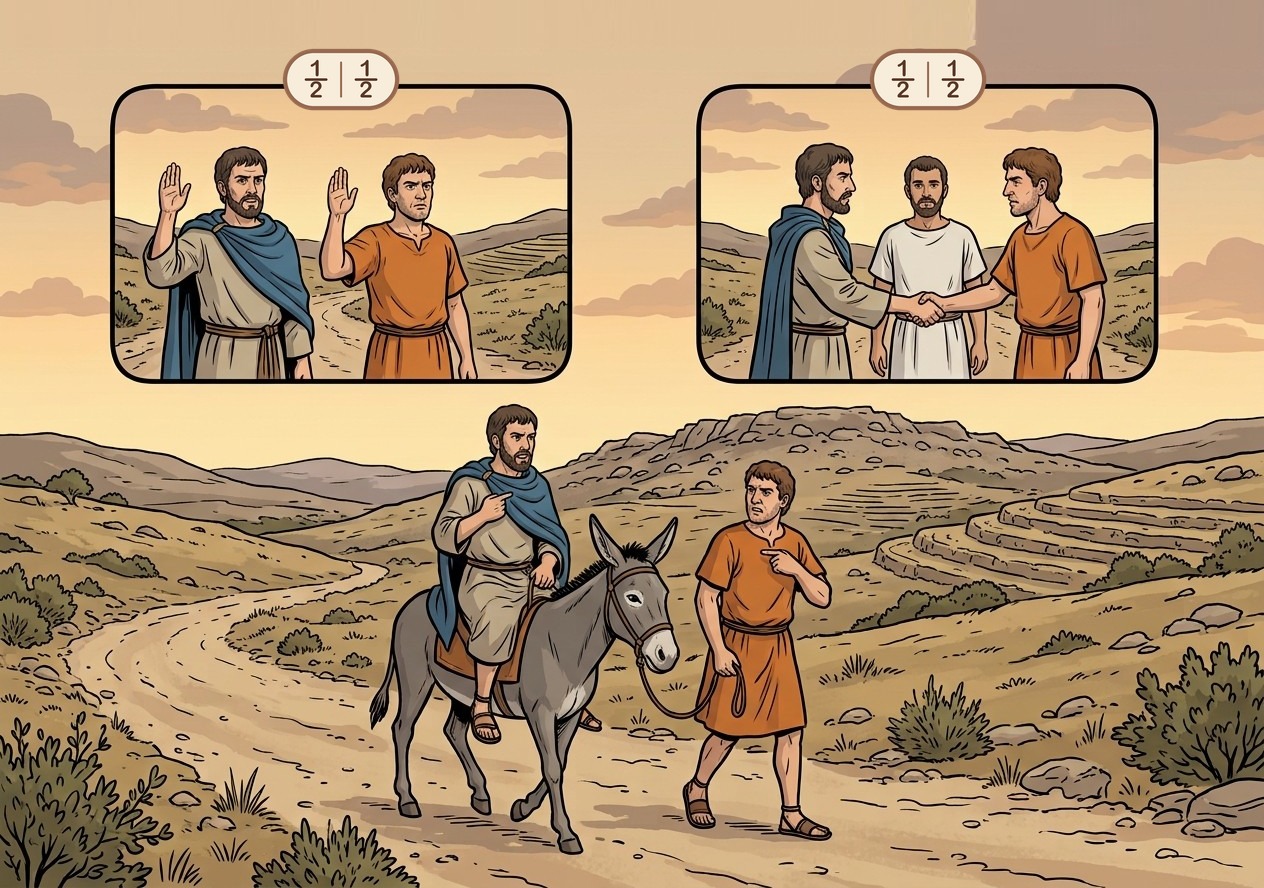
Two men on one animal each say it is all theirs: they swear and split its value. If they agree or there are witnesses, no oath is needed.
The case
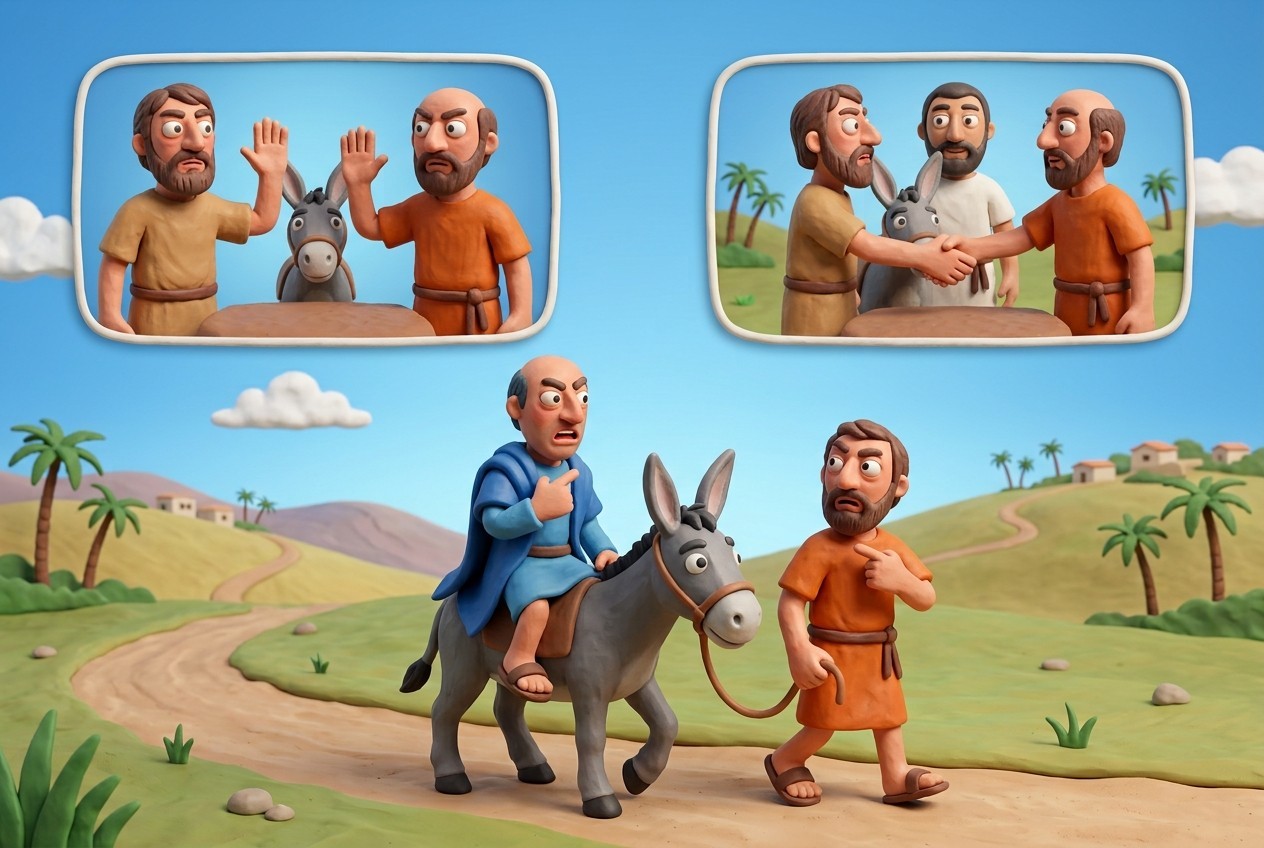
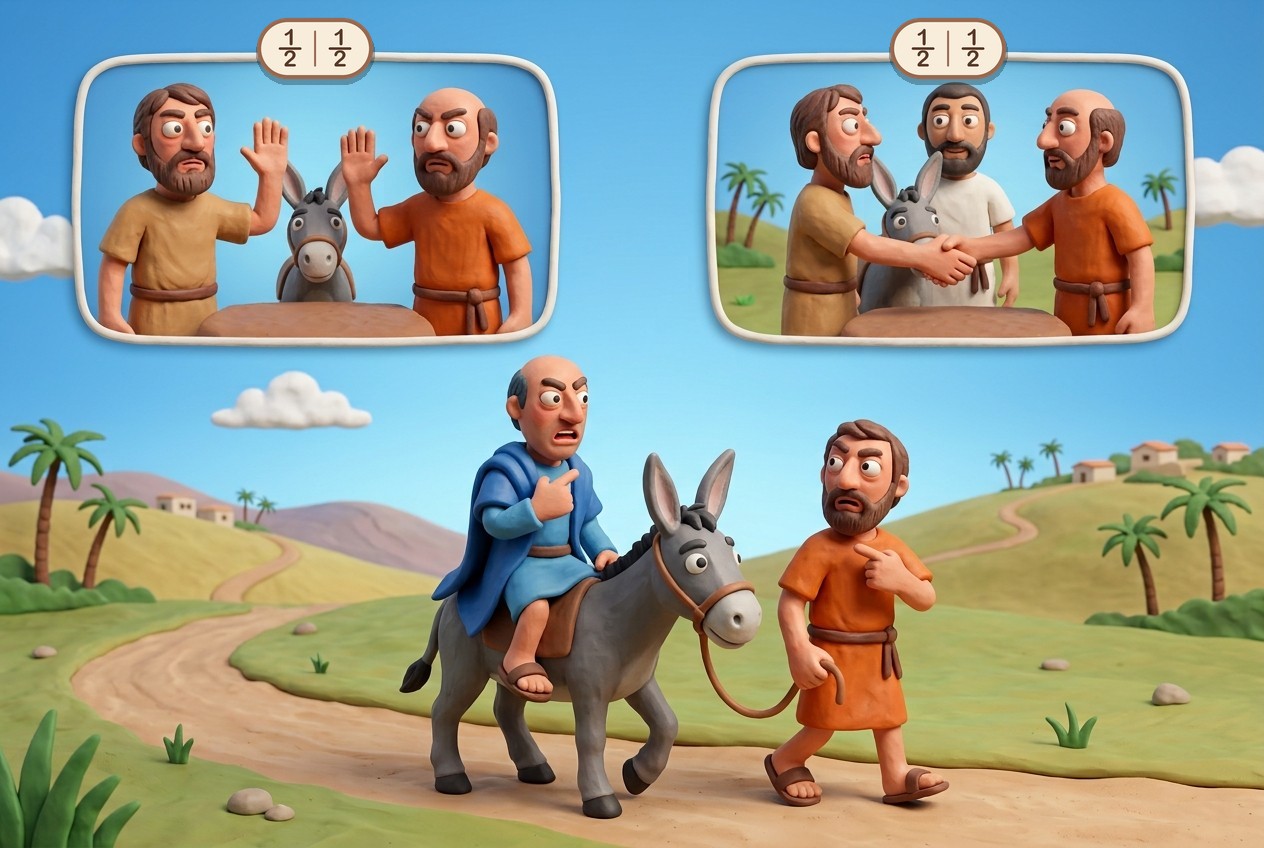
- Two men were riding on an animal, or one was riding and the other leading it. Each says it is all his.
- Each swears that he owns no less than half, and they split it.
No oath needed
- If after the case is settled they both admit the other's claim, or there are witnesses, they split the animal without an oath.
- If they admit, or there are witnesses, no oath is needed: the oath is only to settle a doubt.
Splitting the animal
| Situation | Oath? | Result |
|---|---|---|
| Each claims all of it | Each swears | They split it |
| They later admit each other's claim, or there are witnesses | No oath | They split it |
היו שנים רוכבין על גבי בהמה או שהיה אחד רוכב ואחד מנהיג. זה אומר כולה שלי וזה אומר כולה שלי. זה ישבע שאין לו בה פחות מחציה וזה ישבע שאין לו בה פחות מחציה ויחלוקו.
בזמן שהם מודים או שיש להן עדים. חולקים בלא שבועה:
If two people were riding on an animal, or one was riding and one was leading it, and this one says: All of it is mine, and that one says: All of it is mine, then this one takes an oath that he does not have ownership of less than half of it, and that one takes an oath that he does not have ownership of less than half of it, and they divide it.
When they admit to each other's claims, or when they have witnesses, they divide it without an oath.
 splits in halfsplits in half12
 splits in halfsplits in half12
Mishnah 3: Lost property seen from a donkey
A claim of ownership has to come when you hold the object, not after you have already given it away.
Acquiring it
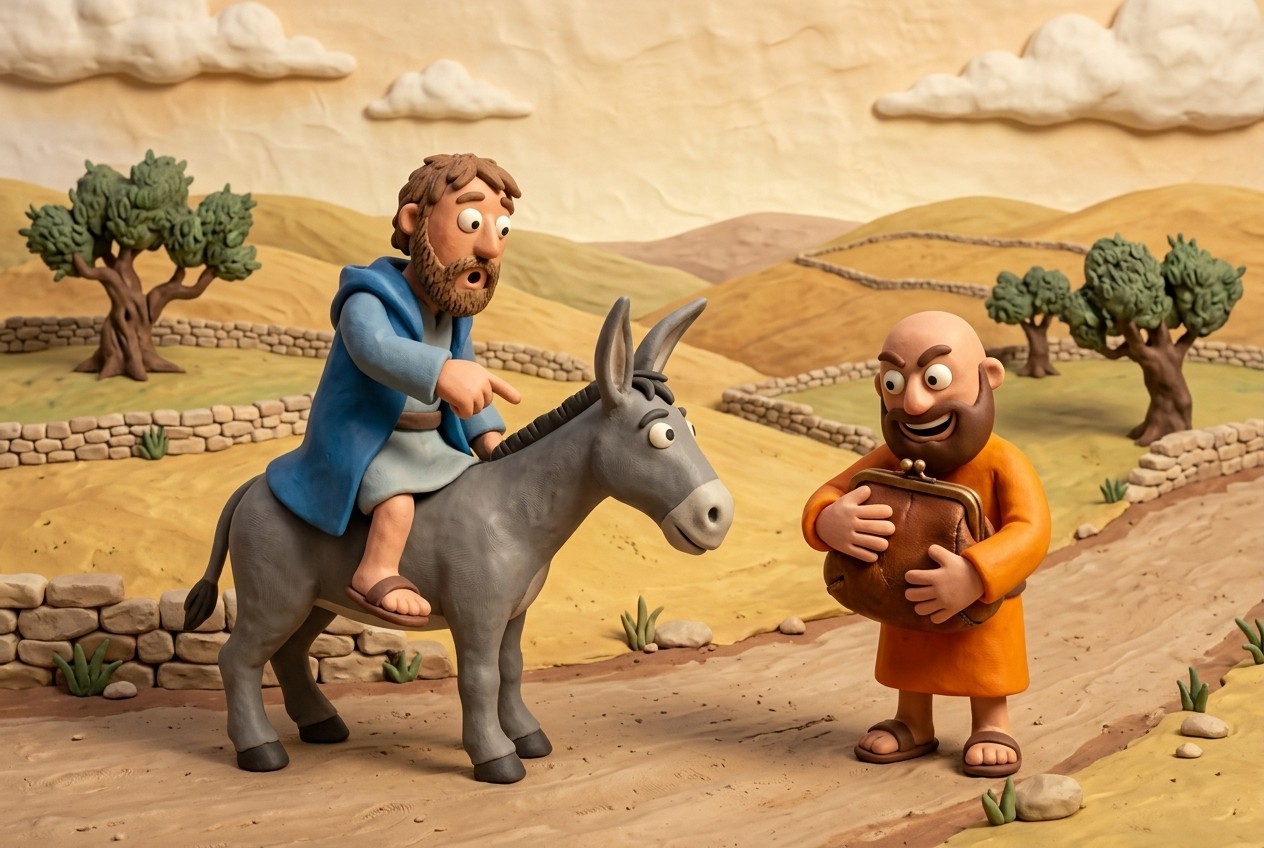
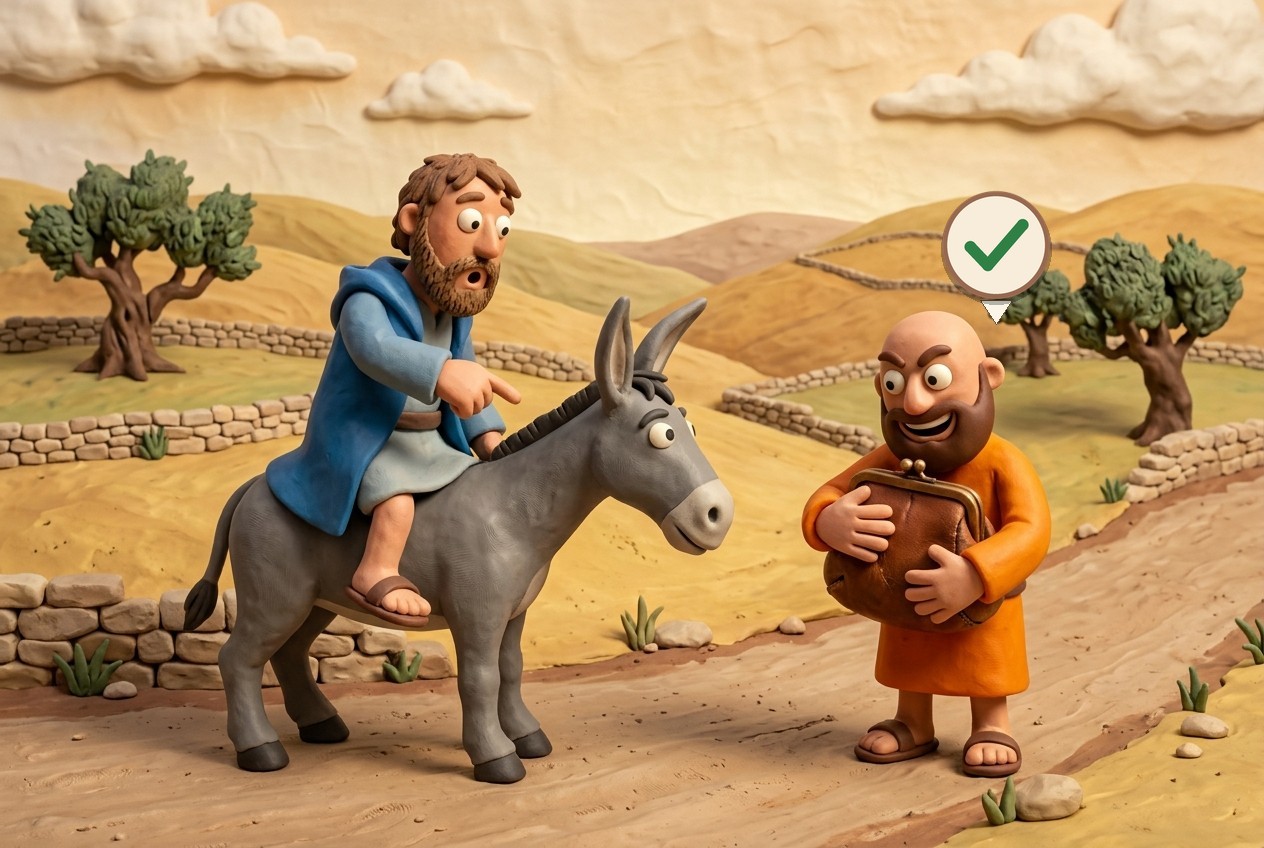
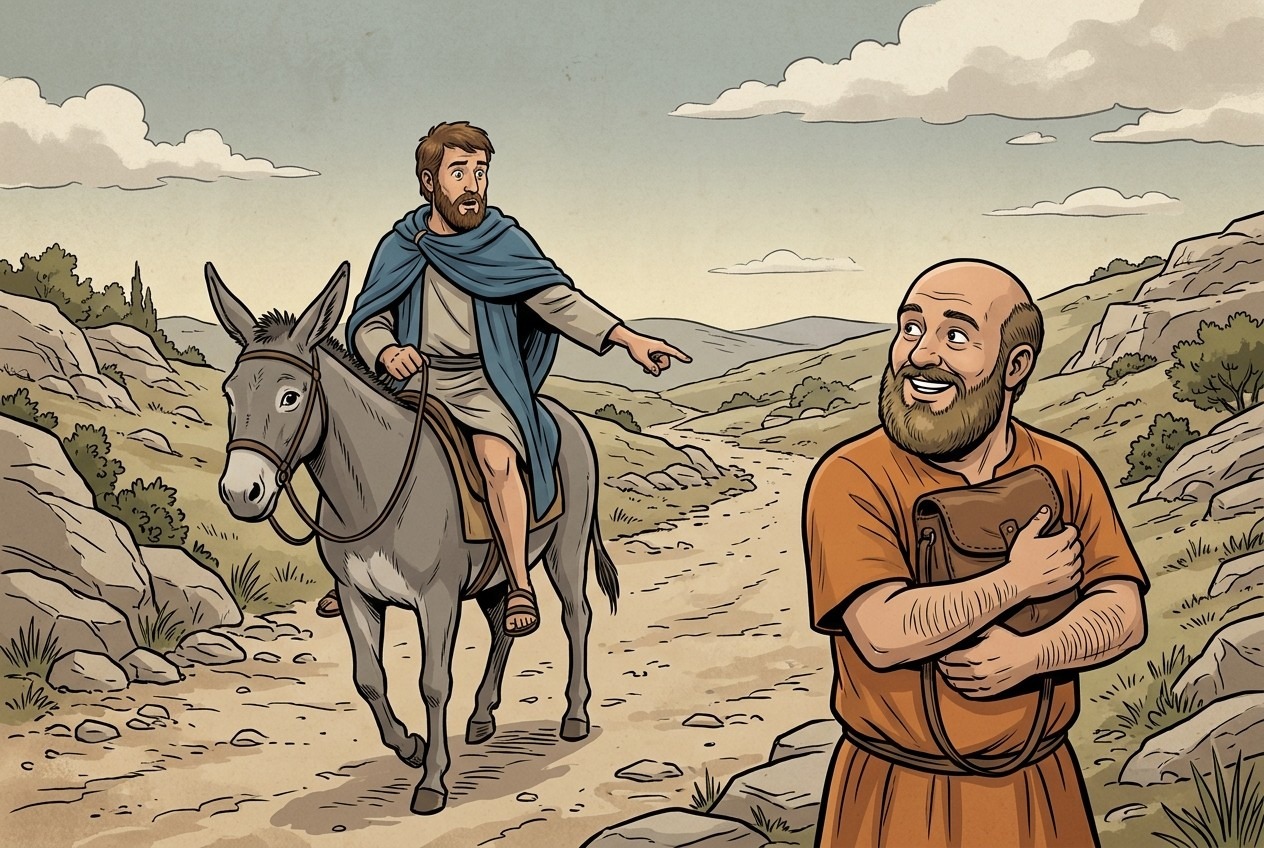
- A man was riding on a beast and saw lost property and said to his friend, "Give it to me." The friend picked it up and said "I have acquired it": he has acquired it.
Too late
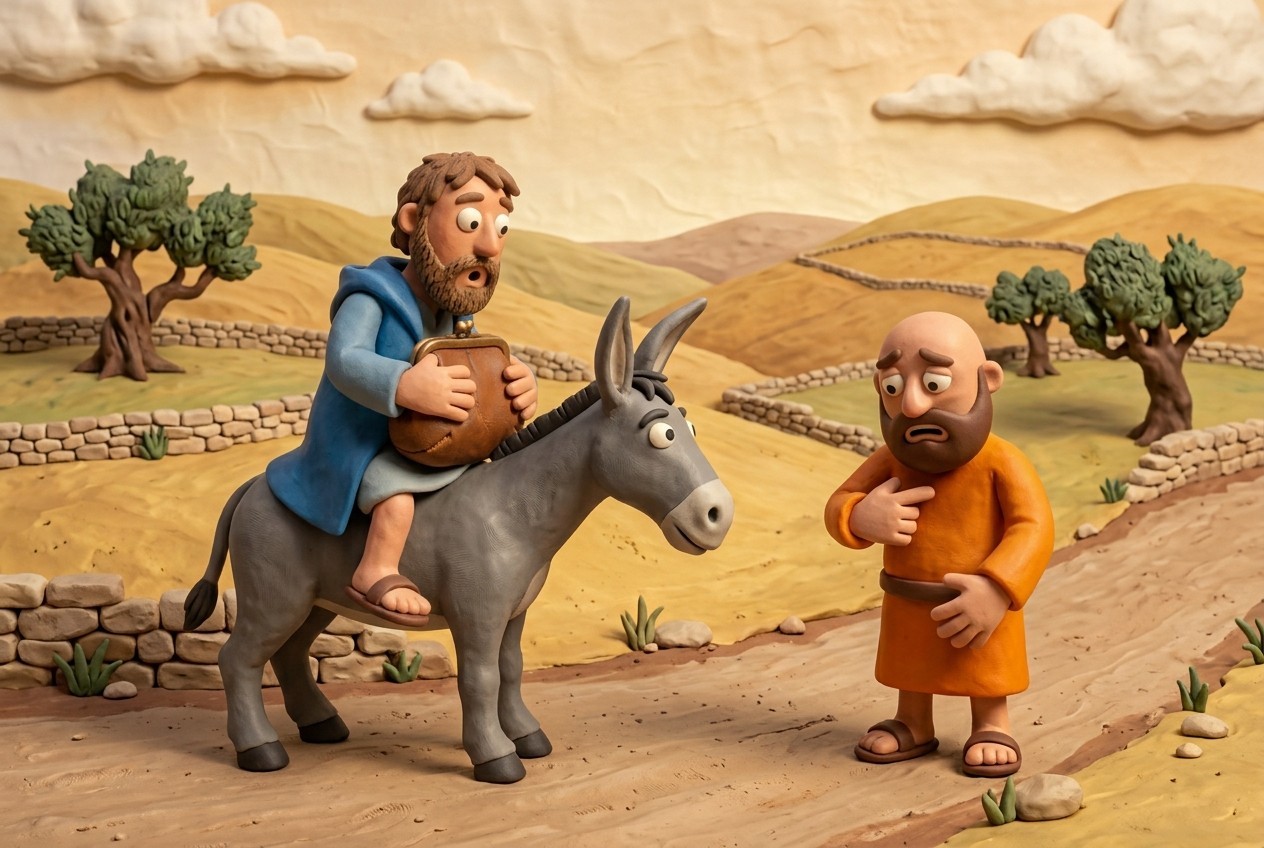
- But if he first handed it to the rider and only then said "I acquired it first," he has said nothing.
- The finder who said "I acquired it" must say so at the moment he picks it up, before handing it over; after that, it already belongs to the rider.
Who keeps the lost object?
| What the friend does | Result |
|---|---|
| Picks it up and says "I acquired it" | He acquires it |
| Gives it to the rider, then says "I had it first" | His words mean nothing |
היה רוכב על גבי בהמה וראה את המציאה. ואמר לחברו תנה לי. נטלה ואמר אני זכיתי בה. זכה בה.
אם משנתנה לו אמר אני זכיתי בה תחלה. לא אמר כלום:
If one was riding on an animal and saw a found item, and said to another: Give it to me, and the other took it and said: I have acquired it, then he has acquired it.
But if, after giving it to him, he said: I acquired it at the outset, he has said nothing.
 keeps it?
 keeps it?
 has no claim?
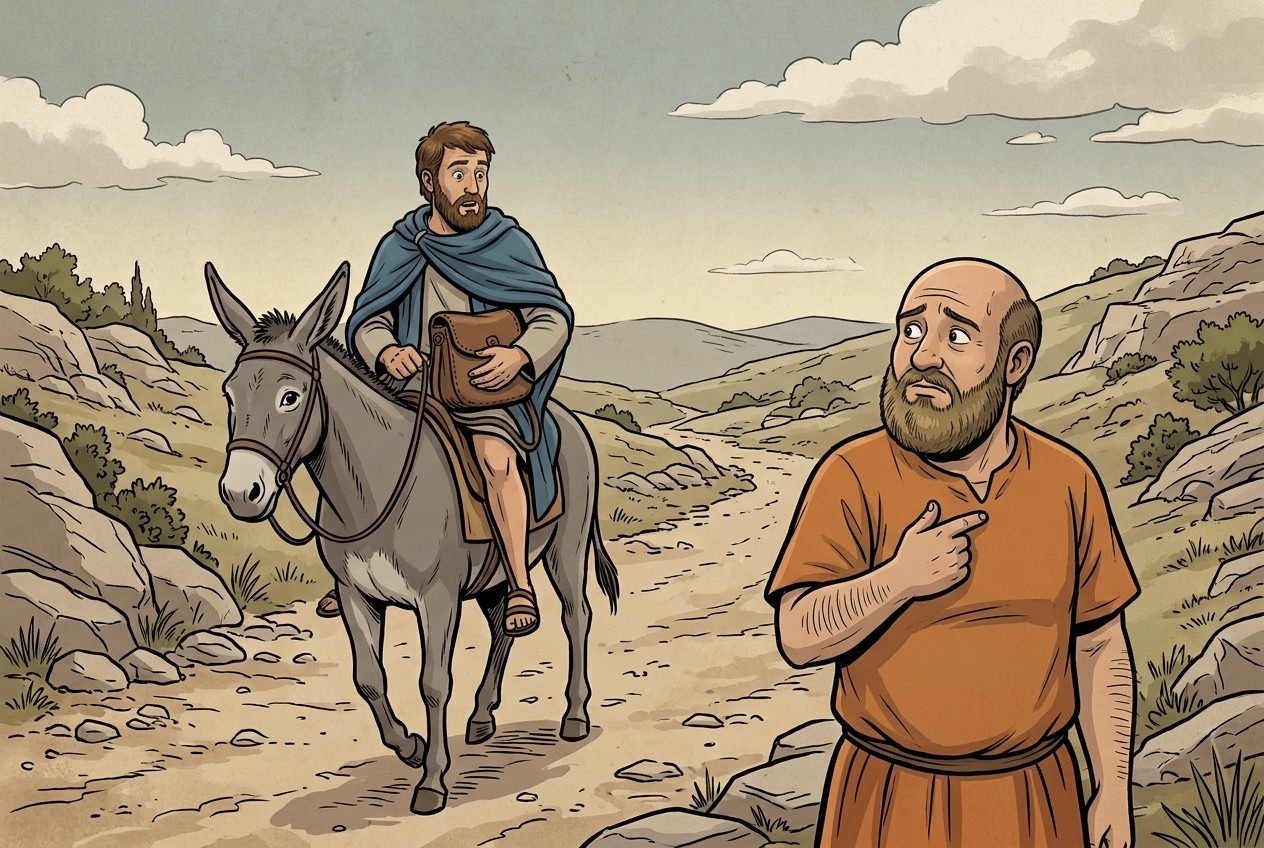 has no claim?
Mishnah 4: Seizing lost property, and the field that acquires
Someone who falls on a lost object loses it to whoever seizes it first. A field can acquire an animal that cannot leave it.
Falling on it
- If a man saw lost property and fell upon it, and someone else came and seized it, the one who seized it acquired it.
"My field acquires it"
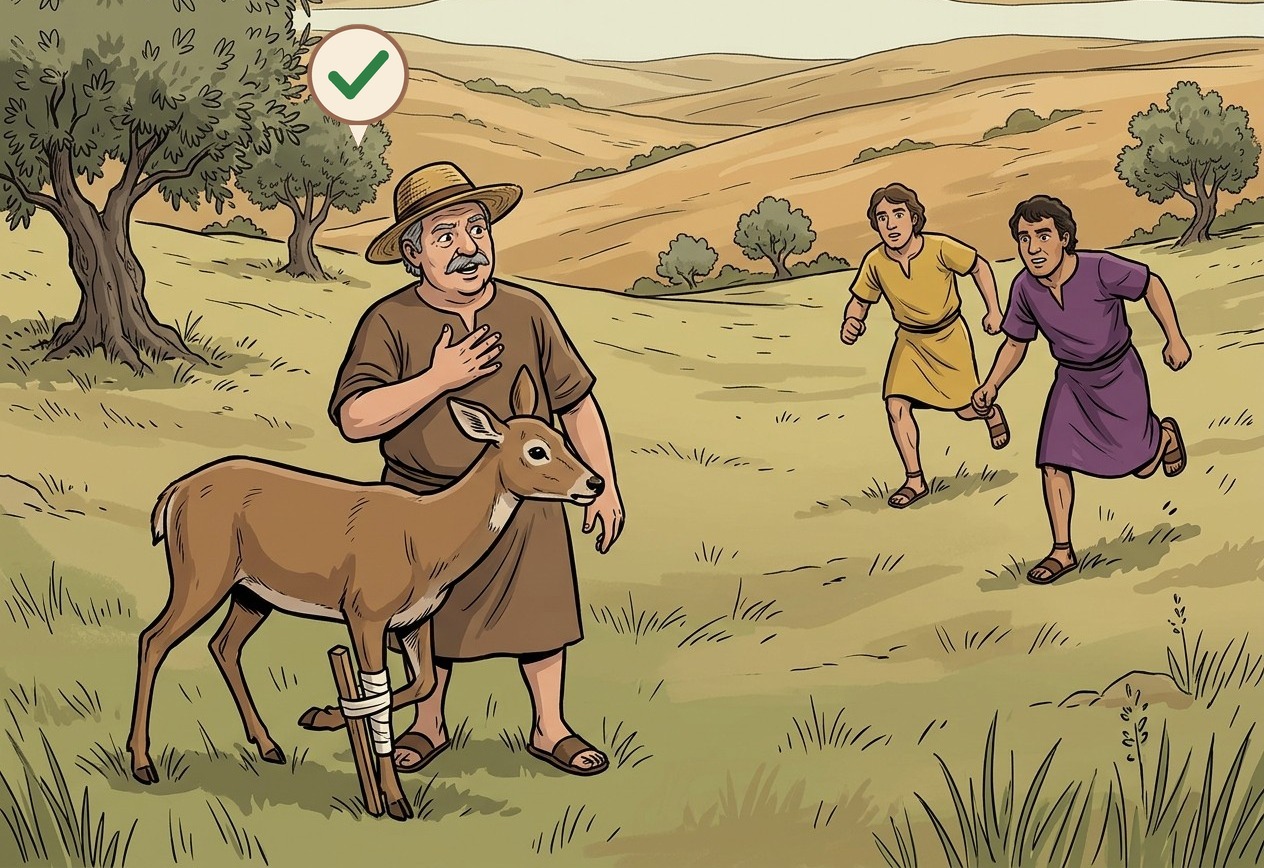
- He saw people running in his field after lost property, such as a deer with a broken leg or pigeons that cannot fly, and said "my field acquires it": he has acquired it.
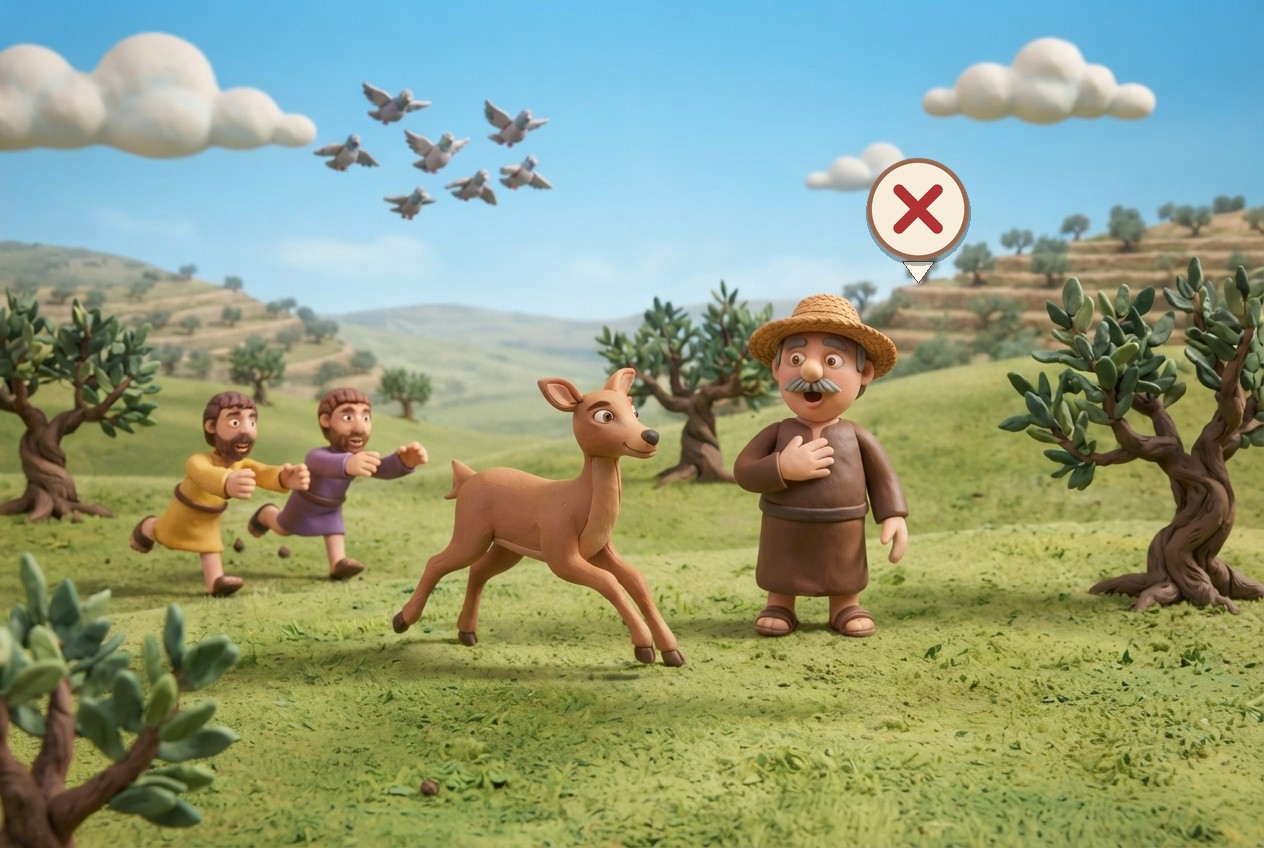
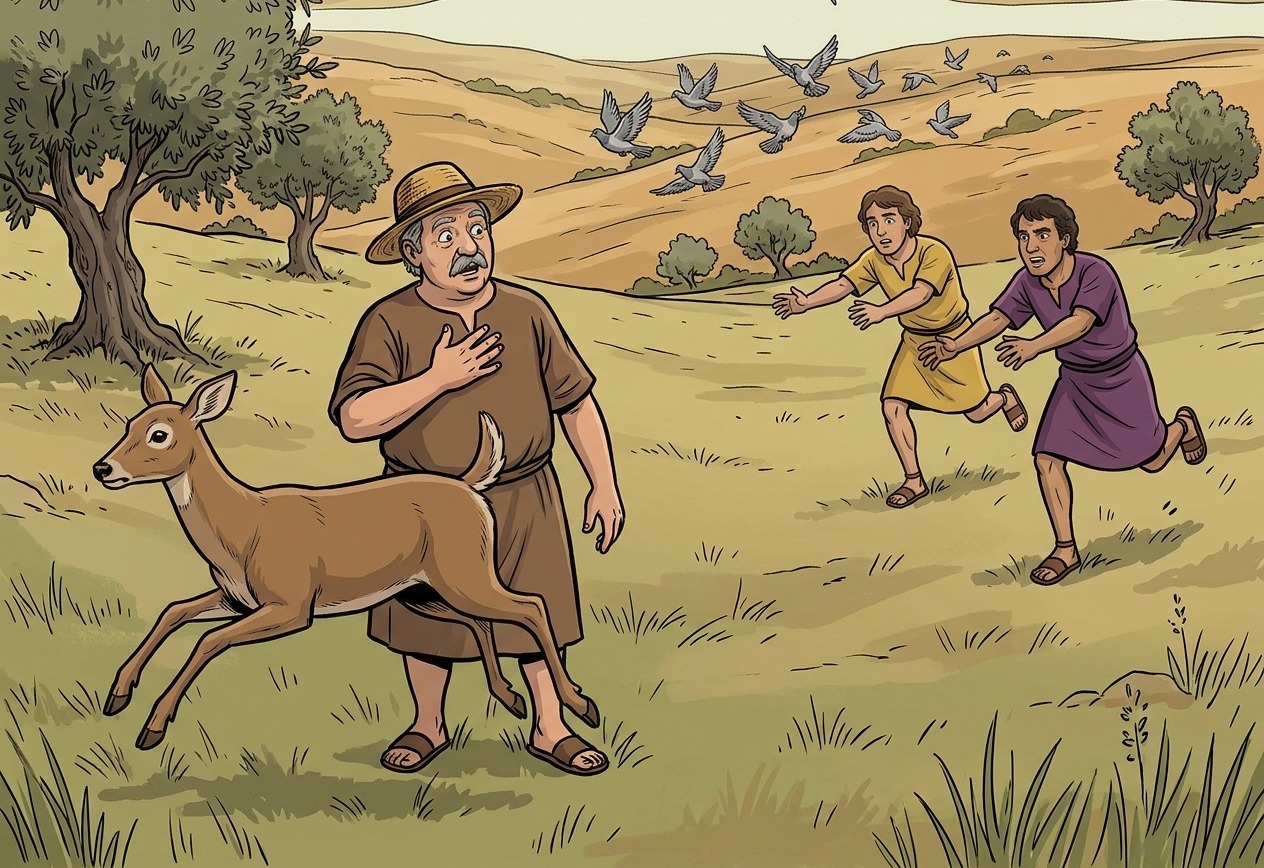
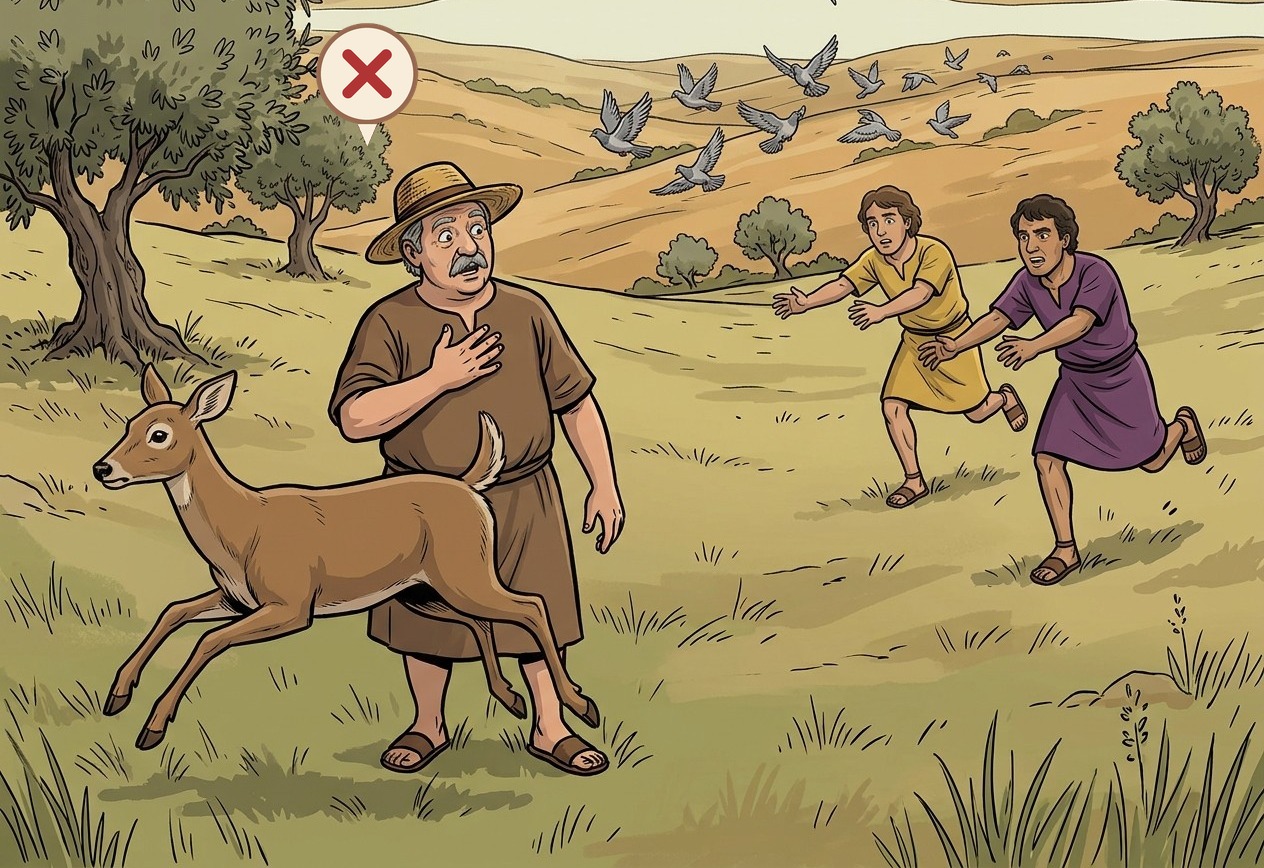
- But if the deer was running normally or the pigeons flying, and he said it, he has said nothing.
Three conditions
- The finder acquires it only if no one else can take it first, the deer or pigeons cannot get away, and the owner of the field says "my field acquires it".
Does the field acquire it?
| The animal | Result |
|---|---|
| Deer with a broken leg, or pigeons that cannot fly | The field acquires it |
| A deer running normally, or pigeons flying | He has said nothing |
ראה את המציאה. ונפל עליה. ובא אחר והחזיק בה. זה שהחזיק בה זכה בה.
ראה אותן רצין אחר מציאה. אחר צבי שבור. אחר גוזלות שלא פרחו. ואמר זכתה לי שדי. זכתה לו.
היה צבי רץ כדרכו. או שהיו גוזלות מפריחין. ואמר זכתה לי שדי. לא אמר כלום:
If one saw a found item and fell upon it, and another came and seized it, the one who seized it has acquired it.
If one saw people running after a found item—after a deer with a broken leg, or after young pigeons that have not yet learned to fly—and he said: My field has effected acquisition for me, it has effected acquisition for him.
If the deer was running in its usual manner, or the young pigeons were flying, and he said: My field has effected acquisition for me, he has said nothing.
 keeps it?
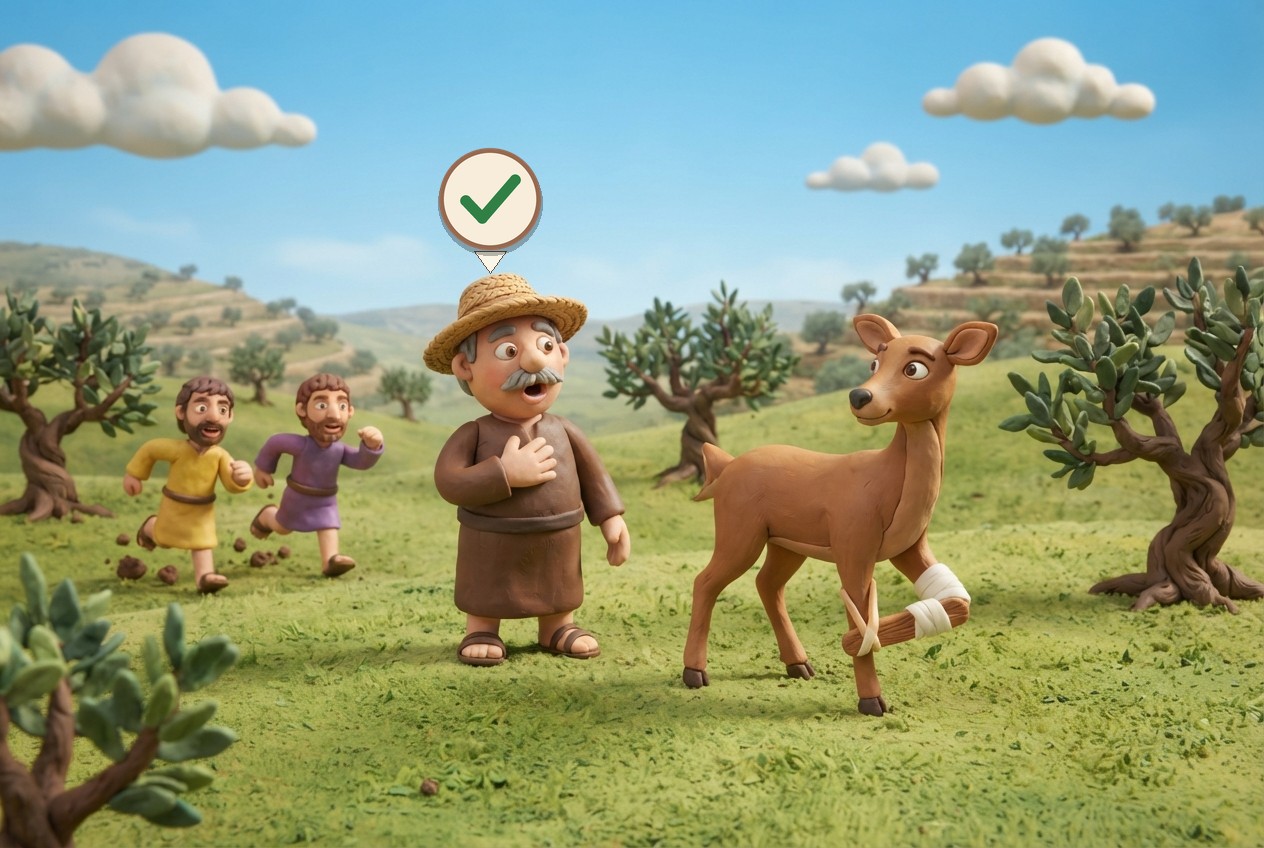
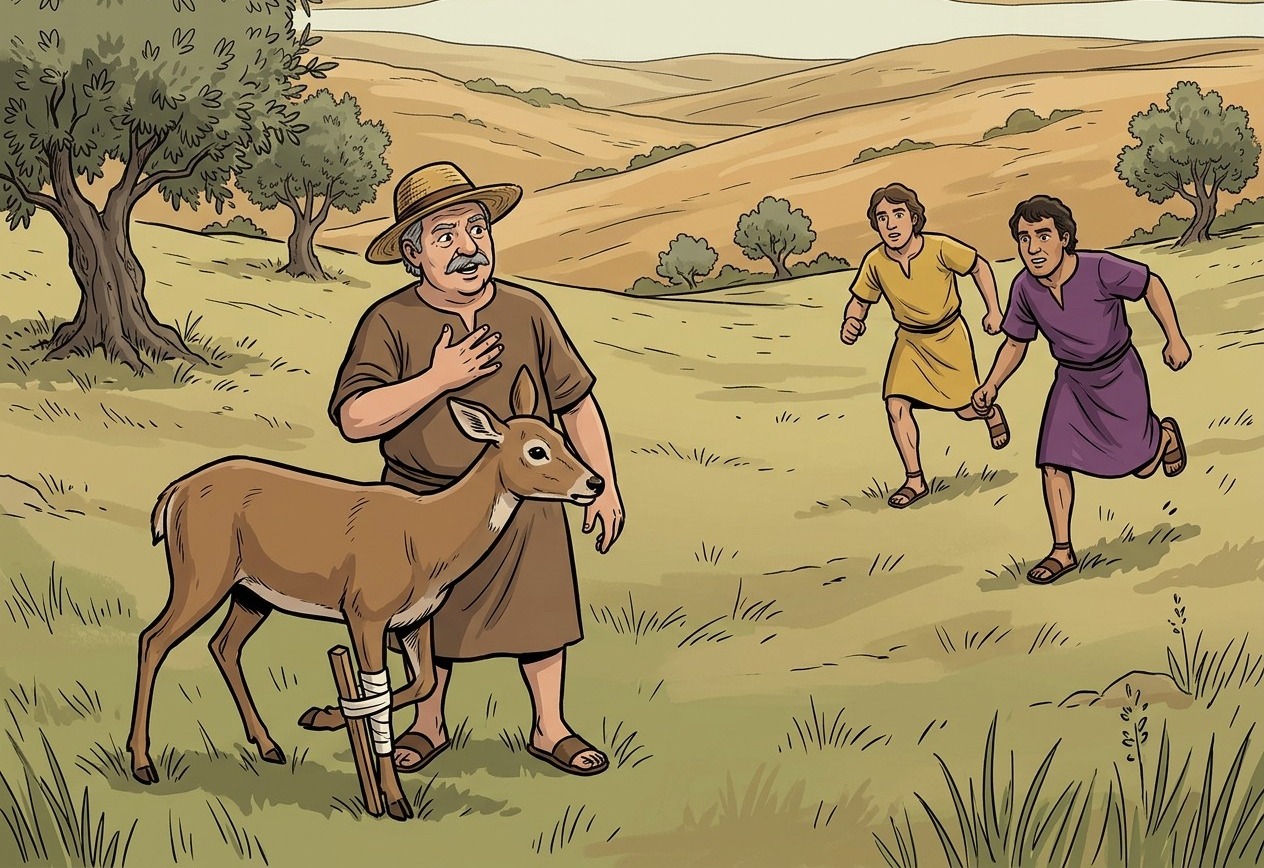 keeps it?
 has no claim?
 has no claim?
Mishnah 5: Who owns what a family member finds?
What those who are supported by him find belongs to him; what those who are independent of him find is their own.
Belongs to him
- What is found by his minor son or daughter, his Canaanite slave or female slave, or his wife.
- A minor son or daughter, a Canaanite slave, and a wife are supported by him, so their finds are his.
Belongs to them
- What is found by his grown son or daughter, his Hebrew slave or female slave, or his divorced wife, even if he has not yet paid her ketubah.
- A grown son or daughter, a Hebrew slave and a divorced wife are not under his authority in this way, so they keep what they find.
מציאת בנו ובתו הקטנים. מציאת עבדו ושפחתו הכנענים. מציאת אשתו. הרי אלו שלו.
מציאת בנו ובתו הגדולים. מציאת עבדו ושפחתו העברים. מציאת אשתו שגרשה. אף על פי שלא נתן כתובתה. הרי אלו שלהן:
The found item of one's minor son or daughter, the found item of his Canaanite slave or maidservant, and the found item of his wife—these are his.
The found item of one's adult son or daughter, the found item of his Hebrew slave or maidservant, and the found item of his ex-wife whom he divorced, even if he has not yet given her payment of the marriage contract—these are theirs.
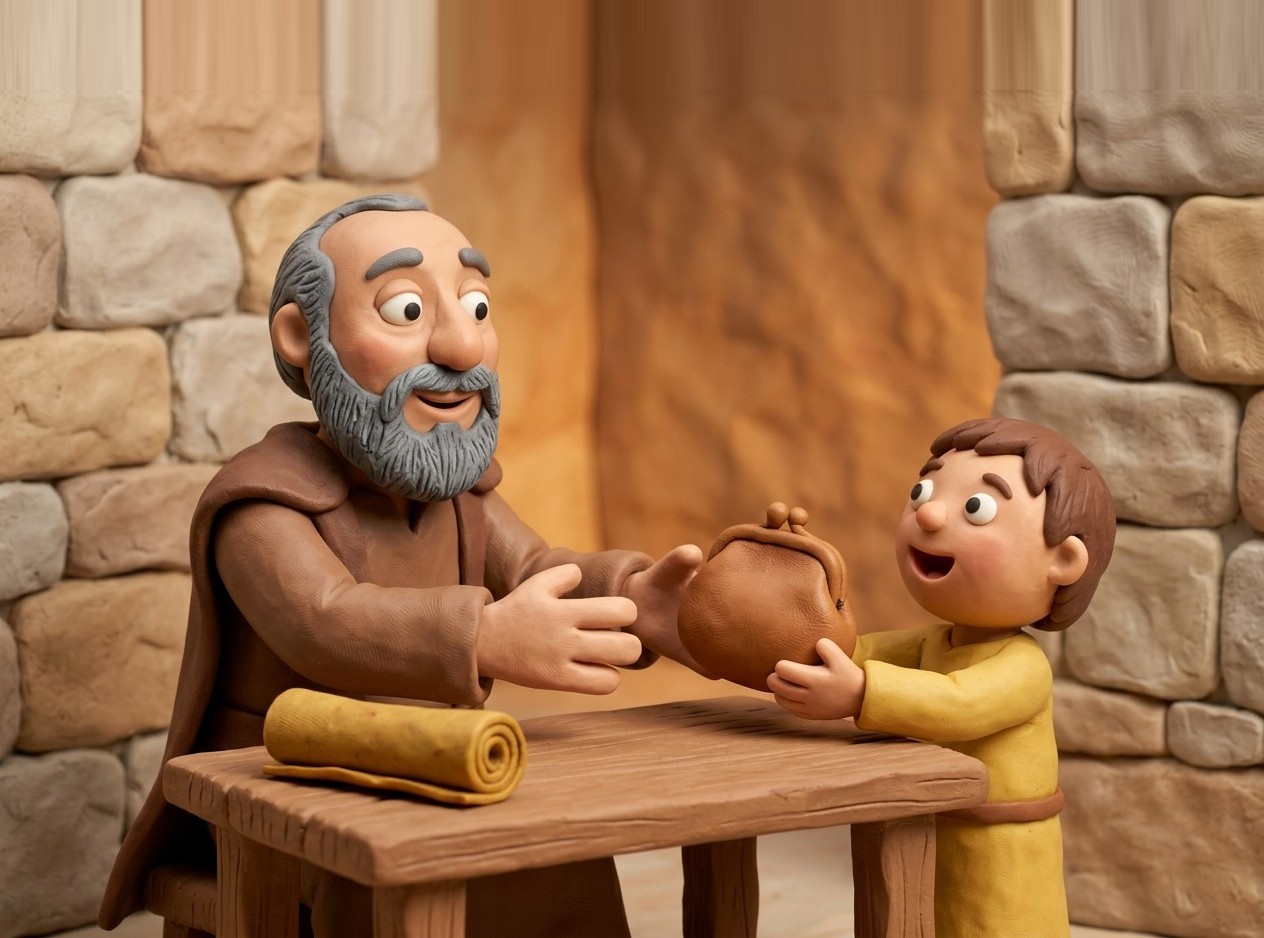 keeps it?
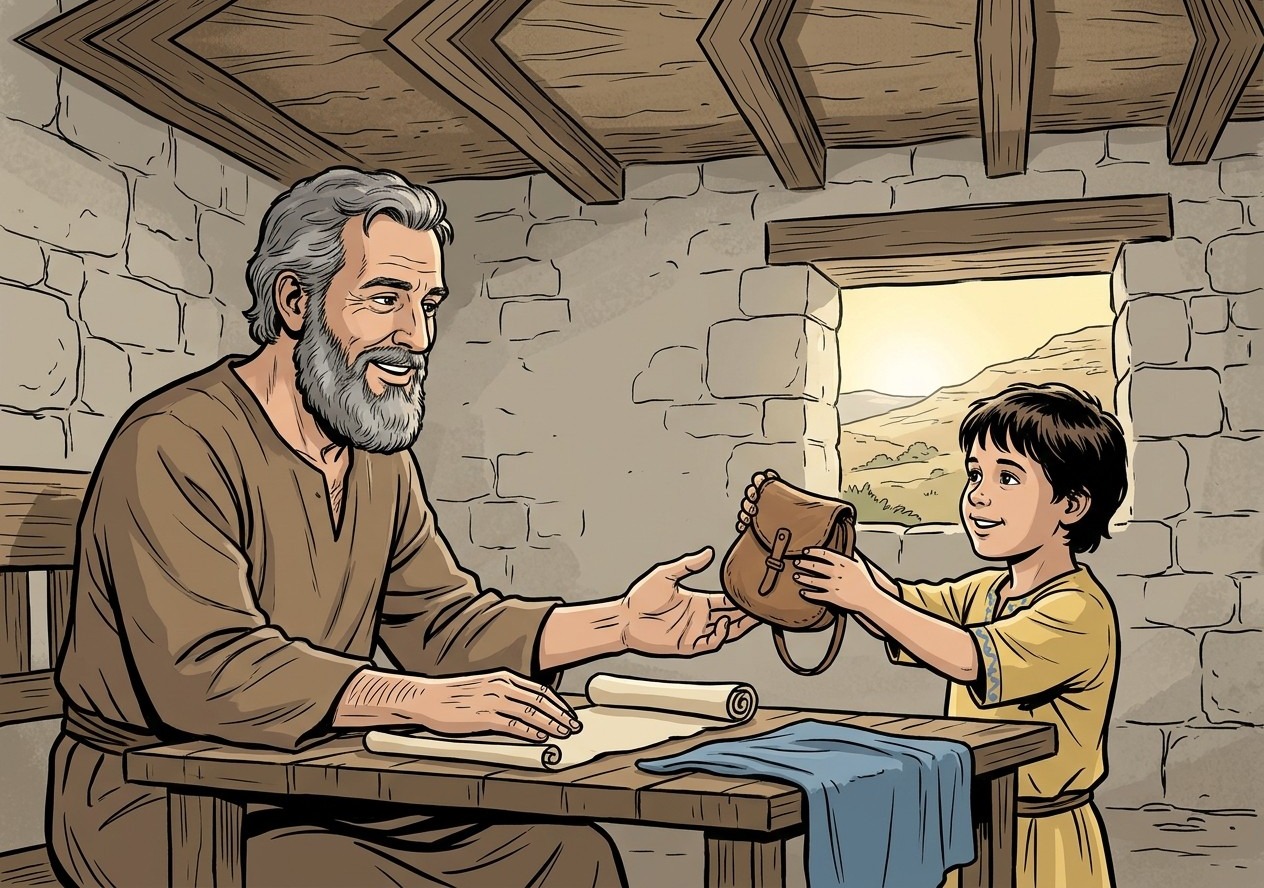 keeps it?
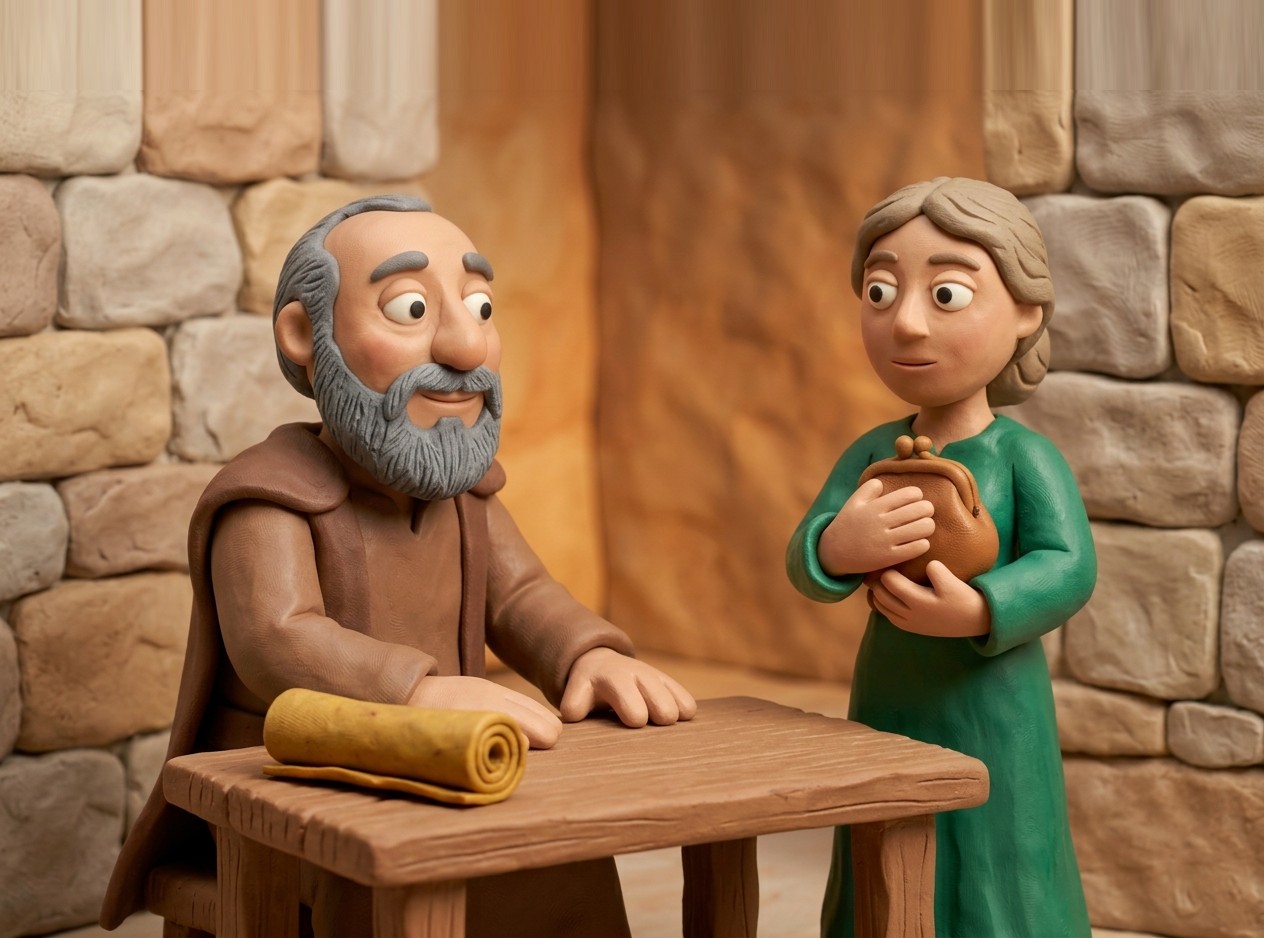 keeps it?
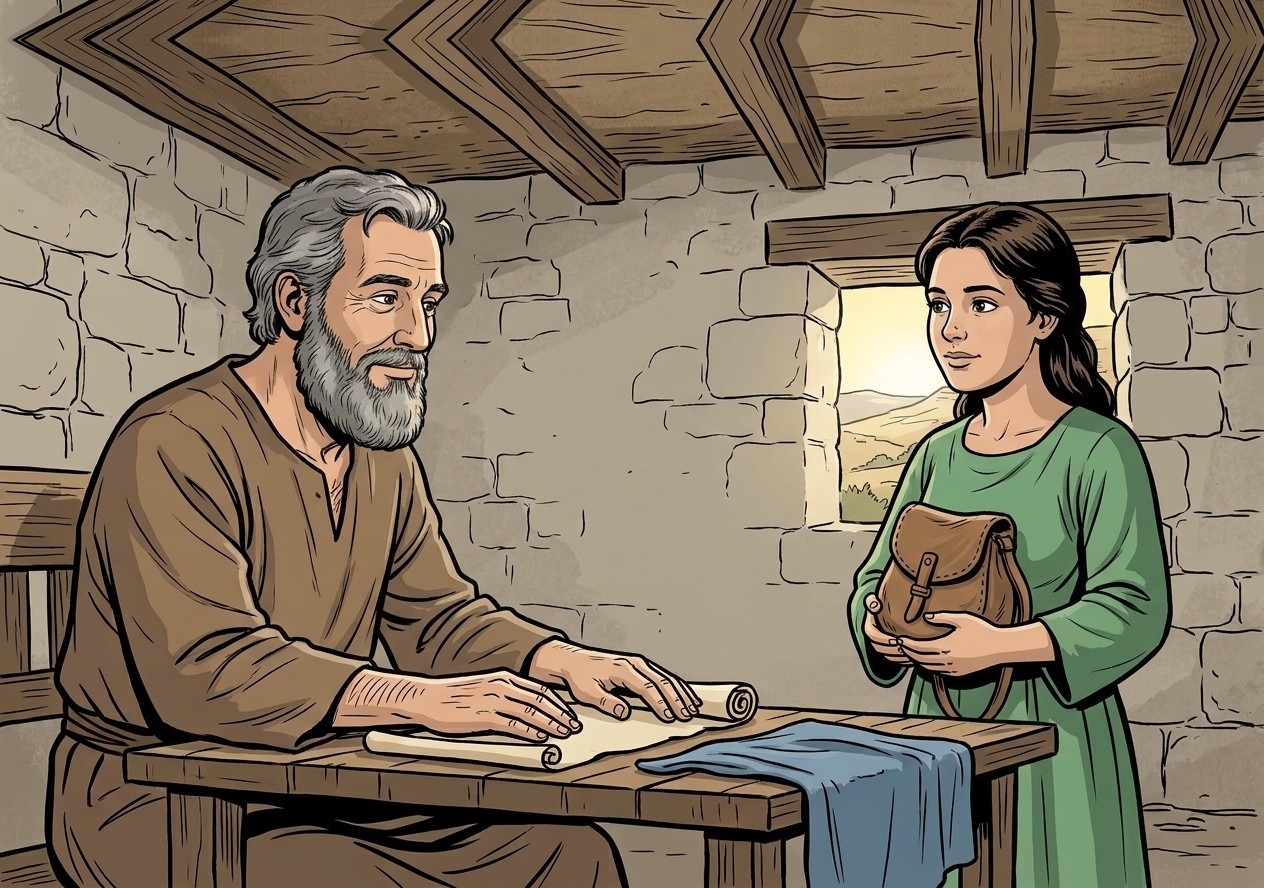 keeps it?
Mishnah 6: Found debt documents
Whether to return a found loan document depends on whether it records a lien on the debtor's property.
A lien on the debtor's property
- He should not return it, since the court would collect repayment from the property.
No lien
- Rabbi Meir: he may return it, since the court would not collect from the property.
- The Sages: in either case he should not return it, since in either case the court would collect from the property.
מצא שטרי חוב. אם יש בהן אחריות נכסים לא יחזיר. שבית דין נפרעין מהן. אין בהם אחריות נכסים יחזיר. שאין בית דין נפרעין מהן. דברי רבי מאיר.
וחכמים אומרים בין כך ובין כך לא יחזיר. מפני שבית דין נפרעין מהן:
If one found promissory notes, and they include a property guarantee, he may not return them, as the court would use them to collect repayment. If they do not include a property guarantee, he returns them, as the court will not use them to collect repayment. This is the statement of Rabbi Meir.
And the Rabbis say: In both this case and that case he should not return them, as the court would use them to collect repayment.
Mishnah 7: Found documents of giving
Documents that give something to another person are not returned, since the writer may have changed his mind.
Do not return
- A man who found bills of divorce, writs of emancipation, wills, deeds of gift or receipts should not return them.
- The writer may have written one and then changed his mind and decided not to give it.
- These documents are written for the one who receives them, but we do not know that the one who found it received it: perhaps the writer decided not to give it.
מצא גטי נשים. ושחרורי עבדים. דייתיקי. מתנה. ושוברים. הרי זה לא יחזיר. שאני אומר כתובים היו ונמלך עליהם שלא ליתנם:
If one found bills of divorce, or bills of manumission of slaves, or wills, or deeds of gift, or receipts, he may not return them, as I say it is possible that they were written and then the writer reconsidered about them and decided not to deliver them.
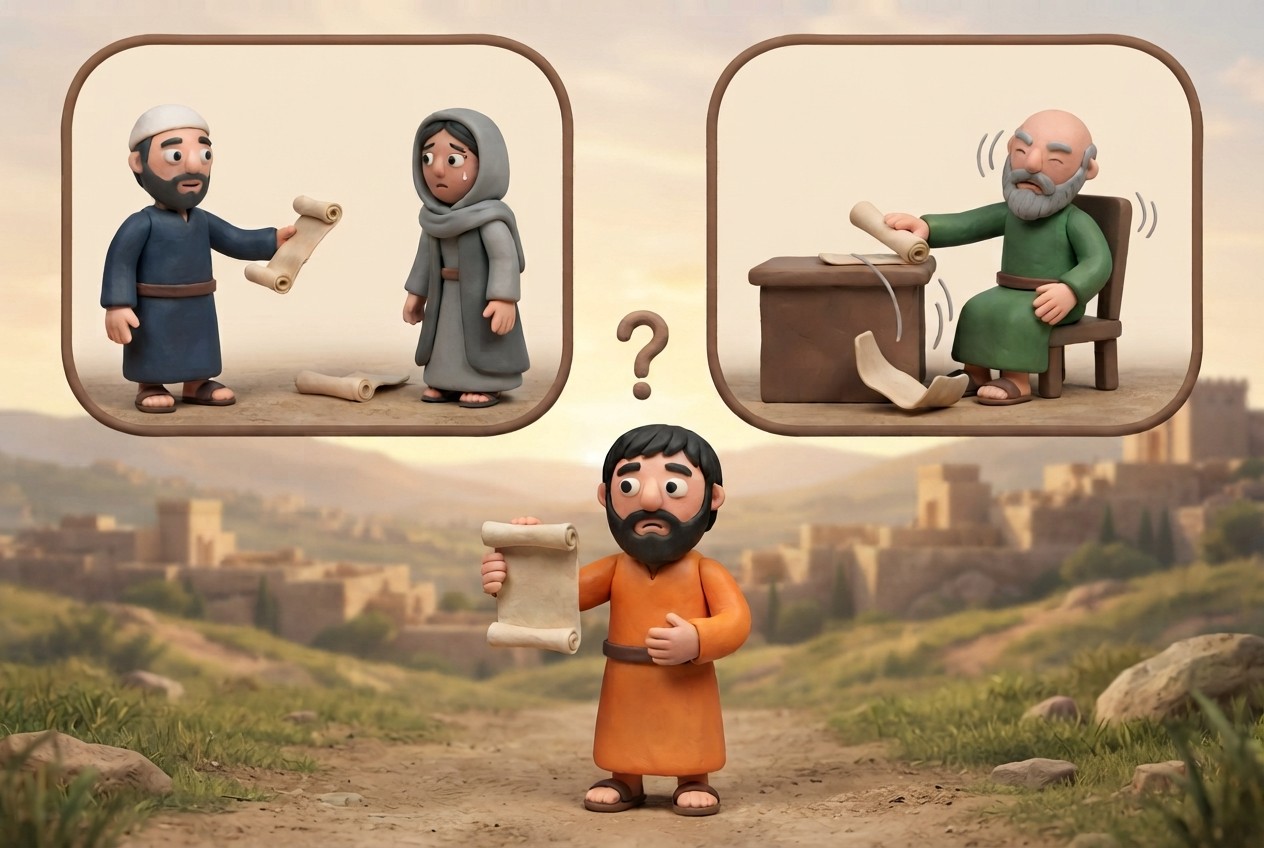 does not return it?
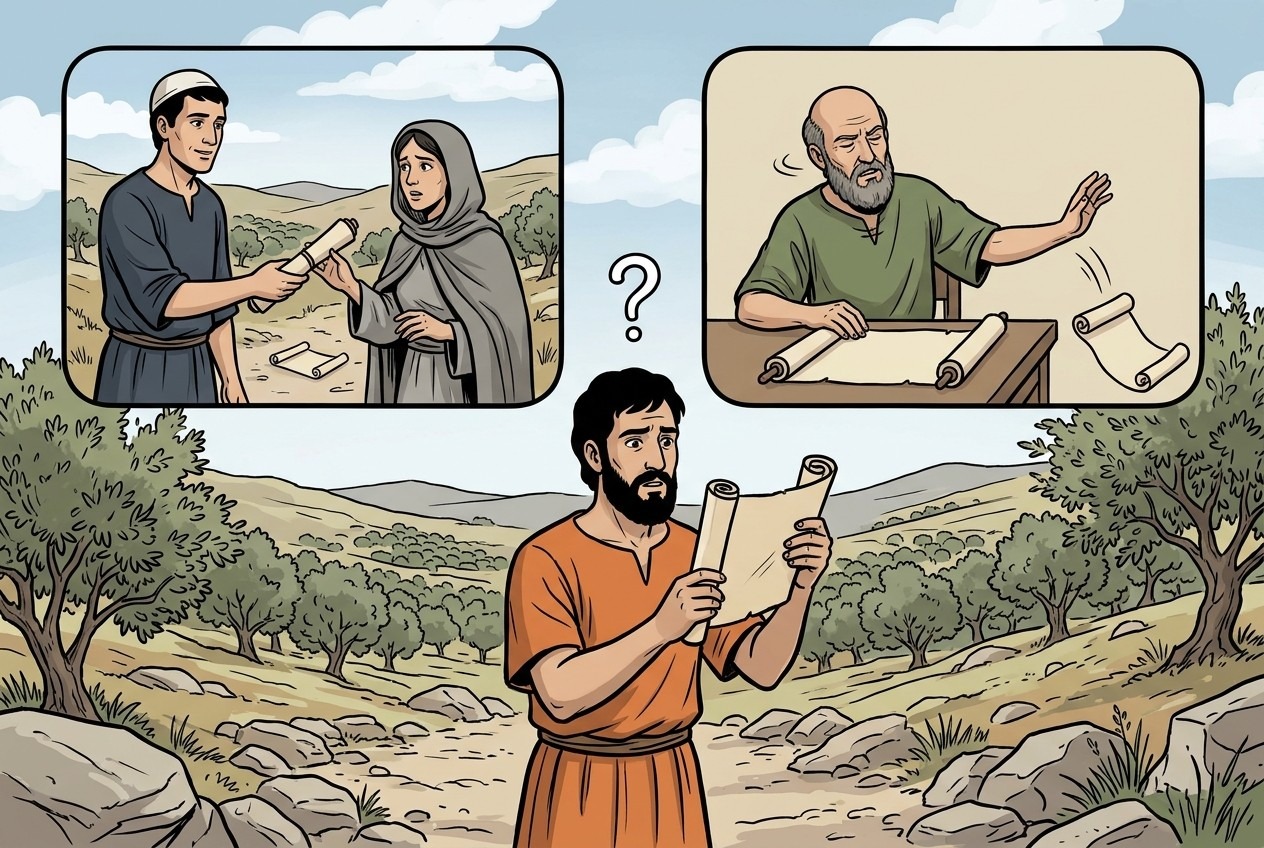 does not return it?
Mishnah 8: Documents that are returned, and the one that waits for Elijah
Which found documents are returned, and what to do with one of unknown nature.
Return them
- Letters of evaluation or sustenance, documents of halitzah or refusal, documents of arbitration, and any document drawn up by the court.
- Documents found in a satchel or bag, or a bundle of documents (three tied together).
- If a satchel or bag has an identifying mark, return it to the one who can identify it.
Rabban Shimon ben Gamaliel
- Three documents in which one man borrowed from three others: return them to the borrower.
- Three documents in which one man lent to three: return them to the lender.
- If one man's name appears in all three, he is the borrower or the lender, so we return them to him.
Not sure, and the simpon
- A document of unknown kind that was found among his own documents waits until Elijah comes: he may not discard it, and may not give it to the creditor or the debtor.
- If there are postscripts in the documents, he does what the postscript says.
מצא אגרות שום. ואגרות מזון. שטרי חליצה. ומיאונין. ושטרי בירורין. וכל מעשה בית דין. הרי זה יחזיר.
מצא בחפיסה. או בדלוסקמא. תכריך של שטרות. או אגודה של שטרות. הרי זה יחזיר. וכמה אגודה של שטרות. שלשה קשורין זה בזה.
רבן שמעון בן גמליאל אומר אחד הלוה משלשה יחזיר ללוה. שלשה הלוין מאחד יחזיר למלוה.
מצא שטר בין שטרותיו ואינו יודע מה טיבו. יהא מונח עד שיבא אליהו.
אם יש עמהן סמפונות יעשה מה שבסמפונות:
If one found documents of appraisal, or documents concerning food, or documents of ḥalitza, or documents of refusal, or documents of beirurin, or any court enactment, he must return them.
If one found documents in a ḥafisa or in a deluskema, or a roll of documents, or a bundle of documents, he must return them. And how many documents are considered a bundle of documents? Three that are tied together.
Rabban Shimon ben Gamliel says: If one person borrowed from three, he must return them to the debtor; if three borrowed from one, he must return them to the creditor.
If one found a document among his documents and he does not know what its nature is, the document is placed aside until Elijah comes.
If there are simponot among them, he should do what is stated in the simponot.
Chapter summary
Draft for review. The outlines are in our own words.
Key principles
- Two people hold an object, each says it is his, and neither can prove it: each swears that he owns no less than half, and they split it. This applies whether they say 'I found it' or 'it's all mine'. 1:11:2
- If one claims all and the other claims half, the claimant of all swears he owns no less than three quarters, the claimant of half swears no less than a quarter, and they divide three quarters to a quarter. 1:1Kehati (1:1): the claimant of half is conceding that the other half is his opponent's, so the dispute is only over the other half, which is divided; hence three quarters and a quarter.
- When neither side has witnesses, each swears. When both admit the other's claim, or there are witnesses, they divide without an oath. 1:11:2
- One who found something must claim it at the time he takes hold of it, not after handing it to someone else. 1:3
- Falling on a found object does not acquire (zakhah)zakhah (acquire) it: whoever seizes it acquires it. A person's field can acquire an animal for him only if three conditions hold: others have not yet claimed it, the animal physically cannot leave the field, and the owner declares that his field acquires it. 1:4
- What a person who is supported by him finds (minor children, Canaanite slave, wife) belongs to the supporter. What those independent of him find (adult children, a Hebrew slave, a divorced wife even before the ketubah is paid) is their own. 1:5
- Found documents are returned or not according to whether we can be sure the owner lost them. A found loan document that records a lien (acharayut nekhasim)an acharayut nekhasim (lien) is not returned, since the court would collect from the property (the Sages say the same even without a lien; R. Meir disagrees, see below). Documents of giving (divorce, release of a slave, wills, gifts, receipts) are not returned, since the writer may have changed his mind and never given them. 1:61:7
- Returned: documents drawn up by the court and the like, documents found in an identifiable bag, and a bundle (three documents tied together) whose names point to who lost it. A document of unknown nature among one's own documents waits until Elijah comes; torn documents are handled as their postscripts (simpon)simpon (postscripts) say. 1:8
Key terms
zakhah (acquire) זכה 1:31:4
To gain title to an object. In 1:3 by holding it and claiming it at that moment; in 1:4 also through one's field.
my field acquires it for me זכתה לי שדי 1:4
A declaration by which a field's owner acquires an animal that is on his field and cannot leave it. It has no effect on an animal that can run or fly away.
ketubah כתובה 1:5
Here, the divorce settlement that a husband owes his wife. Even before it is paid, what his divorced wife finds is hers.
Canaanite slave and Hebrew slave עבד כנעני, עבד עברי 1:5
A Canaanite (non-Jewish) slave is wholly owned, so what he finds belongs to his master. A Hebrew slave keeps what he finds.
acharayut nekhasim (lien) אחריות נכסים 1:6
A document that records a lien on the debtor's property: the court would collect repayment from the property.
simpon (postscript) סמפון 1:8
A note attached to a document that states what must be done with it. The finder follows the postscript even if the document is torn or unreadable.
until Elijah comes עד שיבוא אליהו 1:8
The document is left as it is: the finder must neither discard it nor give it to the creditor or the debtor.
Key debates
Is a found loan document without a lien returned to the lender? 1:6
If it records no lien, he may return it, since the court would not collect from the property.
In either case he does not return it, since in either case the court would collect from the property.
Three documents found together: whose are they? 1:8
Three documents in which one man borrowed from three others go back to the borrower; three in which one man lent to three go back to the lender. Kehati: if all three name the same man, he is the one who lost them.
A bundle (three tied together) is returned.